
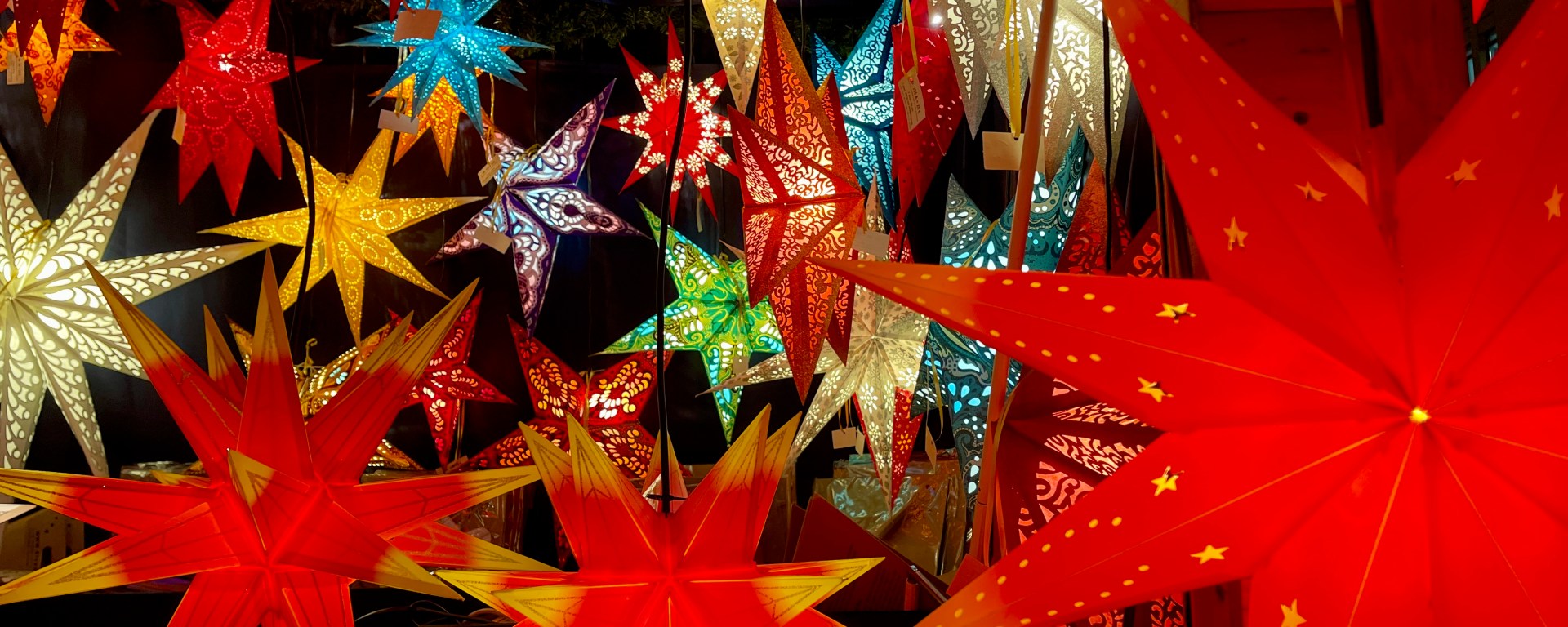
The magic and enchantment of a European Christmas market just cannot be explained! It really just needs to be experienced! I absolutely love this time of year, and visiting markets has been a massive highlight for us during our time in Germany! We have visited many, many, MANY markets over the years, both large and small; both the most famous ones and tiny local town ones. Here in this guide I will give you a rundown on what I have learned in my years of, ahem, “research!”
History
Christmas markets have been around since the Middle Ages. The Striezelmarkt in Dresden dates back to 1434 and is considered to be the first Christmas Market in Germany. Christmas markets were originally tied to mostly Germanic-speaking Countries- Austria, Germany, and parts of what is now France. Strasbourg, France is known as “The Capitol of Christmas” and held its first market in 1570 with crafts, food, and a festive atmosphere, and could arguably be the blueprint for what markets are today. By the 17th century, Christmas markets could be found throughout Germany, and the 18th, 19th, and even 20th Centuries saw other European countries adopt the festive tradition.
Market Dates
Christmas markets are generally tied to Advent, particularly in Germany. Advent marks the 4 weeks preceding Christmas day. So the majority of Christmas markets in Europe will take place between Thanksgiving and Christmas. There are many exceptions, and you will find some early markets, particularly in the UK and in countries where the markets are less tied to religion. I have dates for over 60 markets added to my Christmas Market Calendar to make it easier to plan!
Types
In its very basic anatomy, a Christmas market is three things; food/drink, festive atmosphere, and shopping. But there are different types of markets that offer special features.
Traditional
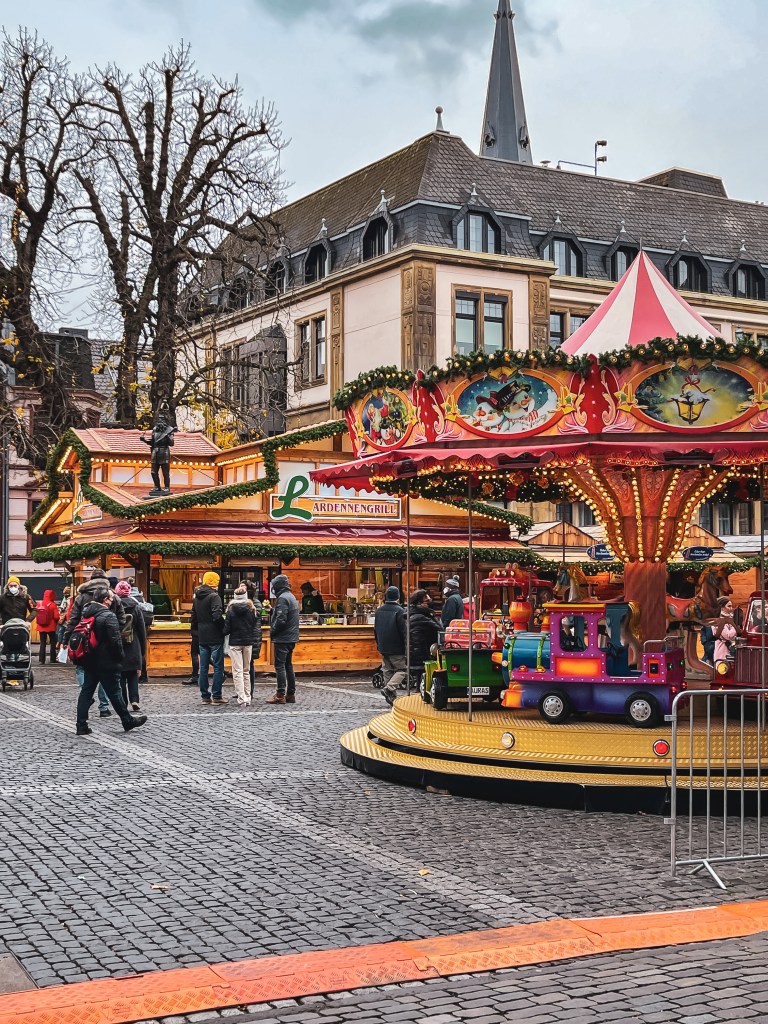
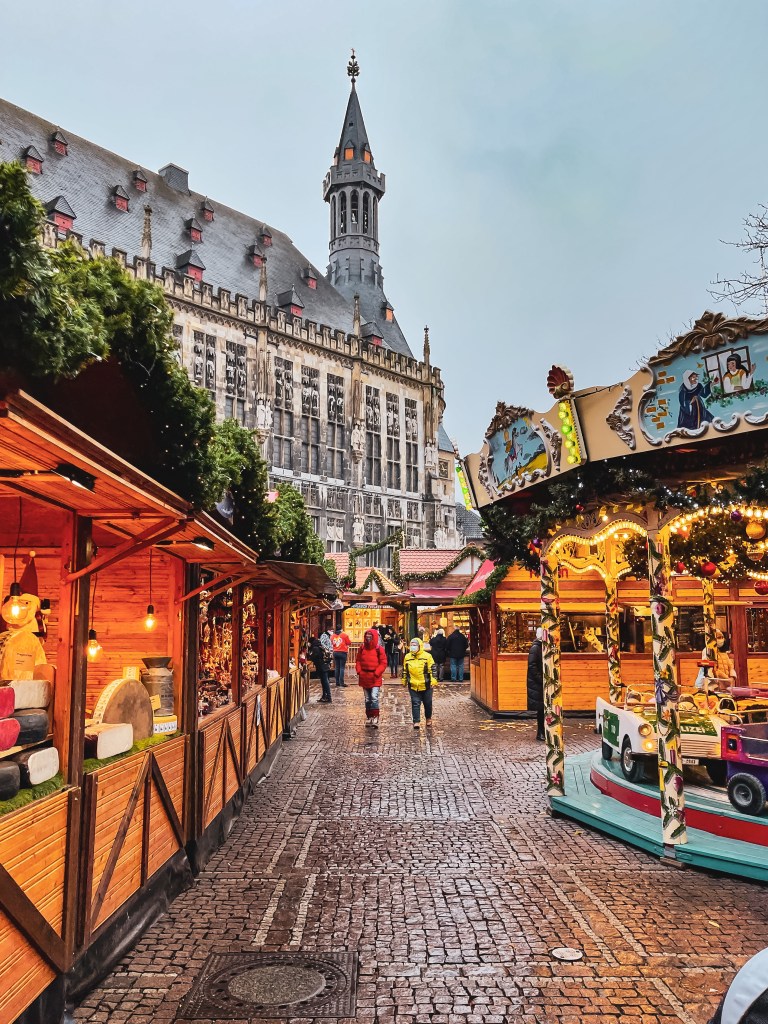
Most of the Christmas Markets in Europe are going to fall under the traditional type. They are characterized by a cozy atmosphere, market food and drink, decorated wood huts, possibly a carousel or large pyramid. They may have a program for concerts and special readings, an ice skating rink or other activities. Any market that does not fall under a specialty category is going to be “traditional.” Some of my favorite traditional markets are:
Aachen Weihnachtsmark
Trier Weihnachtsmarkt
Prague Christmas Markets

Medieval
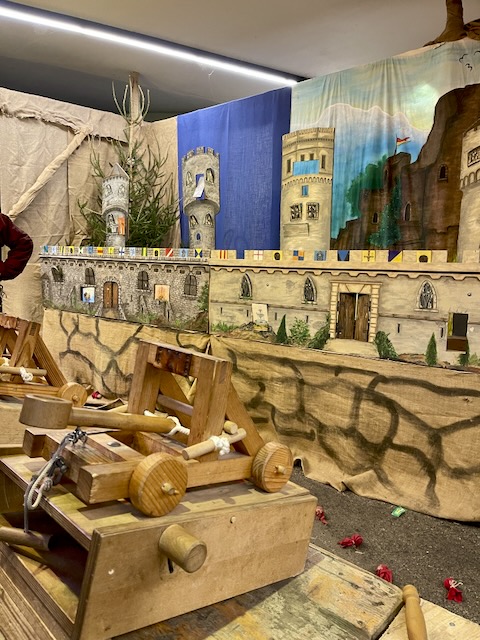
At Medieval Markets you get to step back in time and experience life of the middle ages. These markets are often dimly lit by only fire baskets and torches. Their shops offer more medieval type of goods. Medieval masks, hand tooled leather, a blacksmith demonstration, suits and armor, and knives and axes can often be found. The Glühwein cups are often made of clay, which makes them very different and desirable. Some markets will even have games from the Middle ages for kids to play for free. These are the most unique Markets! Some of my favorite Medieval Markets are:
Esslingen Medieval Market
Dresden Medieval Market in Stallhof
Sankt Wendel Medieval Market


Romantic
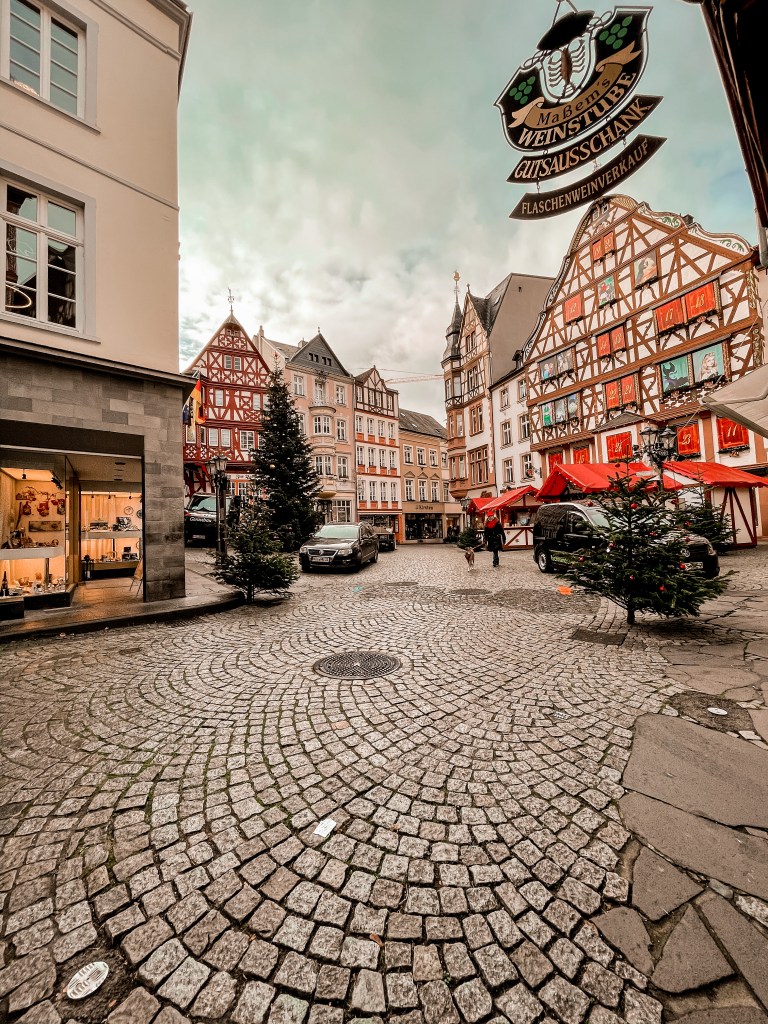
Markets that are held in old town squares, in front of castles, historical municipal buildings, or other fairy tale like settings; markets that seem like they were just pulled out of a storybook are the Romantic Christmas Markets. The ambiance of these markets is what really makes them Romantic. Usually decorated with lots of lights and trees, sometimes candles. They are more natural in their decorating and less of the large ostentations fixtures. Some of my favorite Romantic markets are:
Bernkastel-Kues Weihnachtsmarkt
Rothenburg ob der Tauber Reiterlesmarkt
Heidelberg Weihnachtsmark
Forest
Markets characterized as “waldweihnacht” (forest Christmas) can either take place in the actual forest, a city park, or they bring the forest to the city square and decorated with hundreds of trees and a forest theme. You should expect an abundance of pine trees, natural wood huts, and they will have a very natural feel. Karlsruhe and Wiesbaden both have forest themed markets.
Alternative
There are a handful of specialty market types that you can also find in Europe. Vegan markets, Dog markets, LGBTQIA+ markets, and sustainable markets. Most of these are found in larger cities like Düsseldorf, Munich, Berlin, etc. But some alternative markets can be found in less populated areas as well. The Munich Pink Market is a popular Alternative market.

Ticketed Markets
About 90% of Christmas markets are free entry, but there are some, particularly in areas that have limited space but high popularity, where an entry fee and/or reservation is required. Ravennaschluch in the Black Forest, The Gerndarmenmarkt Berlin, and Triberg Weihnachtszauber are some examples.

Tips
We have been to many markets over the years and have learned by trial and error. Here are all the things I do to prepare for market season!
- Dress in layers. I always have gloves in my pocket and a scarf. I wear a rain resistant coat that has a hood. Check the temperature and decide your footwear. I usually wear warm boots and thick socks. You will be out walking in the weather for more than an hour usually, so dress accordingly! Comfort and warmth are your priorities!
- Figure out where to park before you get there! I always search for a parking garage near the market I plan to attend and plan to park there. Note for European parking garages: you pay at a pay station in the garage NOT at the exit! So take the ticket with you and pay on your way back to your car.
- Bring cash and have coins! Bathrooms at Christmas markets will almost always have a fee. Usually 50 Euro cent. Many vendors also don’t take credit card. There are ATMs but they run out of cash and the fees can be hefty. So prepare ahead and bring cash.
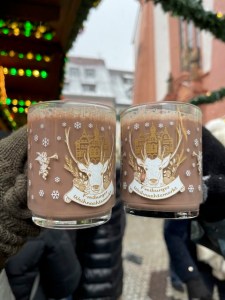
- Pfand. Another reason to bring extra money is for the Pfand. This is a deposit placed on the drink mugs and glasses. When you order a drink, a pfand will be added for the mug. You can return the mug and get the pfand back, or keep the mug. Pfands are typically €3-4. And a hot tip if you plan to collect those market mugs- you can take your empty mug back to the booth and ask for a clean one! OR, just bring some tissue to dry it out so it doesn’t make a mess in your pocket. Either way works!
- Bring a reusable shopping bag! Bringing your own bags for shopping is a norm in Europe, and Christmas markets are no exception. Sometimes you will get lucky and the vendor will offer a bag, but this is not common. I like to use linen tote bags because they fold up really small and I can carry it in my back pocket. We also have one of those foldable zipped up bags that we usually bring.
- The best time to go to a Christmas market in my opinion is around 3-4pm. I love seeing them at night, but they are far less crowded in the day. If we show up around 3pm, we can beat the crowds. We wander around and shop as the sun sets. When the darkness sets in, the lights come on and and it is simply magical! By the time the nighttime crowds roll in, we are ready to go! Many people will say to go right when they open, which is usually around 11am. This is a great time to beat the crowds if you don’t care about seeing the lights.
- What to eat? Where do I even start! I look forward to the markets every year just for the food! It’s not at all like American fair food. Sure they have the wursts (sausages), fries, and sugary snacks, but they have some amazing dishes that you only really see at festivals. We have found festival food to also vary by region. Some of Jeremy’s favorite mushrooms cannot be found where we live now, and I had never even heard of the handbrot until we went to Dresden. So keep an eye on where you are traveling to find these specific foods. Here is a list of some of my favorite things you can look out for!
- Flammlachs -open fire smoked salmon in a brioche roll with herb or dill sauce.
- Flammkuchen -flatbread with creme fraîche sauce, onion, and bacon. This is pretty common an can be found most places
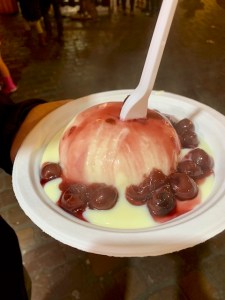
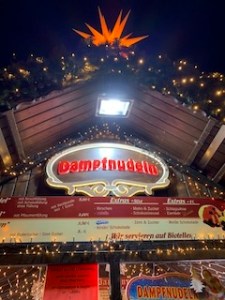
- Dampfnudeln – a yeasty dough dumpling topped with sour cherry and vanilla sauce. Seen a lot, but mostly in Western Germany.
- Baumstriezel – Also called a chimney cake. Its like a pie dough wrapped around a circular form and cooked over coals. You can get it coated in cinnamon and sugar or other things. In some regions they will dip it in chocolate and you can add nuts or coconut. Some areas also will fill it with ice cream. Delicious! Also very widespread.
- Handbrot- this is only found in certain areas; near and around Dresden. It’s a hand pie filled with gooey goodness! You can get them with ham and cheese, mushrooms and cheese, and other options.
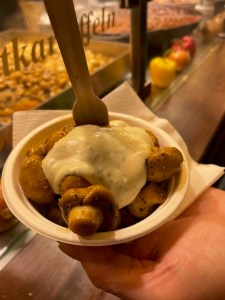
- Garlic sautéed mushrooms with a garlic sauce- These are Jeremy’s favorite! Although most Christmas markets will have mushrooms, they are not all the same style or recipe. The ones Jeremy likes are found in Western Germany.
- Au gratin potatoes with Ham- Another of Jeremy’s favorites! Mostly found in France, these are thin slices potatoes cooked in a giant vat of cream and cheese with diced ham. Delicious!
- Lumumba- if you are not a fan of the Glühwein (like me) try a Lumumba! It’s hot chocolate with rum or amaretto!
- Candied nuts- Almost every festival has a nut hut with freshly candied nut. We love the vanilla or cinnamon almonds!
- Nougat- If you go to a market in France you must try the nougat! Sort of a mix between a marshmallow and taffy, its soft and lightly sticky. It is insanely delicious! We like the pistacio or almond!
- Pasta- Not as common, but sometimes we will find a pasta booth. It’s often prepared in a cheese wheel and is just incredible! Speyer for sure has one!
- Here are som more festival foods that are common and can be found in and around Germany Kartoffelpuffer- these are hashbrown pancakes that are fried and served with applesauce. Found mostly in the Rhineland-Pfalz region.
Langos- a deepfried flatbread with garlic sauce. These actually originate from Hungary so are very widespread among Christmas markets.
Spätzle- It’s like a macaroni and cheese. It varies wildly across Germany. Some places offer different toppings, or might cook it inside a cheese wheel.
Raclette- If you are wandering around and thinking “what is that pungent smell??” it’s probably raclette! It’s a smelly Swiss cheese that they torch melt over some boiled potatoes, or sometimes over a sandwich. As much as I love the idea of something smothered in melty cheese, I can never get past the smell!
Crepes- You can find crepes all over Europe, not just in France. Jeremy and I actually visited a tiny local market in Germany where the only food booth was crepes! So they are very widespread.

Special Events
Though Christmas Markets are the most well-known events of the winter, there are other events and festivals that coincide with Christmas and are worth checking out! Santa Runs, Krampus events, Winter Circus, Chocolate festivals, Light Festivals, and more! Here are a few noteworthy ones!
Tubingen Schokoladen Fest
Amsterdam Light Festival
Deventer Dickens Festival
Tollwood (Munich) Winter Festival
Stuttgart Weihnachts Circus
Munich Krampus Run
Pullman City Rauhnacht (Rough Night)

My Picks
Tens of thousands of people plan travel to Europe during Christmas with the sole intent to visit some Christmas markets. It’s a busy, magical, festive time! But requires some patience. These Markets offer a cosy ambiance that is part of the German (and European) culture. It’s customary to order a Glühwein and stand at the hut to drink it. Lines get long, stands get crowded. You can attend a less publicized market to have a more intimate experience, but if you are planning the most popular in the World, like Cologne, pack your patience! Here are some of my suggestions for markets to visit!
- For Quaint Without the Massive Crowds. Look at Aachen, Speyer, and Wiesbaden. All are beautiful markets set in historic town squares that are near larger, more popular hotspot markets so a bit lower on the tourist radar.
- For Most Bang For Your Buck- Large cities always have multiple markets! And if it is well planned, you can walk to all of them. Brussels and Prague have many markets that are walking distance of each other, the cities are beautifully decorated, and again- it’s not Paris or Berlin.
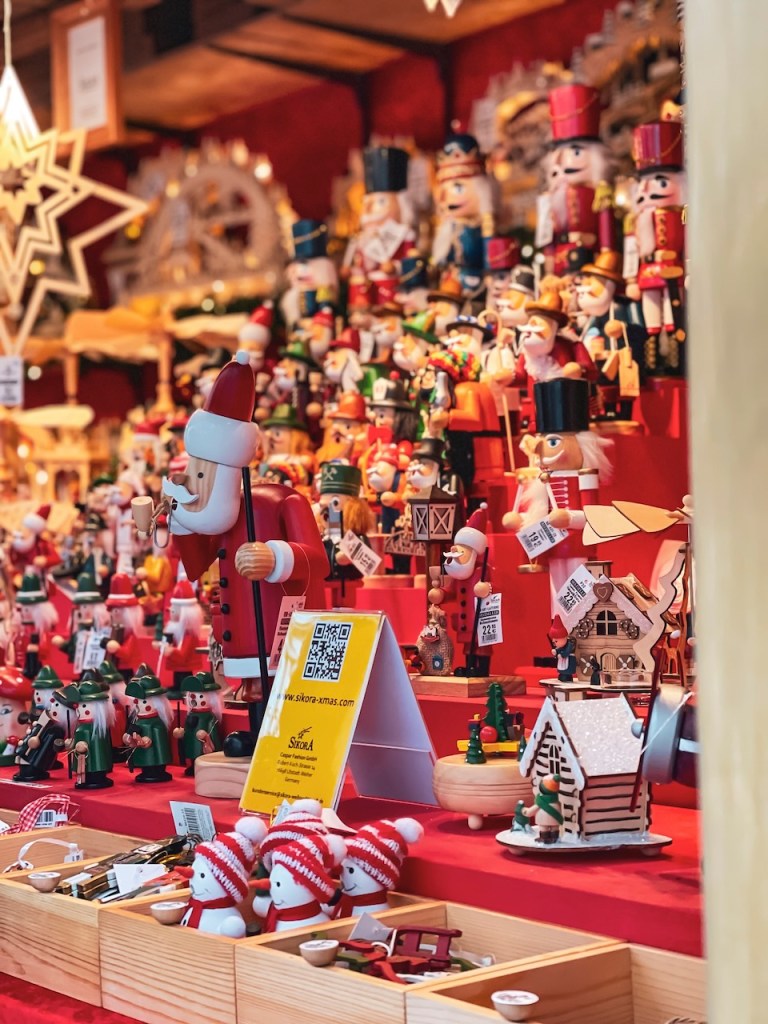
- Best For Shopping- One of the things I love at market is finding unique holiday finds in the booths! Market shops really run the gamut of cheap “Made in China” things, to boutique shop items, and handmade crafts. My suggestions for handmade craft markets are Stuttgart, Aachen, Prague, Brussels, and the Cologne Cathedral market. Medieval markets always have some really unique finds though! Most markets will have a shop (or 3) that sell gloves, scarves, and hats. Many will have a booth selling the ceramic houses, and you will often find a booth in the German markets selling all the nutcrackers, smokers, and Pyramids! So bring your shopping bags!
- Favorite Markets. There are so many incredible markets in Europe, so it’s tough to narrow down to just a few. But my favorite market will always be Trier! It was the first market I ever visited and remains my go-to every year! I loved Baden-Baden, Ravennaschluch is beautiful, Dresden’s Neumarkt and Stallhof are so quaint and festive! I keep visiting Prague over and over and it’s amazing every time! Aachen felt like a Hallmark movie set! With the historic town hall as the backdrop, quaint wooden huts, and giant gingerbread men, it was just picture perfect!
European Christmas markets draw people far and wide to their festive atmosphere and cosy holiday vibe. For holiday shopping or just for the ambiance, the Weihnachtsmarkt is an essential part of the European Christmas experience. Whether you are a market enthusiast like me, or visiting for your first market season, I hope you found something useful in this guide! If there is something I forgot to touch on, or you have questions, post them in the comments!


I subscribed to you blog but still cannot find the calendar to the Christmas markets. Can you please help?
LikeLike
Hi. Sorry you are having trouble! Once a person is subscribed and logged into WordPress, the link appears and you just have to click it. You may need to try logging into WordPress again. Hope this helps!
LikeLike