
When J and I moved to the DC area, one of the first things we did was take a map of DC and circle all the things we wanted to see while we were here. The U.S. Holocaust Memorial Museum was high on the list! We finally went last month. Here are the pictures!

It’s always an odd predicament to say that it was not what I was expecting, but at the same time to not know what I was expecting. I just know it was not this!
The museum is laid out as a timeline. Upon entering the museum you are instructed to pick an identification card of a person who lived during the Holocaust. The card resembles a passport, and each page corresponds to a floor in the museum. You are instructed to read the page on the corresponding floor to find out what happened to your person during that time frame. And in the end, to find out if they survived.
I am #5637, Bella Judelowitz. Born Bella Hirschorn in 1871 in Kuldiga Latvia. I moved to the small town of Aizpute when I was a young woman, where I met and married my husband Daniel. We opened a bakery-grocery store in town. In the 1920s we moved to Liepaja and opened a dry goods store. We have 10 children, but one sadly passed as an infant.
It all begins on the 4th floor. You are ushered like cattle into a big industrial-looking elevator that resembles a gas chamber. It holds maybe 20 people and it is packed full. As you ascend 4 floors, a voice track that is timed perfectly to the slow ascent gives you a preface for what you are about to experience. Everyone is silent. Then the elevator opens and you are confronted with the image below. An entire wall of sadness. And the journey begins.
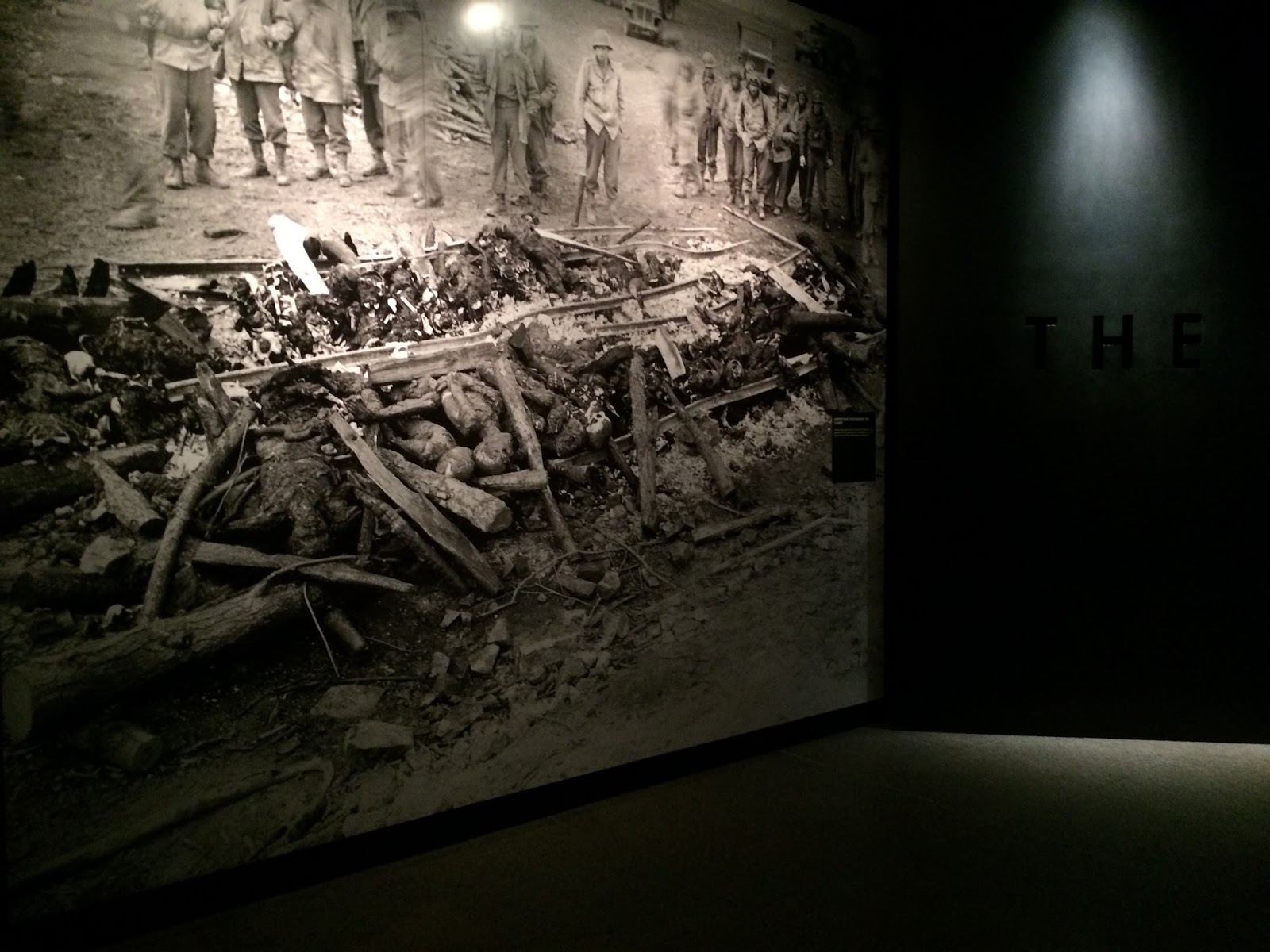
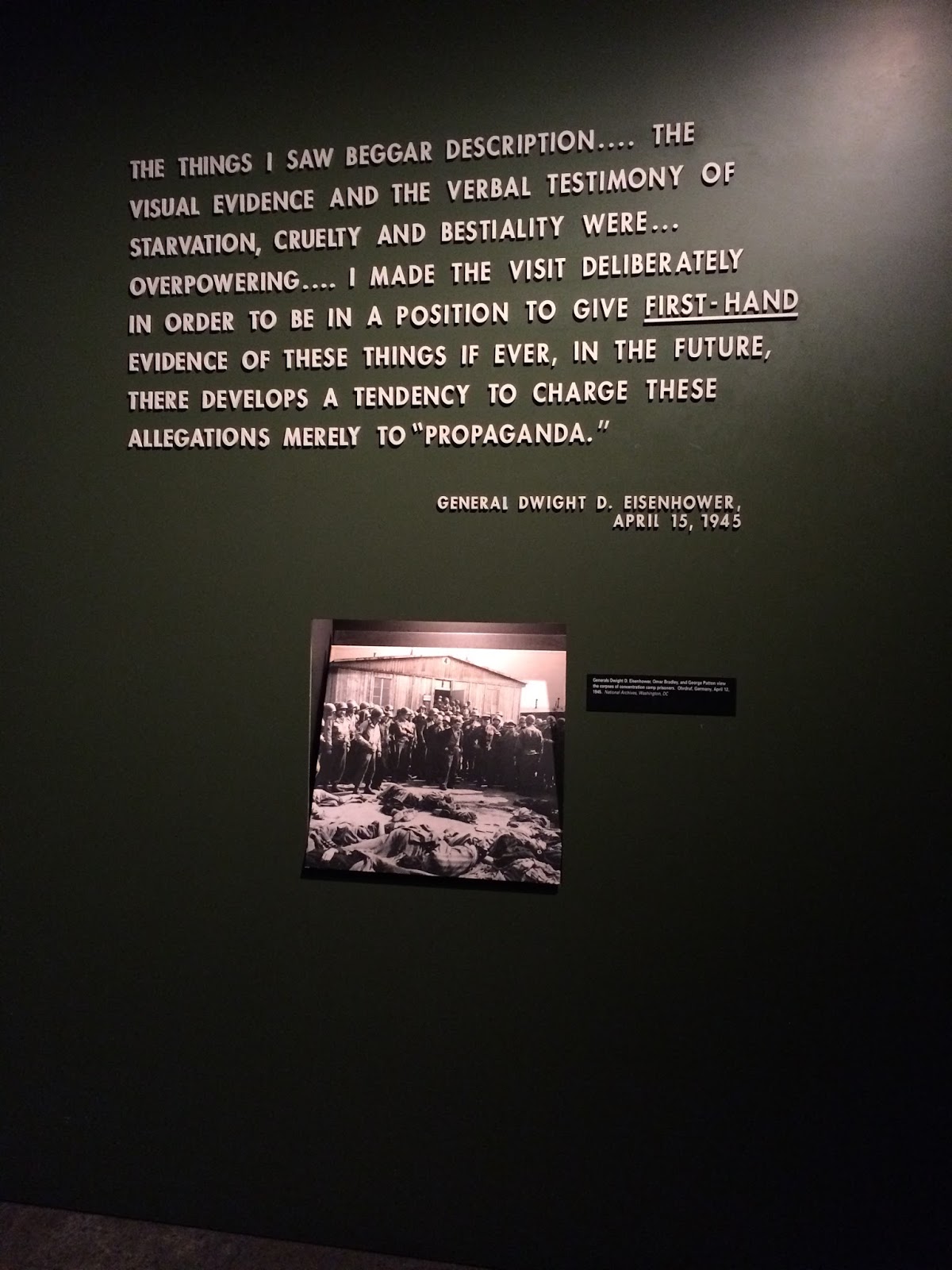
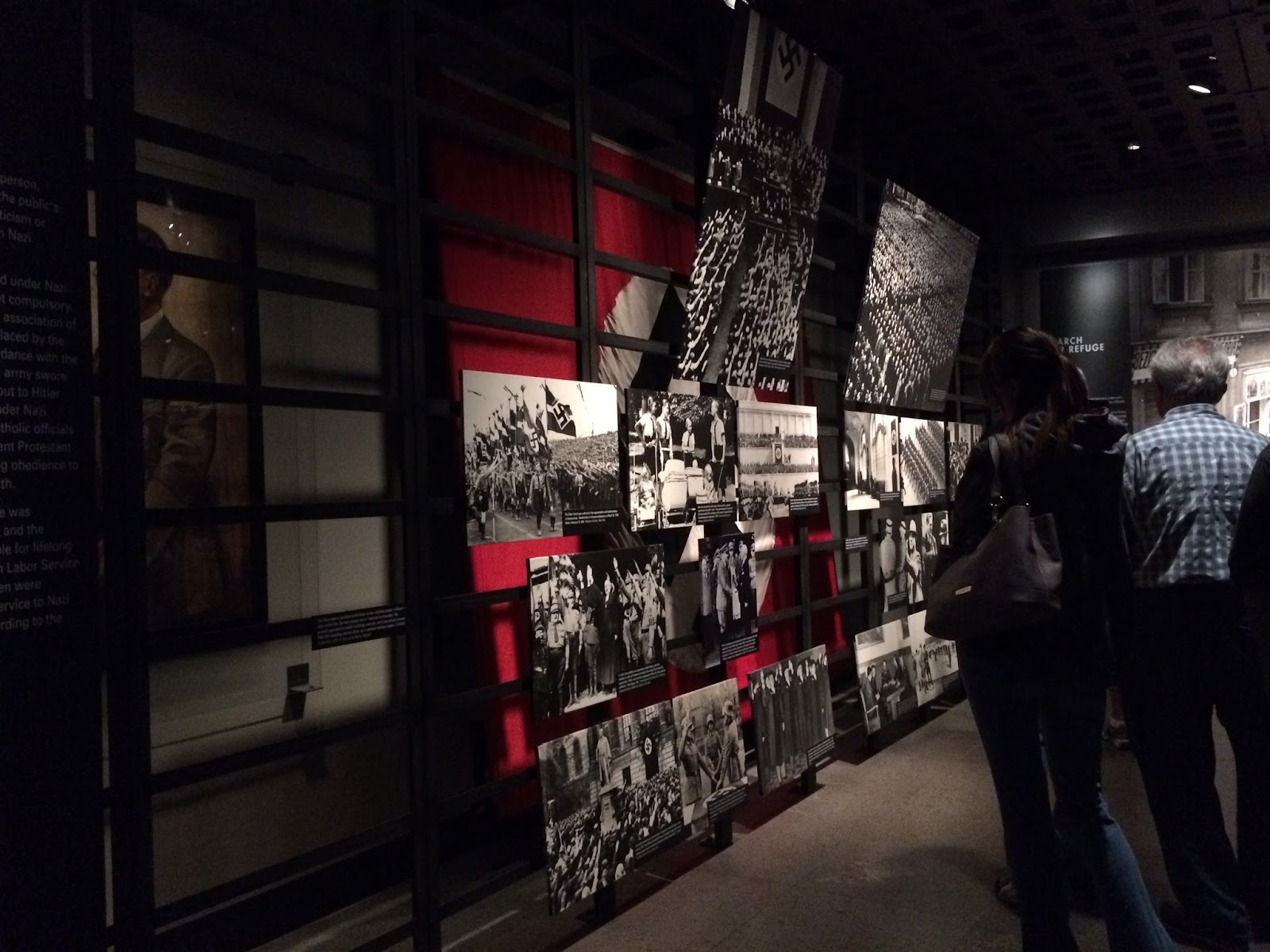
The 4th floor gives a timeline of events and activities leading up to Hitler’s rise in power. You learn about the steps he took to rise to power, the first steps of racial inferiority, and what the rest of the world was doing about it. Hitler did not work in secret. This was not an underground movement that just merged it’s ugly head once it had power. He worked in the open. He authorized the creation of “labor camps” just weeks after he became chancellor. The rest of the World knew what was happening, but they wanted to stay out of it. Spend the money on our own problems was the anthem of the day.

 |
| Hitler’s army of storm troopers gained larger numbers than that of the German Army. Once he became Chancellor, he used them to enact revenge upon his political opponents. “Blood Sunday” and the “Week of Blood” were the beginning of the state violence from Hitler’s regime. |
The “Night of Broken Glass” was November 9, 1938. Hundreds of Germans took to the streets and destroyed Jewish businesses in synagogues. Over 250 synagogues were destroyed. Businesses were not allowed to reopen unless they were headed by a non-Jewish person. The following morning, over 30,000 Jewish men were arrested and sent to concentration camps for the crime of being Jewish.
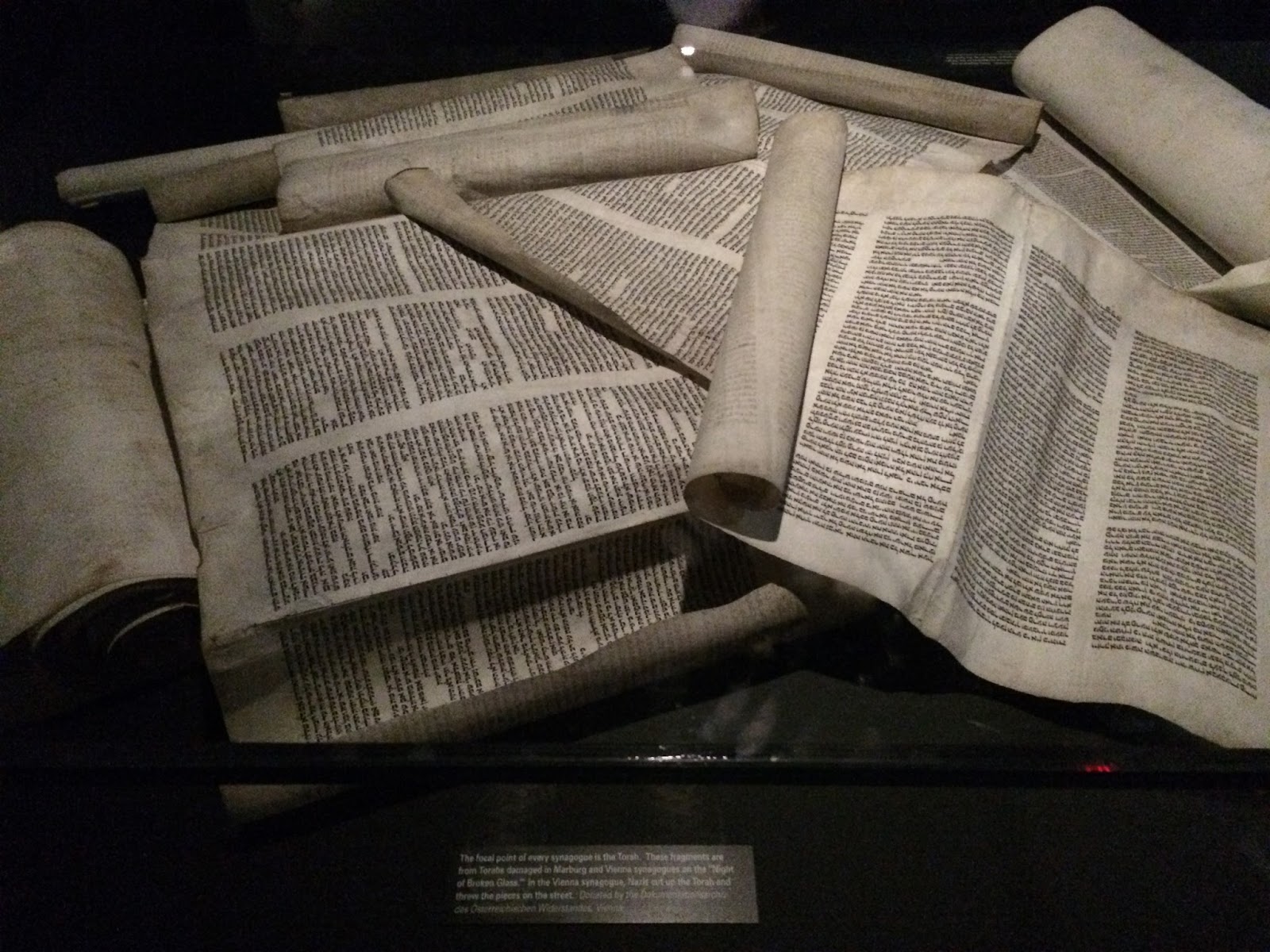 |
| The remains of a Torah from a synagogue in Vienna that was destroyed on “The Night of the Broken Glass” |
 |
| The Arch is a centerpoint in every synagogue as it is where the Torah is housed. This Arch is from a synagogue in Nenterschausen. |
 |
| The inscription read “Know before whom you stand” |
 |
| The arch before The Night of the Broken Glass. |
 |
| Synagogue after. |
 |
| This is a map of how many Jews emigrated to each country. The United States was very stingy with allowing immigrants, but they made it a point to take the top intellectuals and artists of the time. Einstein was one of them. |
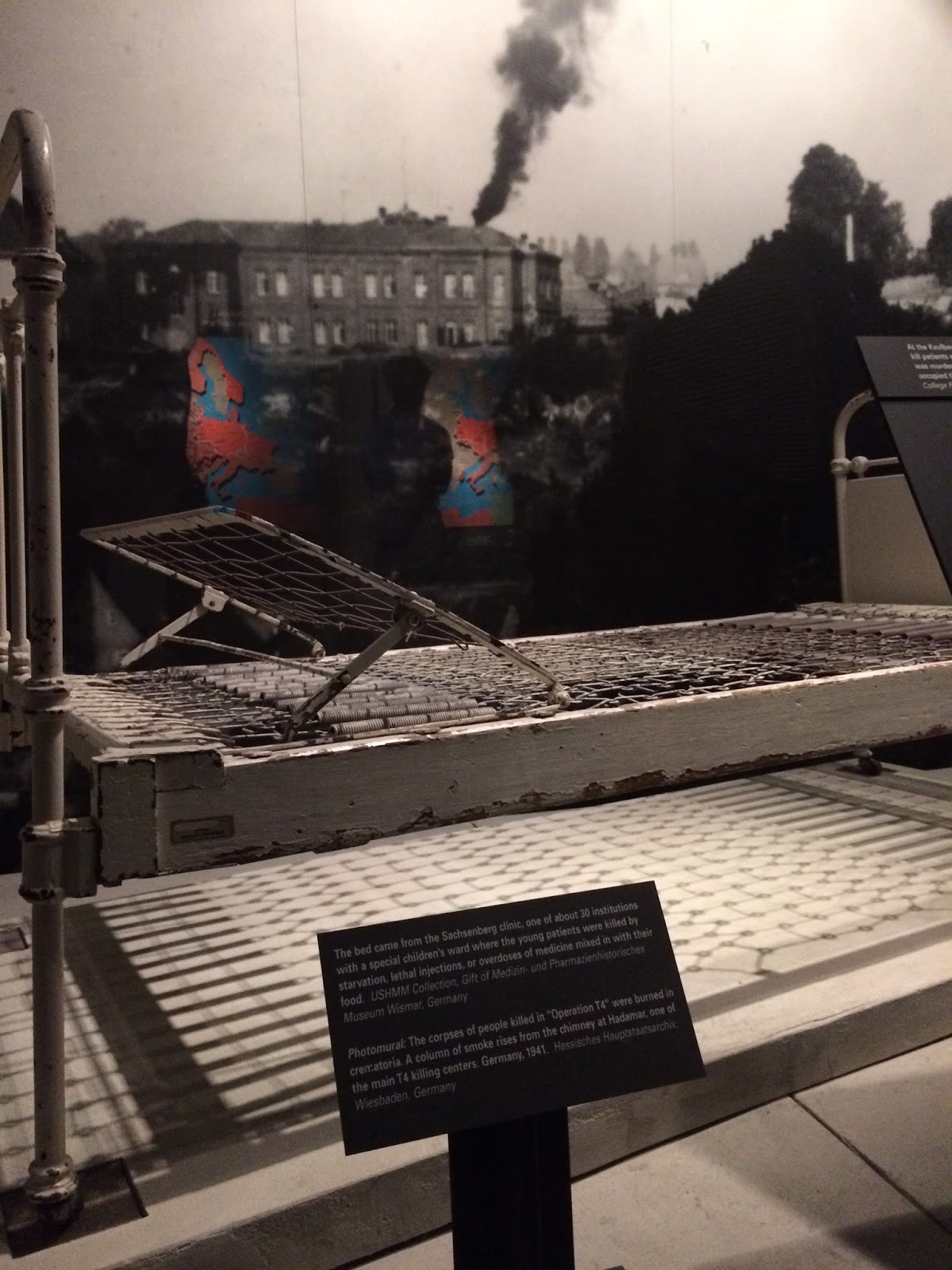 |
| A bed from a children’s ward. In the photo, smoke rises from the chimney of Hadamar, one of the main T4 killing centers. |

 |
| German police executed 1,700 civilians in the Polish village of Palmiry. The picture was taken shortly before the execution, and the stump was the marker for the mass grave. |

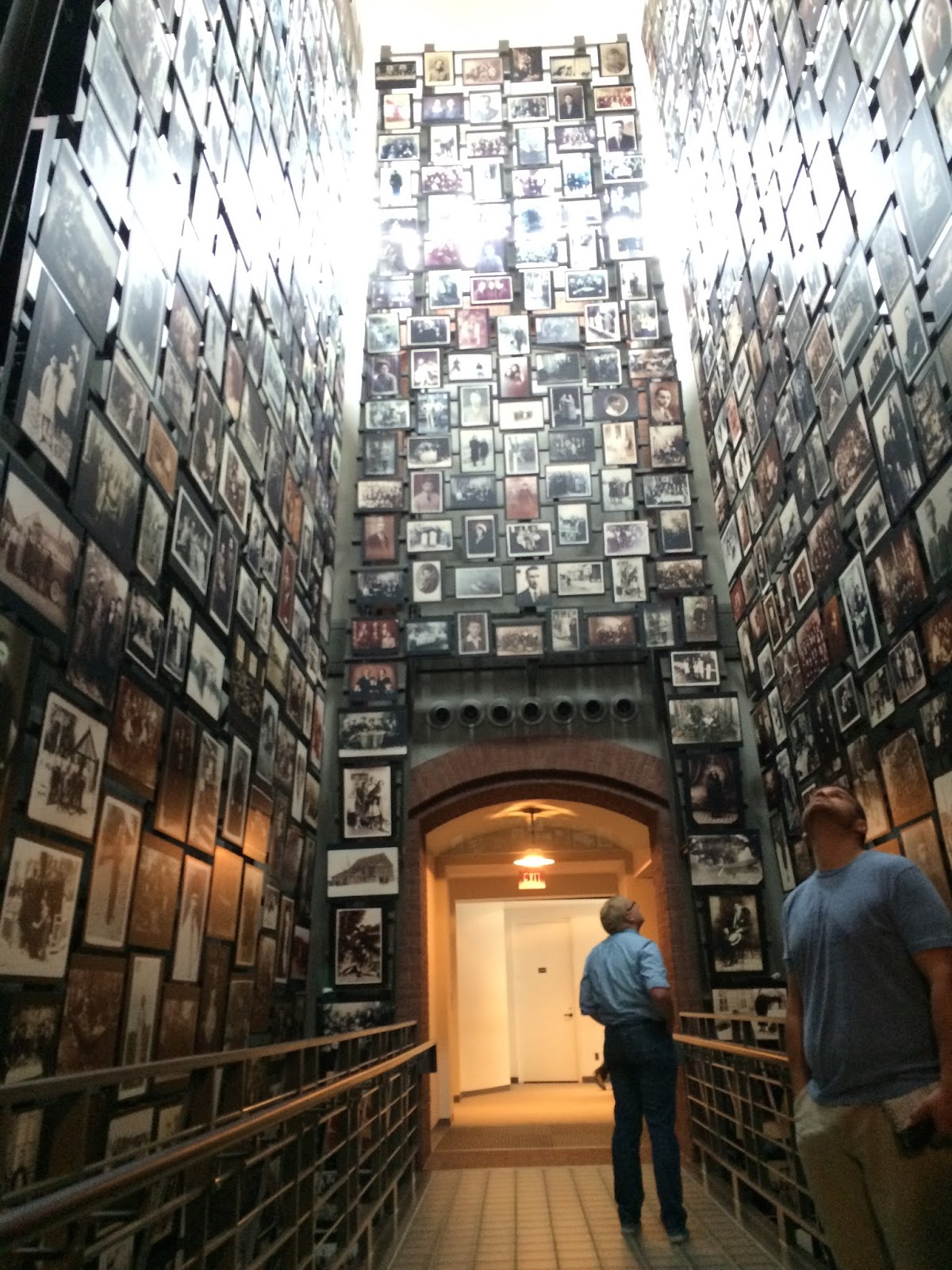
These photos were rescued from a prominent photographer in a Shtetl, a Jewish community. These photographs lined this hall through 3 stories. Statistically, two in every 3 people in these photos did not survive the Holocaust.


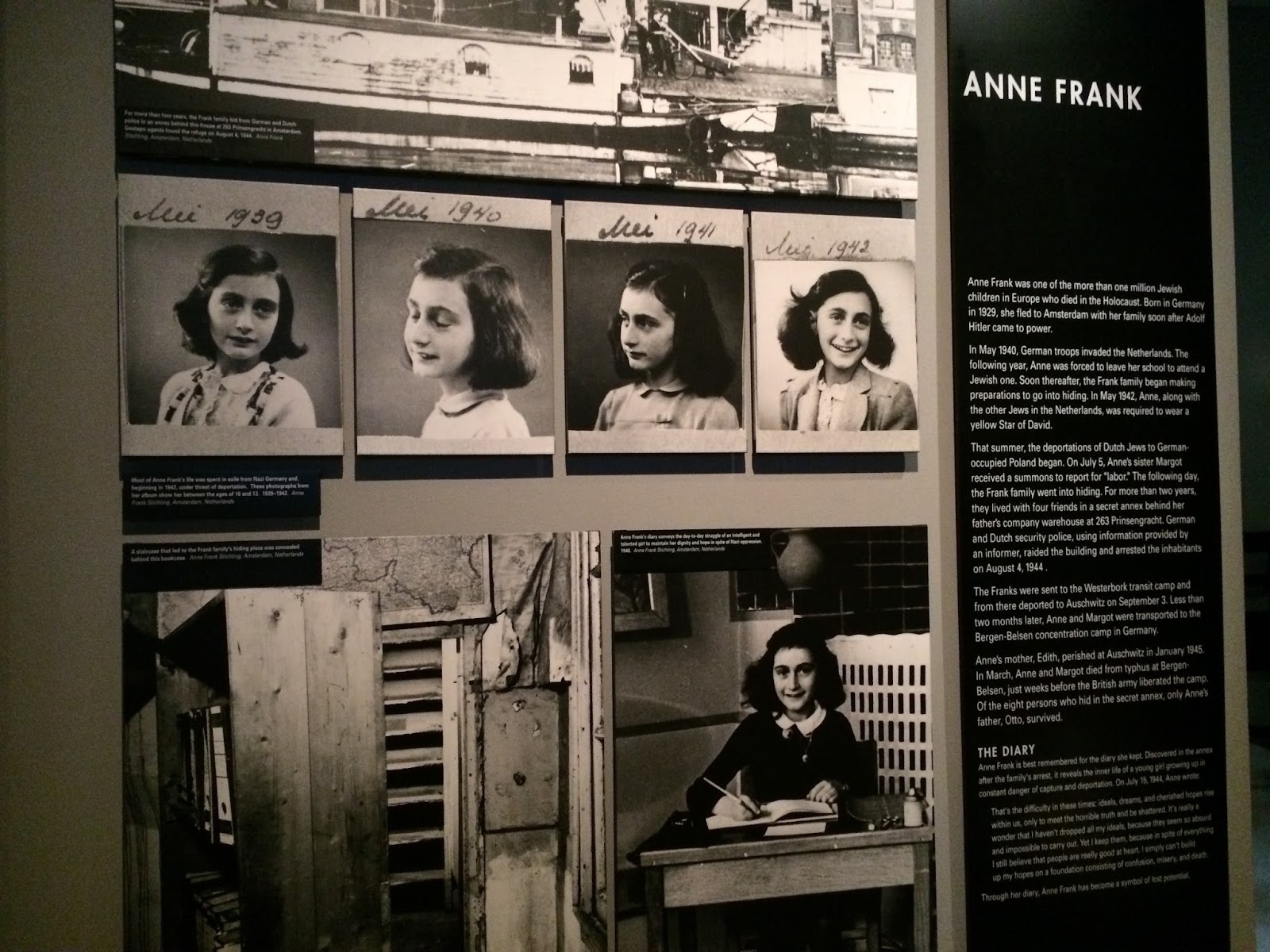
1933-1939: Our store sold fabric and various clothing items and accessories from buttons to shirts and stockings. After Daniel and I retired, our daughters took over the business. In 1939 Germany invaded Poland. Latvia, at the time, was still a free nation.
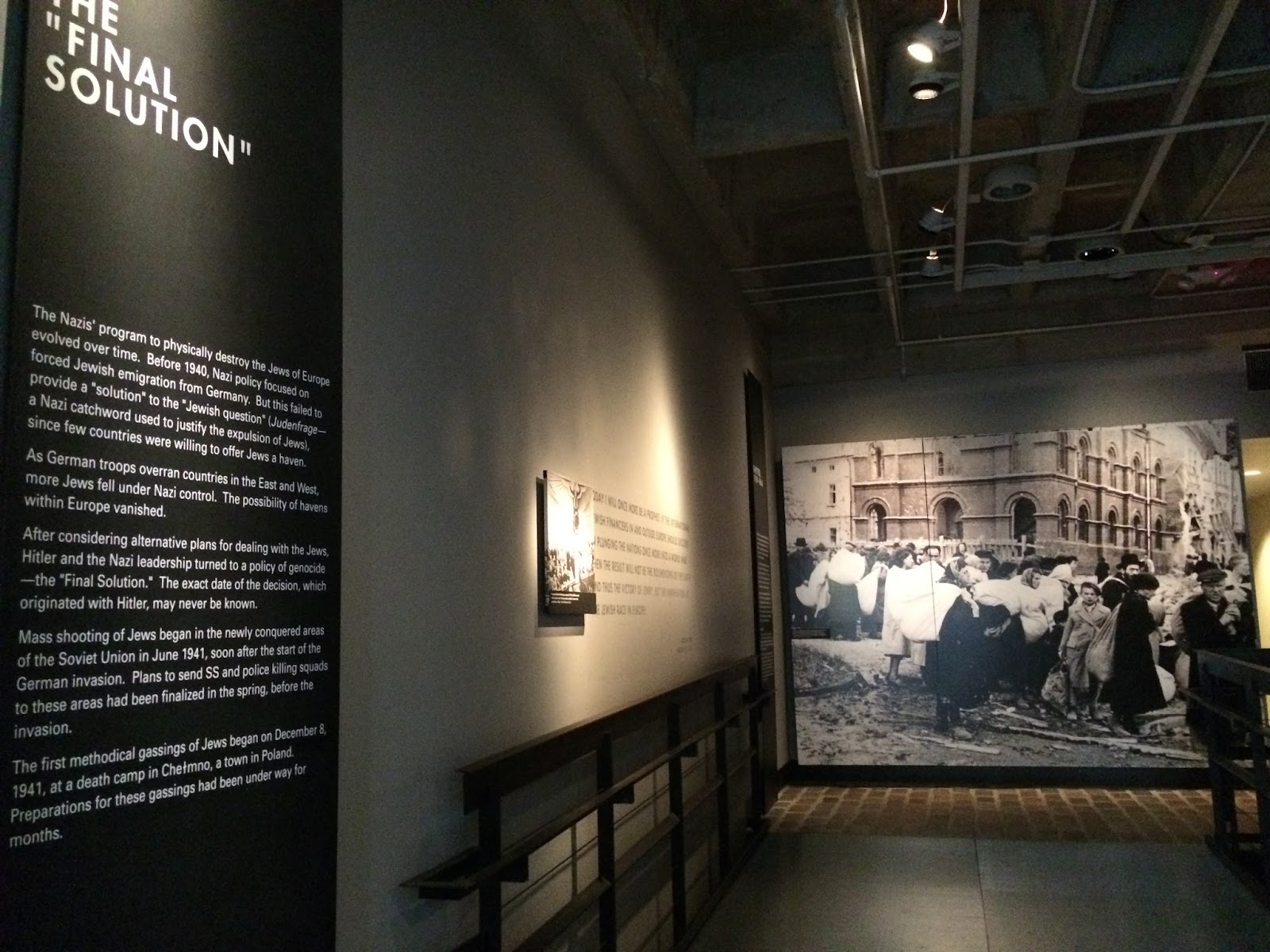
1940 marked a turning point in the Holocaust. Up until this point, the plan was to run the Jews out of Germany. Forced emigration is what they called it. However they were finding that many other European countries did not want the Jews and were denying emigration. So in late 1940, Hitler and his Nazi party decided that the Final Solution to the “Jewish Question” would be Genocide. Mass shootings began in occupied areas of the Soviet Union in June 1941, and the first gassing occurred in the concentration camp in Chelmno Poland, Dec 8, 1941.
The 3rd floor walks through the progression of the Final Solution. From capture and the forced relocation to created “ghetto’s,” to the gas chamber in the death camps.
 |
| A replica train car like those used to transport Jews. They had standing room only and would sometimes travel for days in the freezing temperatures with no heat, no food, and no water. |

Six concentration camps were used as extermination camps, or death camps. When the “prisoners” arrived they were immediately sorted into “immediate death” and “extermination through work”, a process called the Selektion. At death camps Chelmno, Bełżec, Sobibór, and Treblinka, all except a handful of prisoners were sent to immediate death. The few who remained alive were put to work burning and burying the bodies of the others.
At Auschwitz-Birkenau and Majdenek, people who could work were spared from the gas chamber and were used for slave labor. Upon arrival, Selektion would take place and all elderly, sick, weak, pregnant women, and children were sent to immediate death.

The museum has a large scale replica of the Auschwitz Crematorium II. Auschwitz had 4 of them, each of which could incinerate more than 1,000 people per day. Victims would enter believing they were going to the “shower room”, but the spigots on the ceiling released gas instead. The bodies of the dead would be removed and burned in the connecting crematoria by slave workers.
About 1 million Jews, and thousands of non-Jewish victims, were killed at Auschwitz-Birkenau.
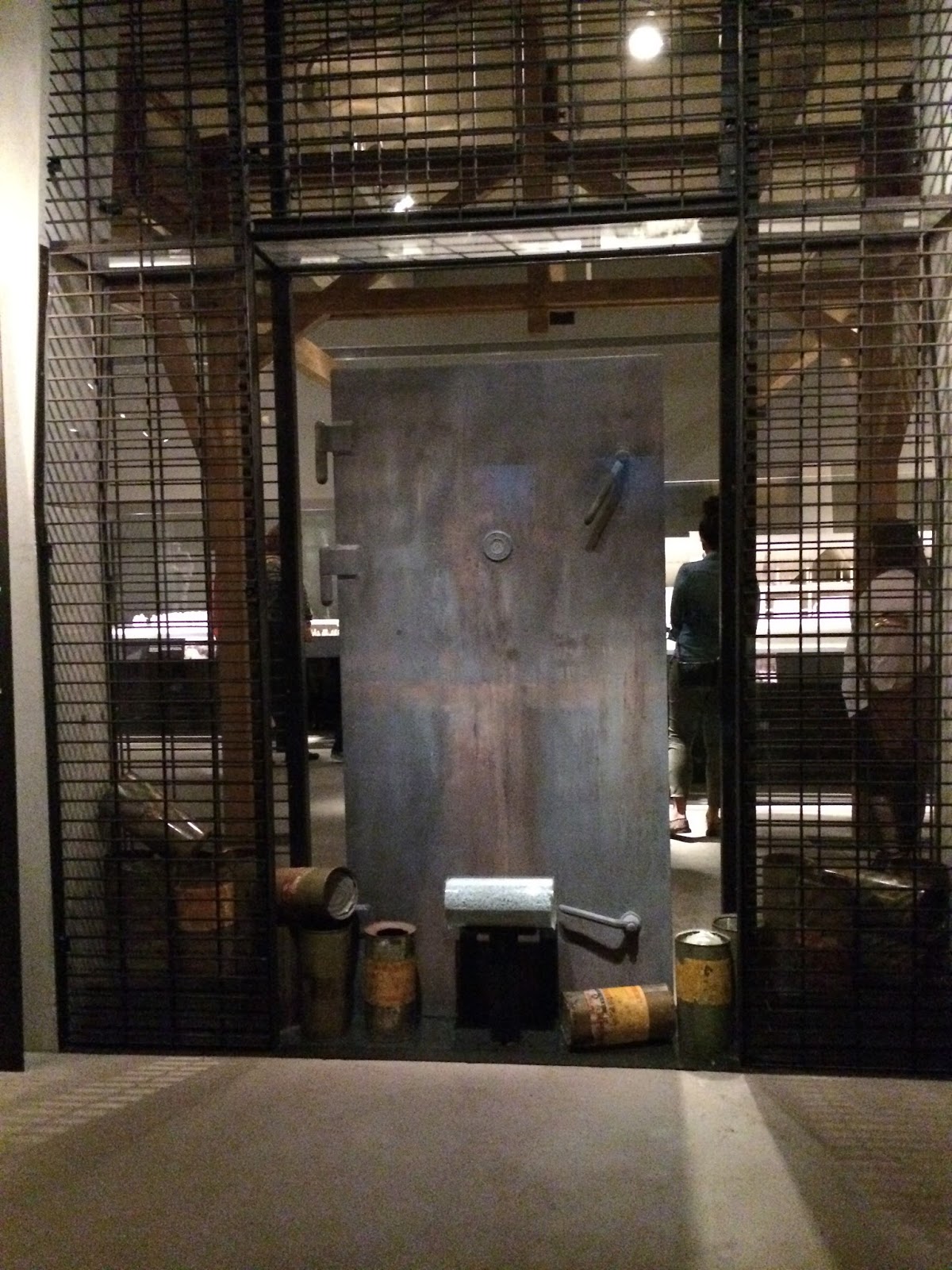 |
| Cast replica of a gas chamber door from Majdanek, Poland |
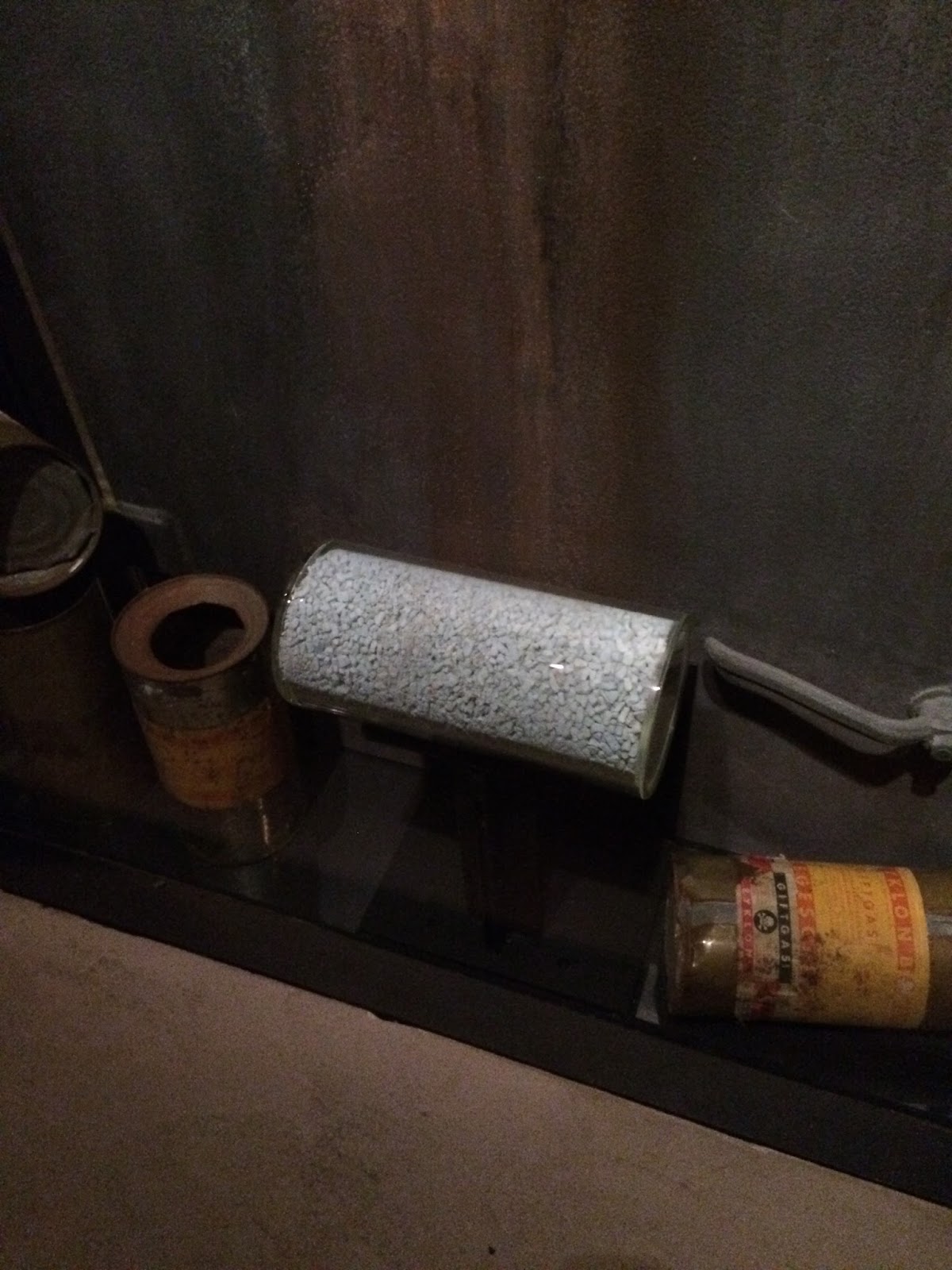 |
| Cylinders of Zyklon B, the agent used to gas victims, was found at Auschwitz. |
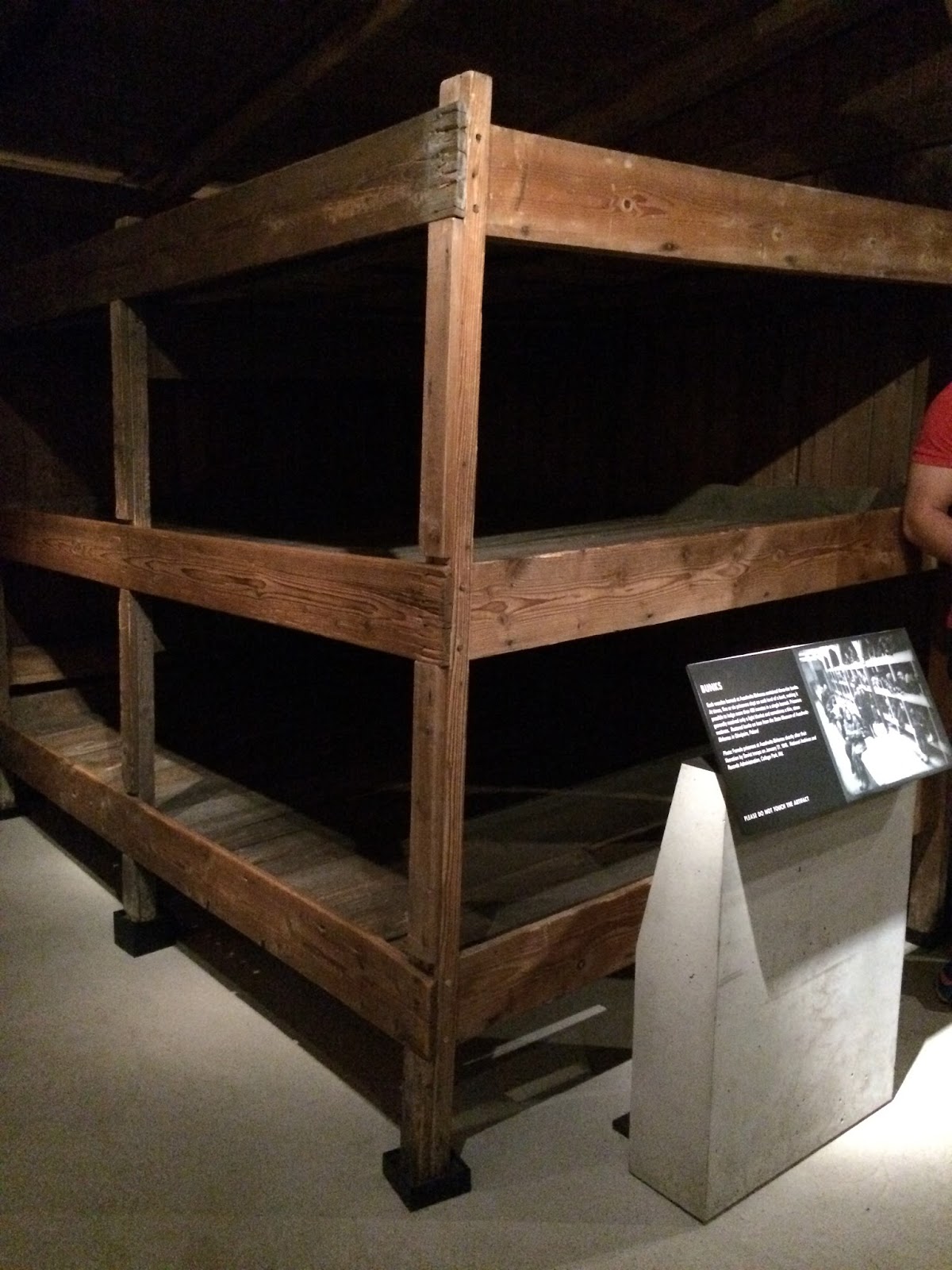 |
| Prisoners would sleep 3 to a bed, with a “bed” being one segment of this bunk. |

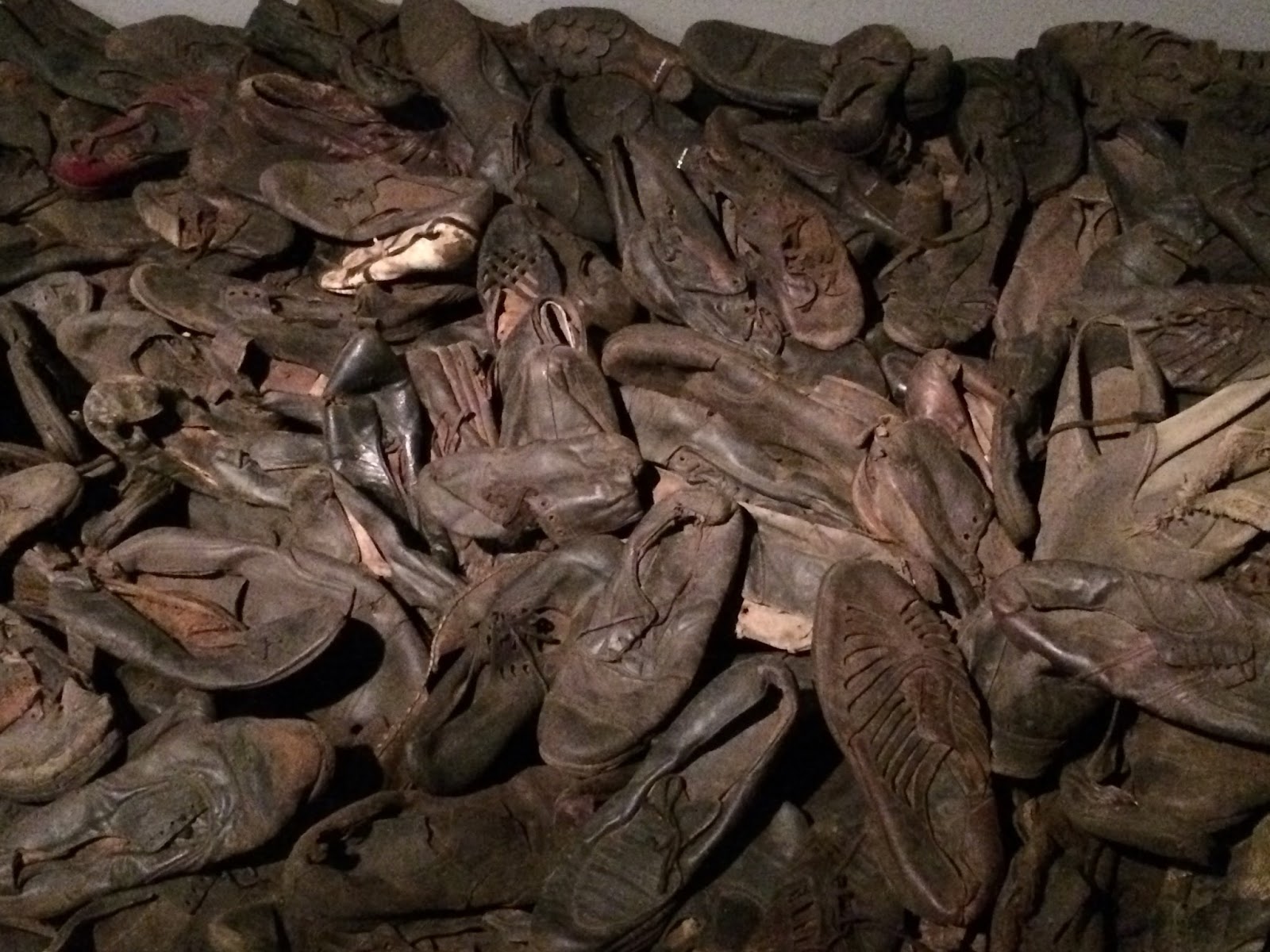
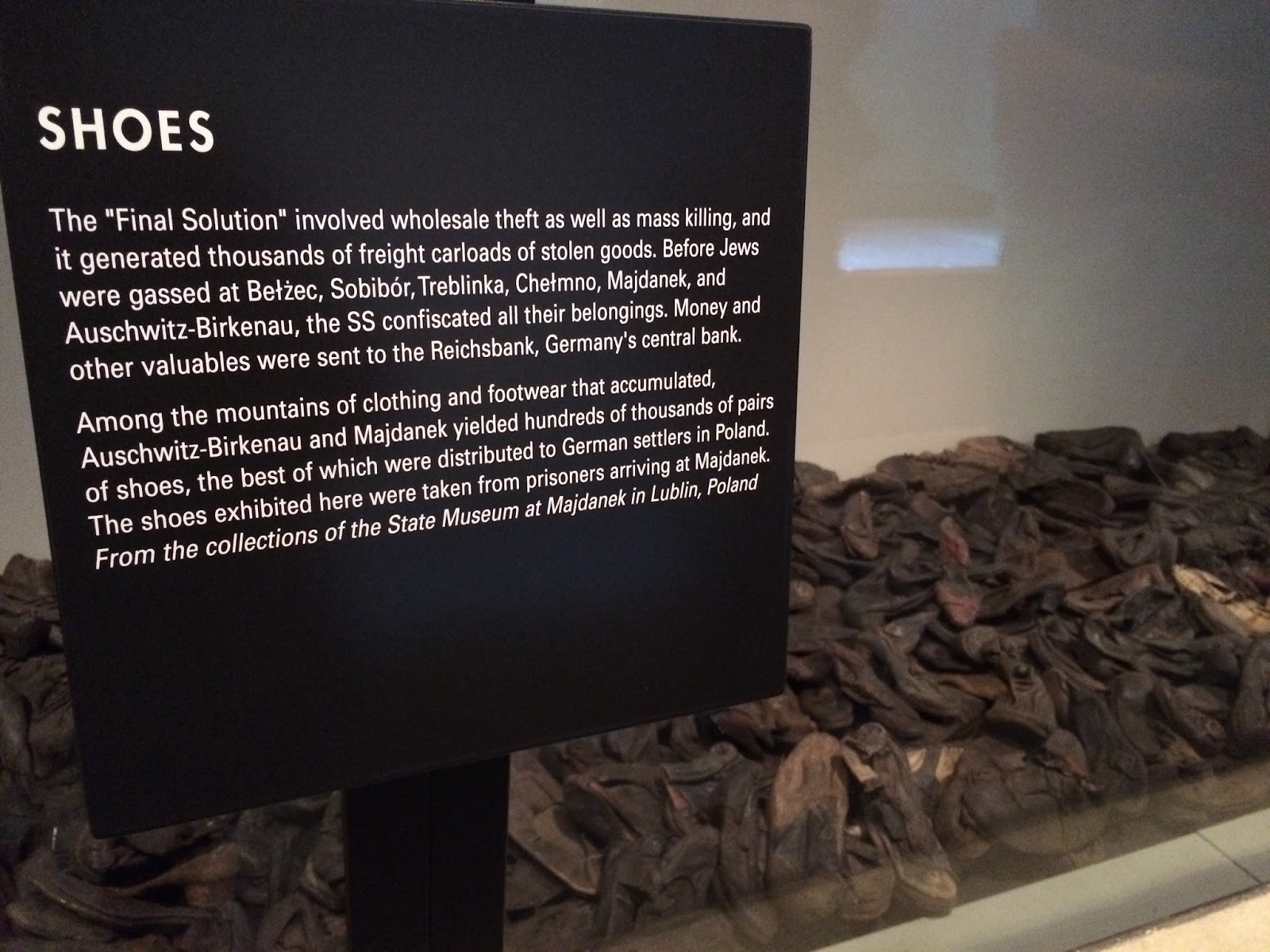
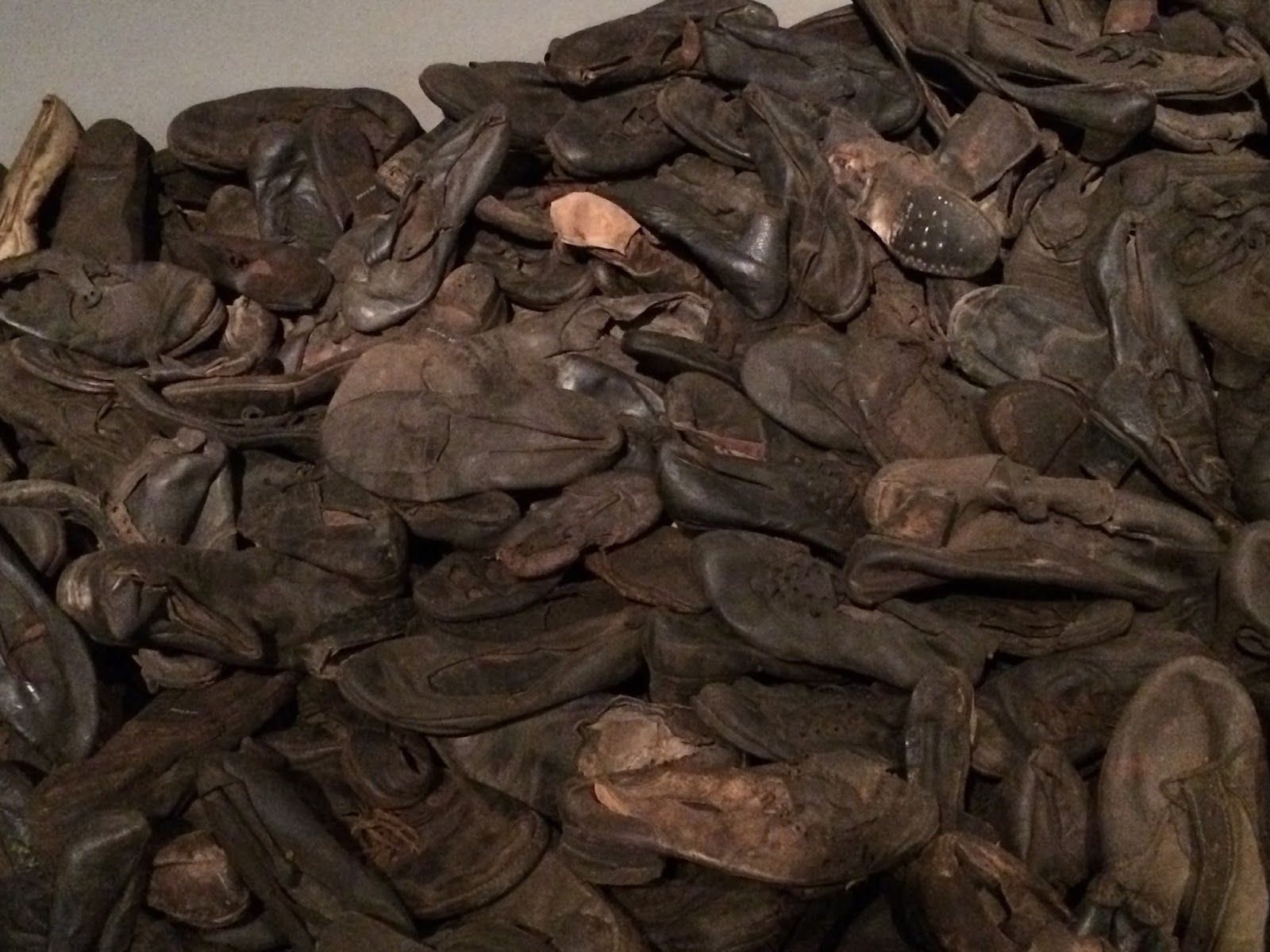
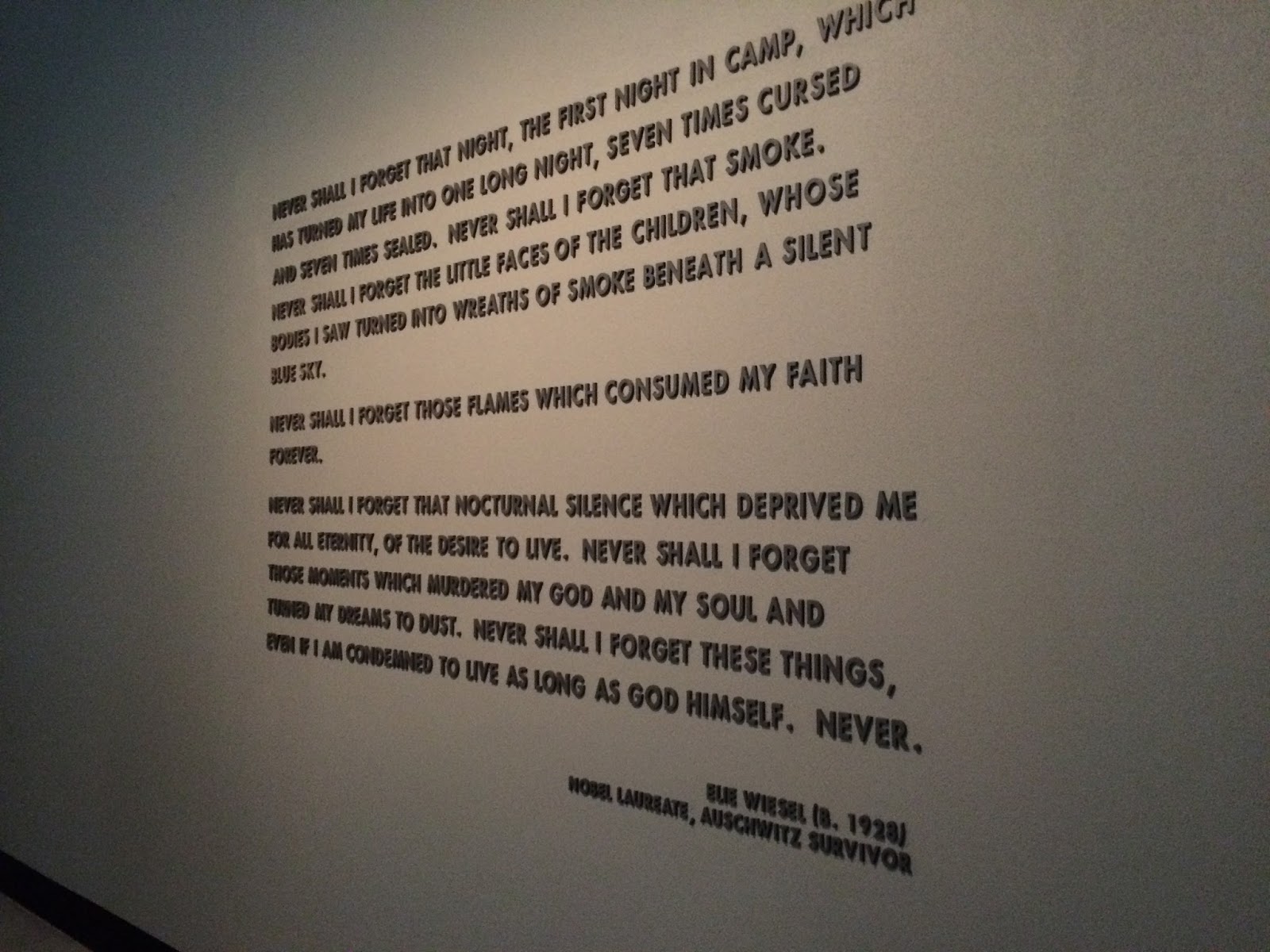
1940-1941: German troops entered Liepaja in June 1941, a year after the Soviets occupied Latvia. Daniel and I were ordered to report to the local police station to register and return our valuables. Within weeks of the occupation, mass executions were carried out by the Germans on the Baltic coast. Between September and December hundreds of Jewish men and women were killed because they were classified as “unfit for work.”
“The final floor of the Permanent Exhibition addresses the possibilities for responding to the Holocaust in the face of mass indifference.”
The 2nd flood of the museum is tells the end of the story. It tells the story of rescue and resistance. When the German’s invaded, most countries would turn over their Jews for fear of their own lives. To protect a Jew was incredibly dangerous, but some pockets of resistance could be found and some Jews were saved by the communities they lived in.

This boat was part of an operation code named “Helsingør Sewing Club,” wherein 7,000 Danish Jews were secretly ushered across the sea by Danish fisherman, from German-occupied Denmark to neutral Sweden, to protect them from persecution.
 |
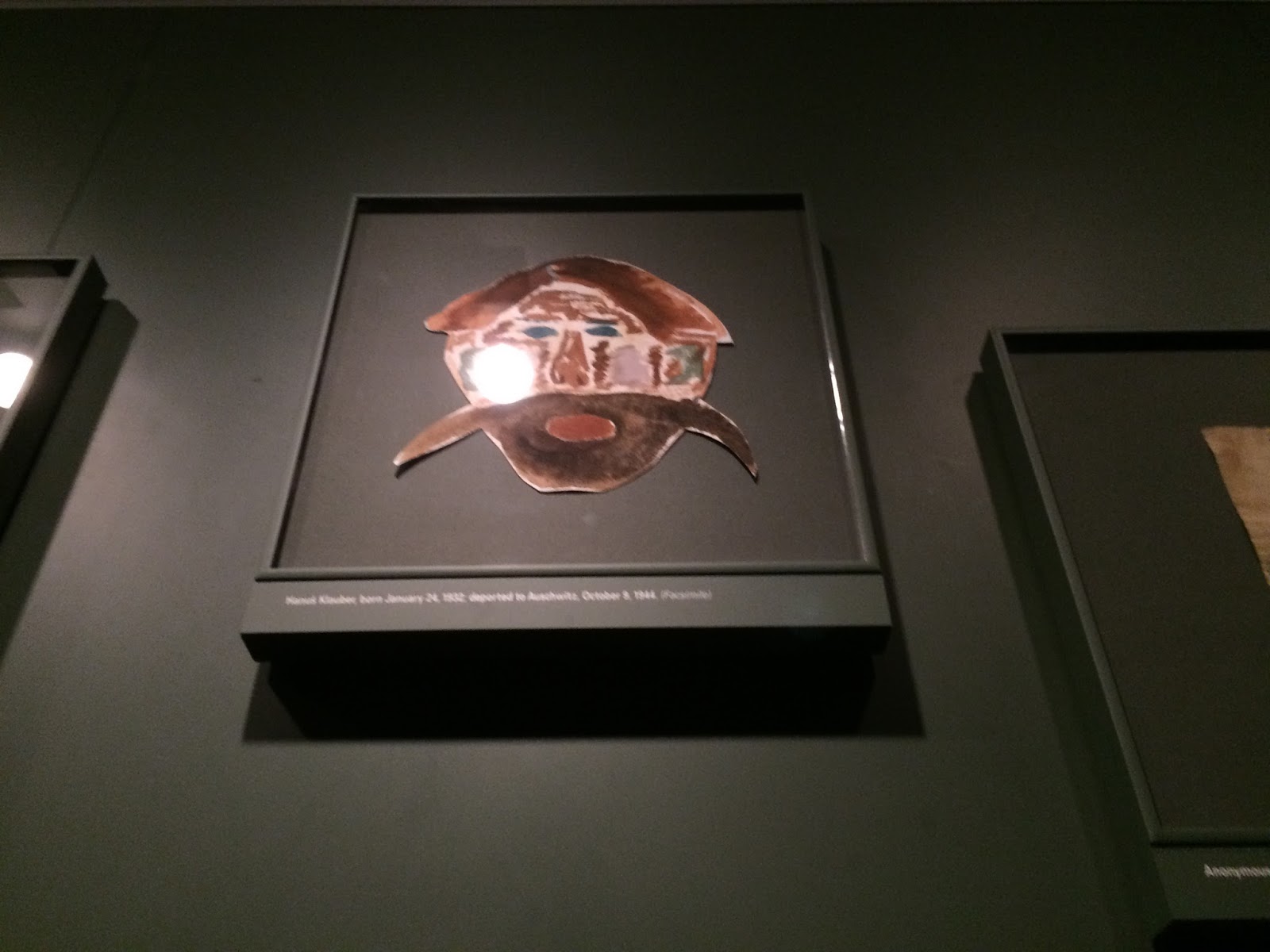
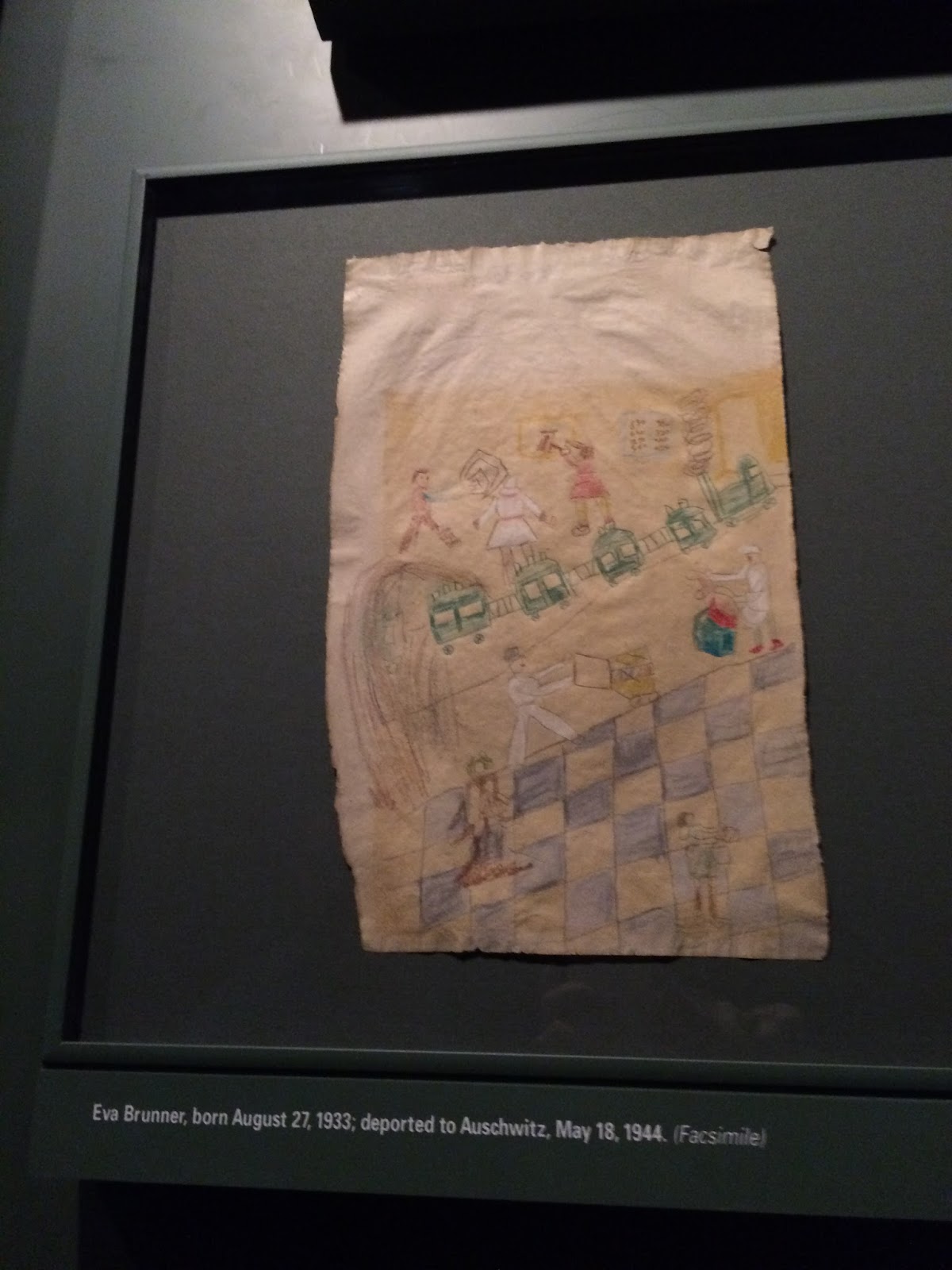
| Artwork from the children in Theresienstadt Ghetto |
 |
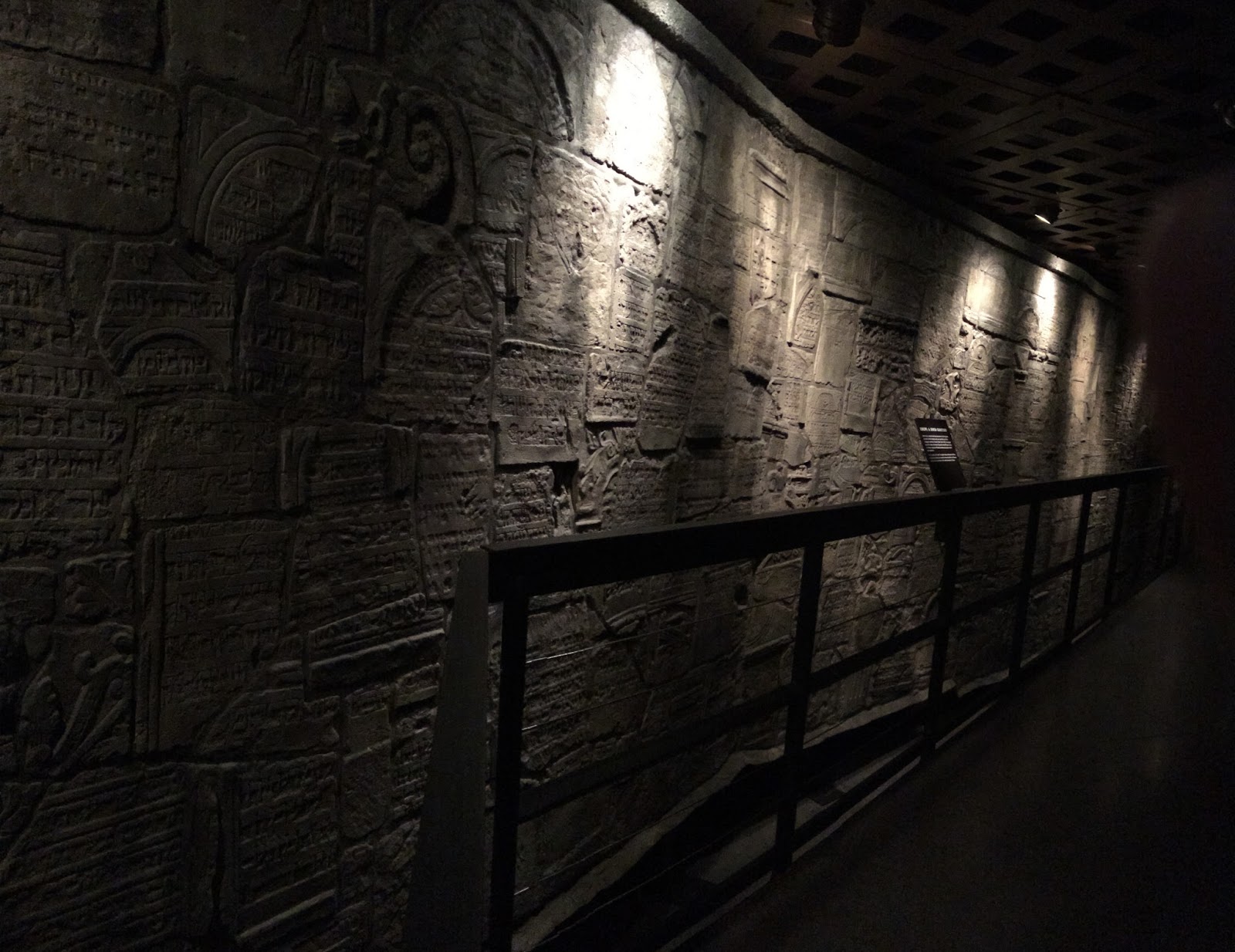
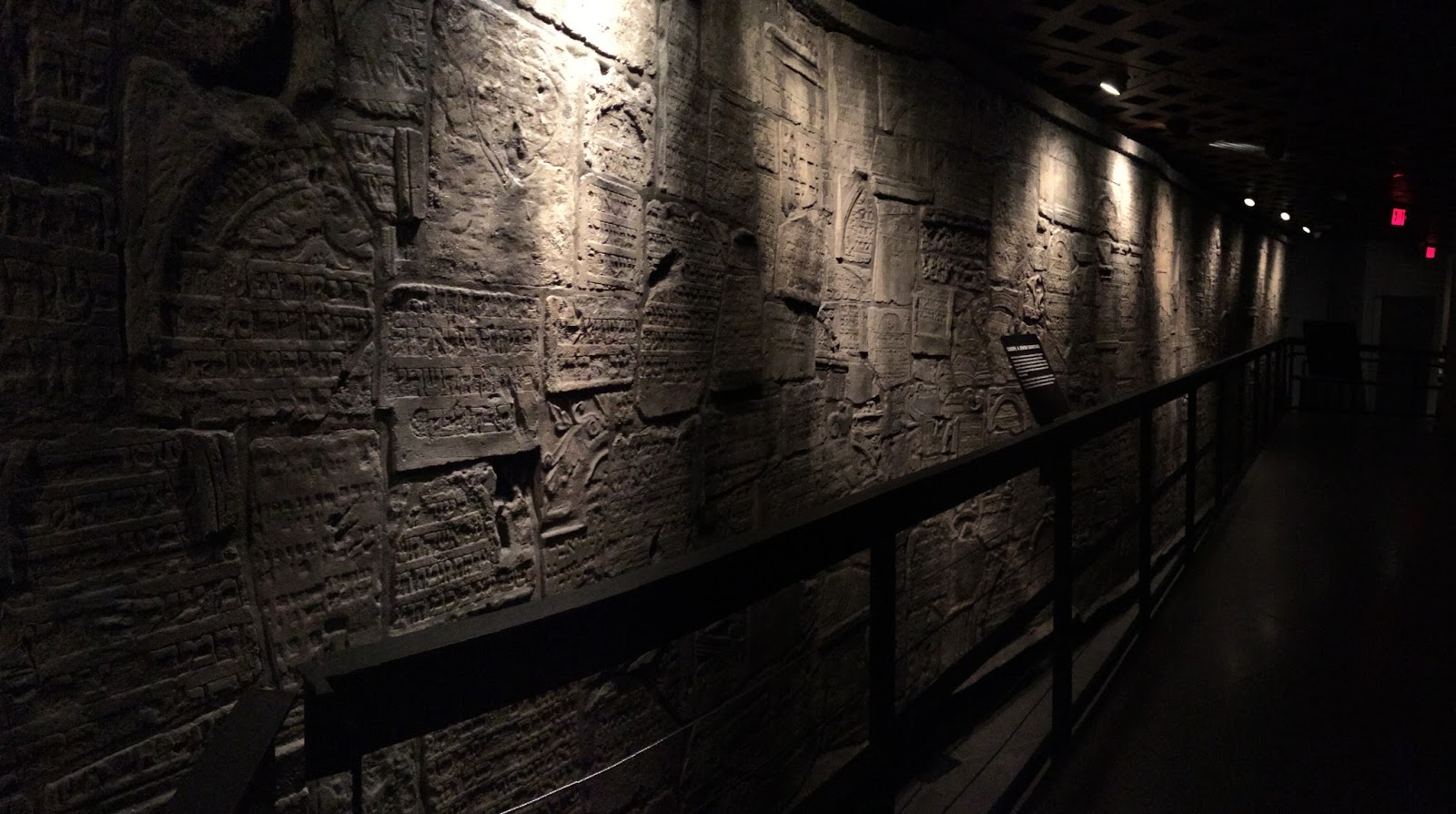
| “After the war, a memorial wall was constructed out of the fragments of several hundred tombstones that were unearthed in the Remu synagogue’s cemetery in Cracow, Poland. Built in 1552, the synagogue served the Jewish community of Cracow for almost 400 years. During the German occupation of Poland its cemetery was used as a site for mass executions. This is a casting of the wall. The original mosaic wall stands in the Remu synagogue’s cemetery as a memorial to the those who died in the Holocaust.” |
In 1941 on Yom Kippir, the Jewish Day of Atonement, Daniel and Bella were arrested and Deported. Neither of them was ever heard from again.
The 2nd floor of the museum also houses the Hall of Remembrance. The hexagonal shape of the hall represents both the 6 million Jews who were killed, and the 6-pointed Star of David. The Eternal Flame lies in the center of the hall. Earth gathered from each site is placed in an urn at the Eternal Flame, and both are overshadowed by the verse from Deuteronomy.

“Only guard yourself and guard your soul carefully, lest you forget the things your eyes saw, and lest these things depart your heart all the days of your life and you shall make them known to your children, and to your children’s children.” -Deuteronomy 4:9

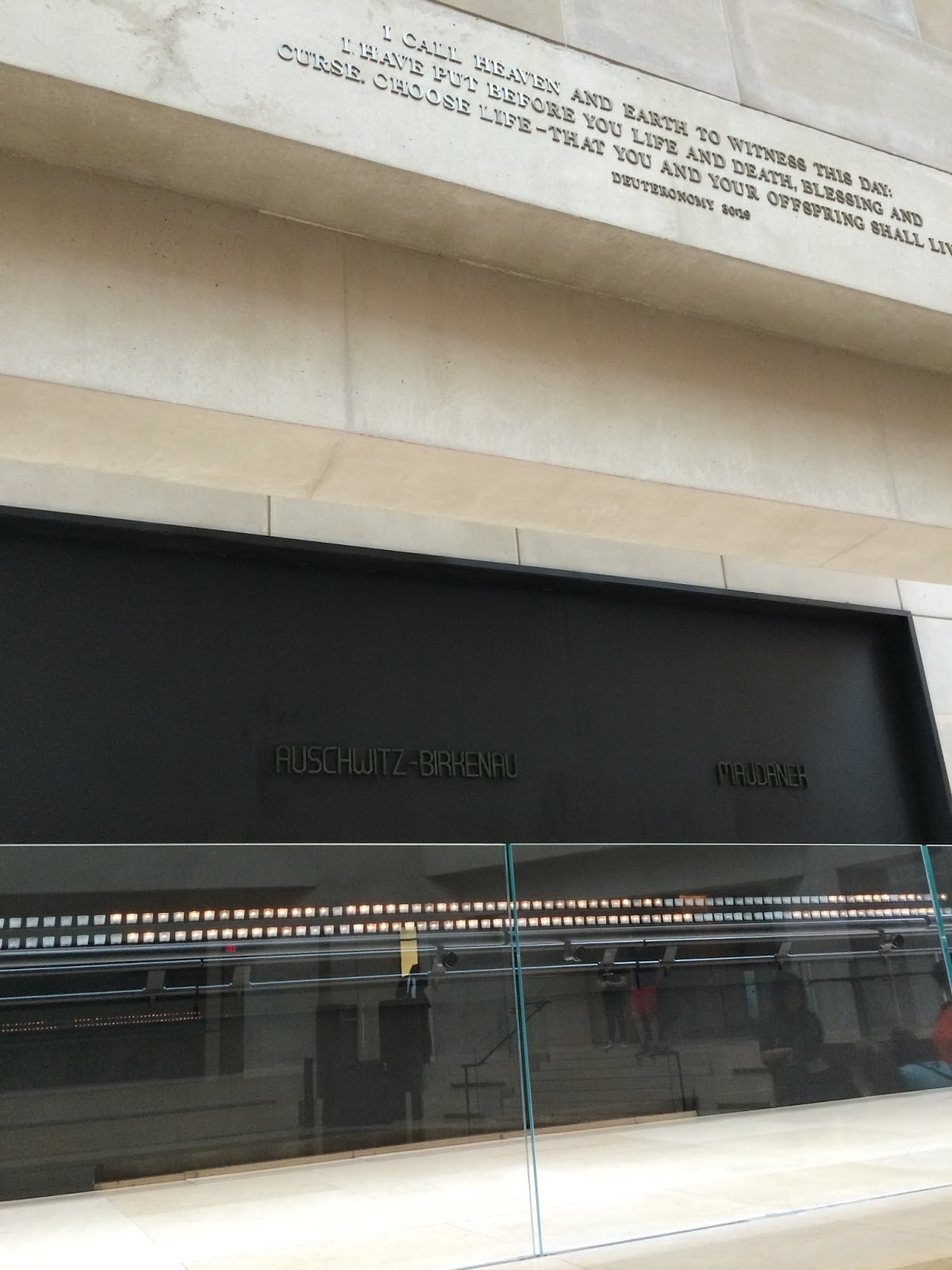 |
| I call Heaven and Earth to witness this day: I have put before you life and death, blessing and curse. Choose life- that you and your offspring shall live. -Deuteronomy 30:19 |
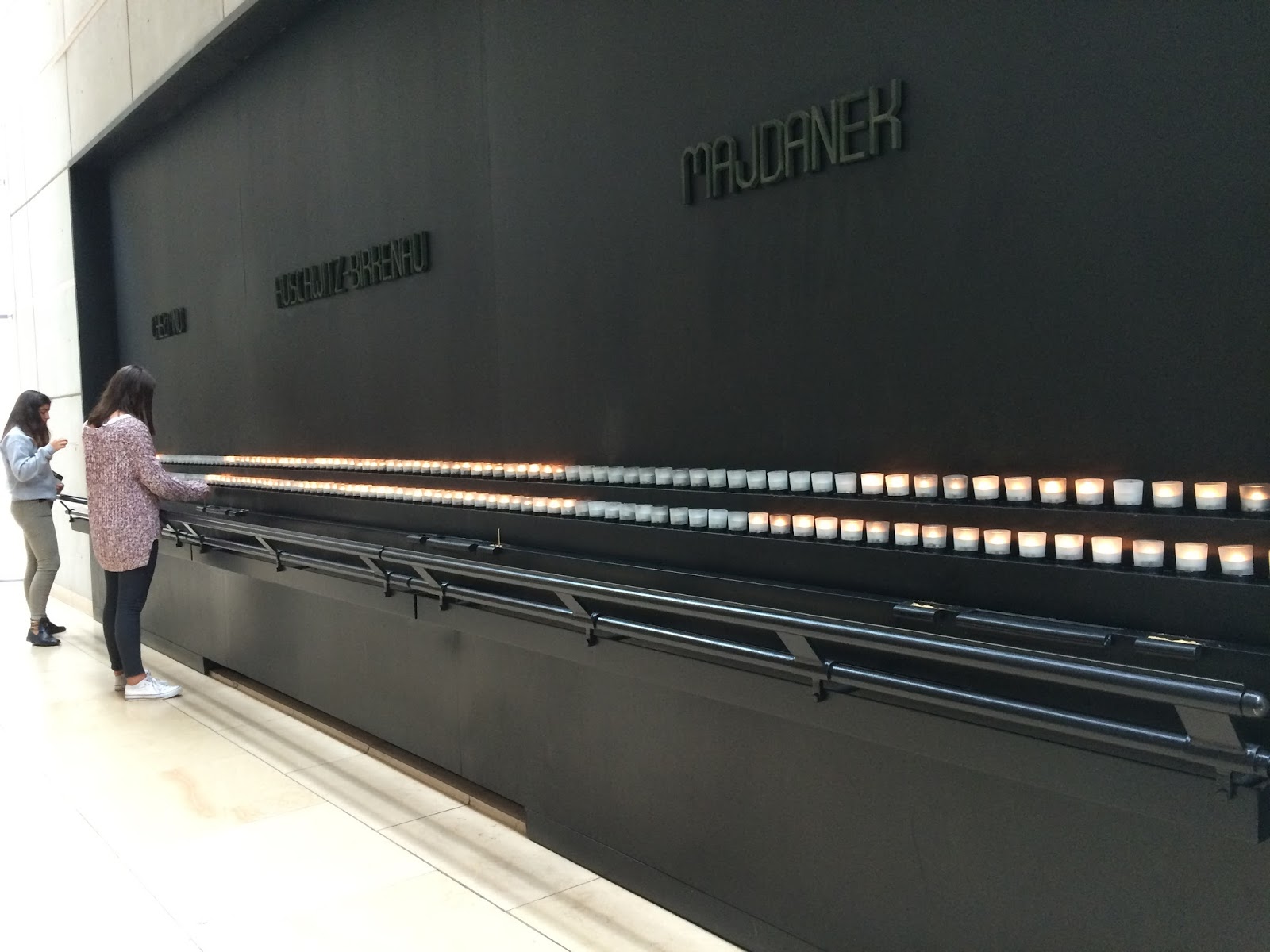

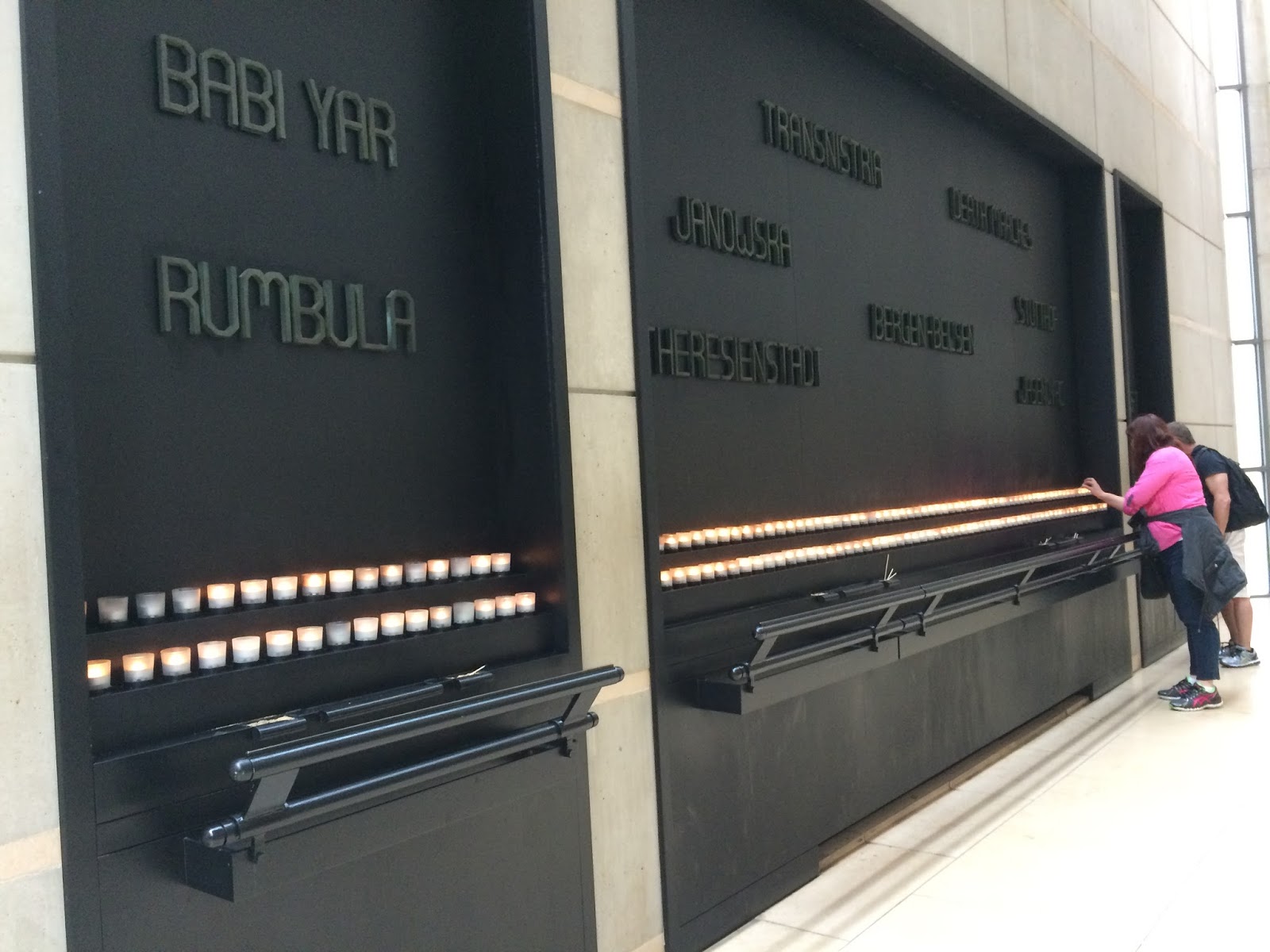

On the first floor, there is Daniel’s Story, an exhibit where you walk through the life of a boy named Daniel, through excerpts from his journal. It starts in a normal Jewish house with a normal life, and progresses through capture, confinement in a ghetto, and on to a concentration camp.
You will find the Children’s Tile Wall on the lower level (basement). It is a wall of ceramic tiles painted by children after hearing the story of the Holocaust.
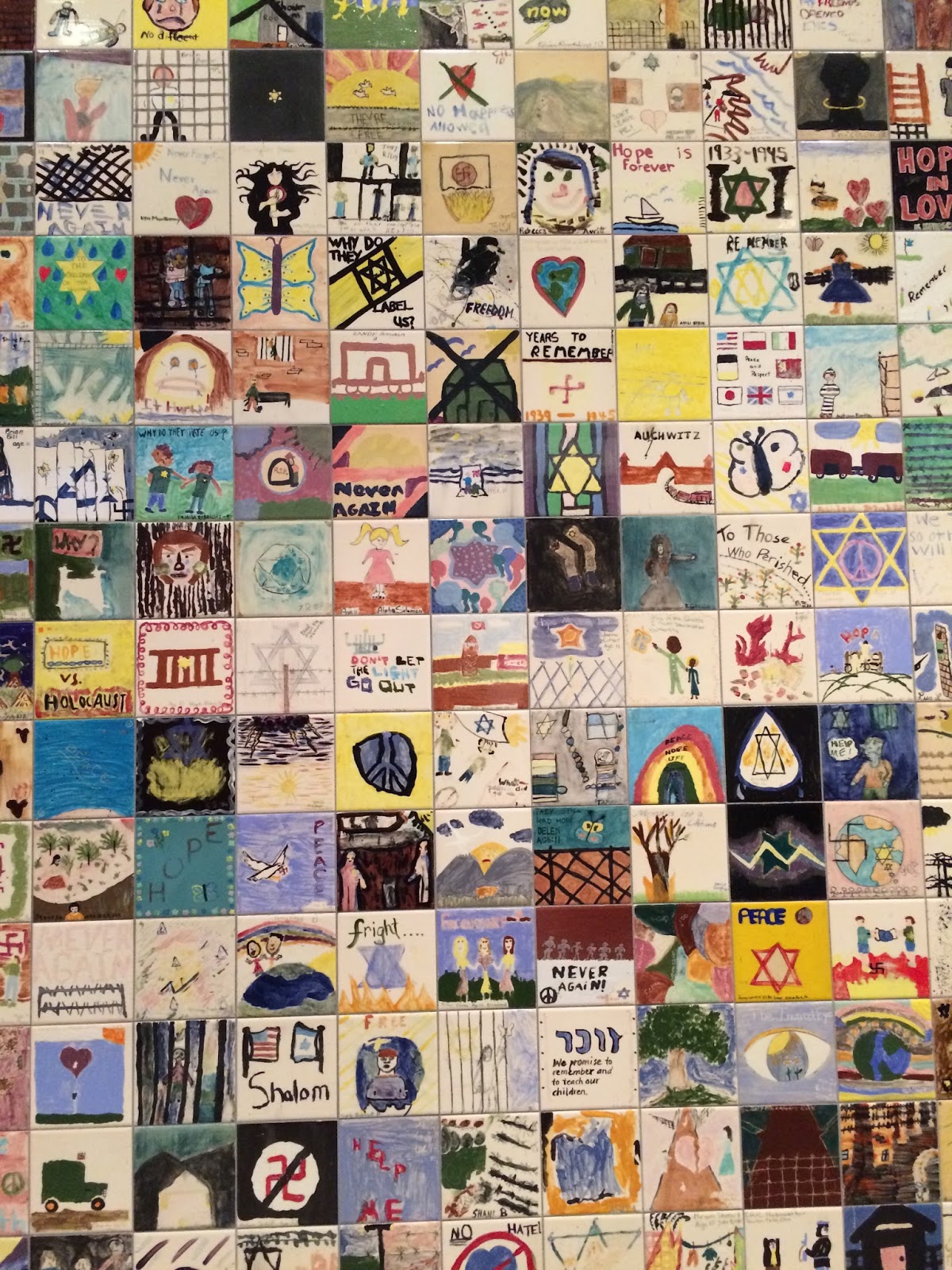

Other exhibits are located on the 2nd floor and Lower Level (basement), including From Memory to Action– an exhibit for more recent acts of Genocide including what is currently happening in Syria, where the question from Holocaust survivor Elsie Wiesel is posed, “When we say ‘never again,’ what does that mean?”
We spent about 4 hours in the museum, and we were both surprised to see the time when we exited. We were so immersed in the experience that we had no concept of how long we were there. I think the thing that really stood out for me is how much the world knew and just turned a blind eye, or ever worse, aided the German agenda.
You can read more about the Permanent Exhibition and artifacts here.
 Tuck & Sundry
So much suffering and torment. So many tears shed and pure heartache for all of those people after reading this. I would be so overcome and consumed by the stories, artwork, and artifacts after visiting this Museum. Thank you for sharing their stories and writing a blog about it.
LikeLike
So much suffering and torment. So many tears shed and pure heartache for all of those people after reading this. I would be so overcome and consumed by the stories, artwork, and artifacts after visiting this Museum. Thank you for sharing their stories and writing a blog about it.
LikeLike