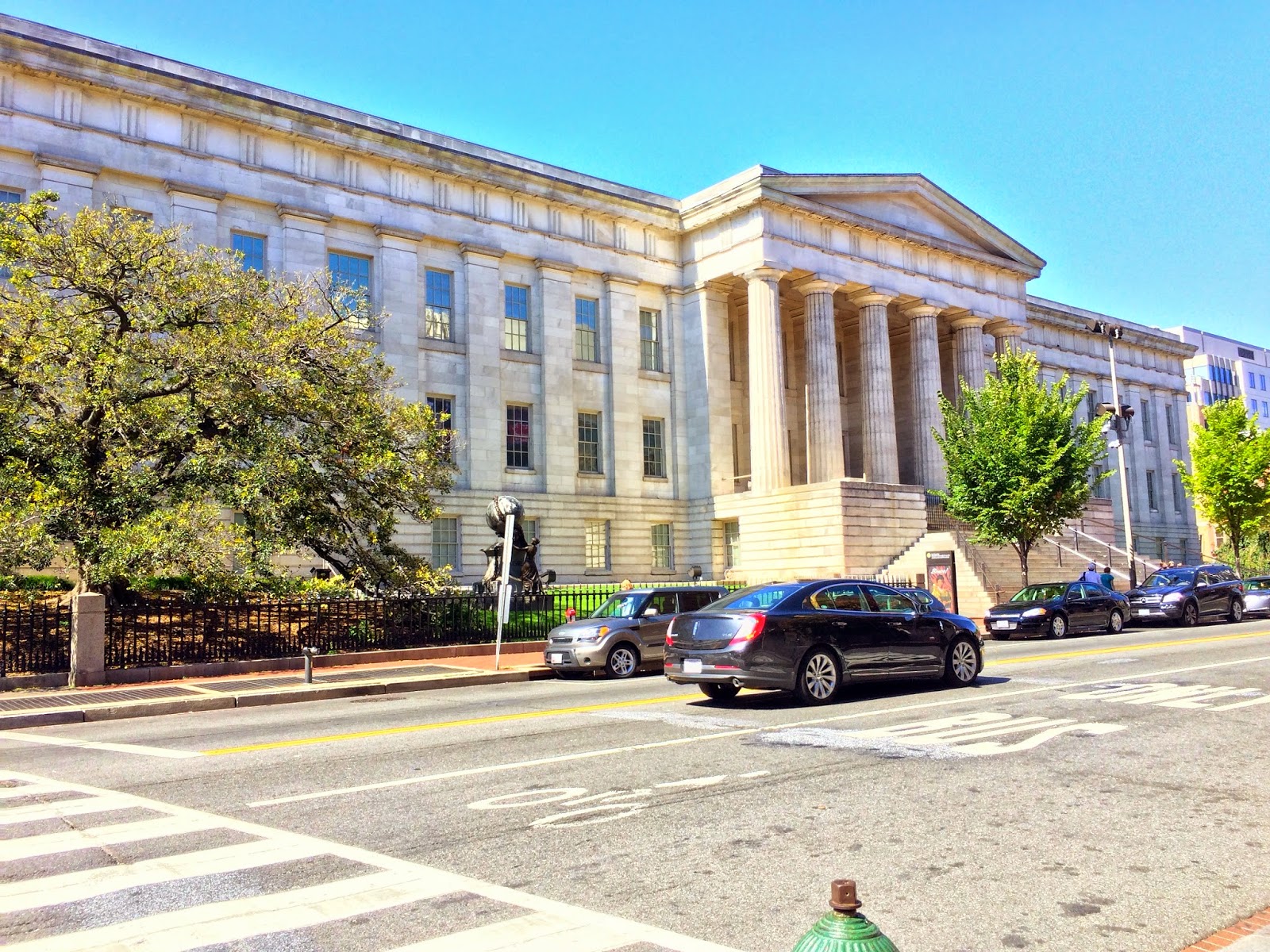
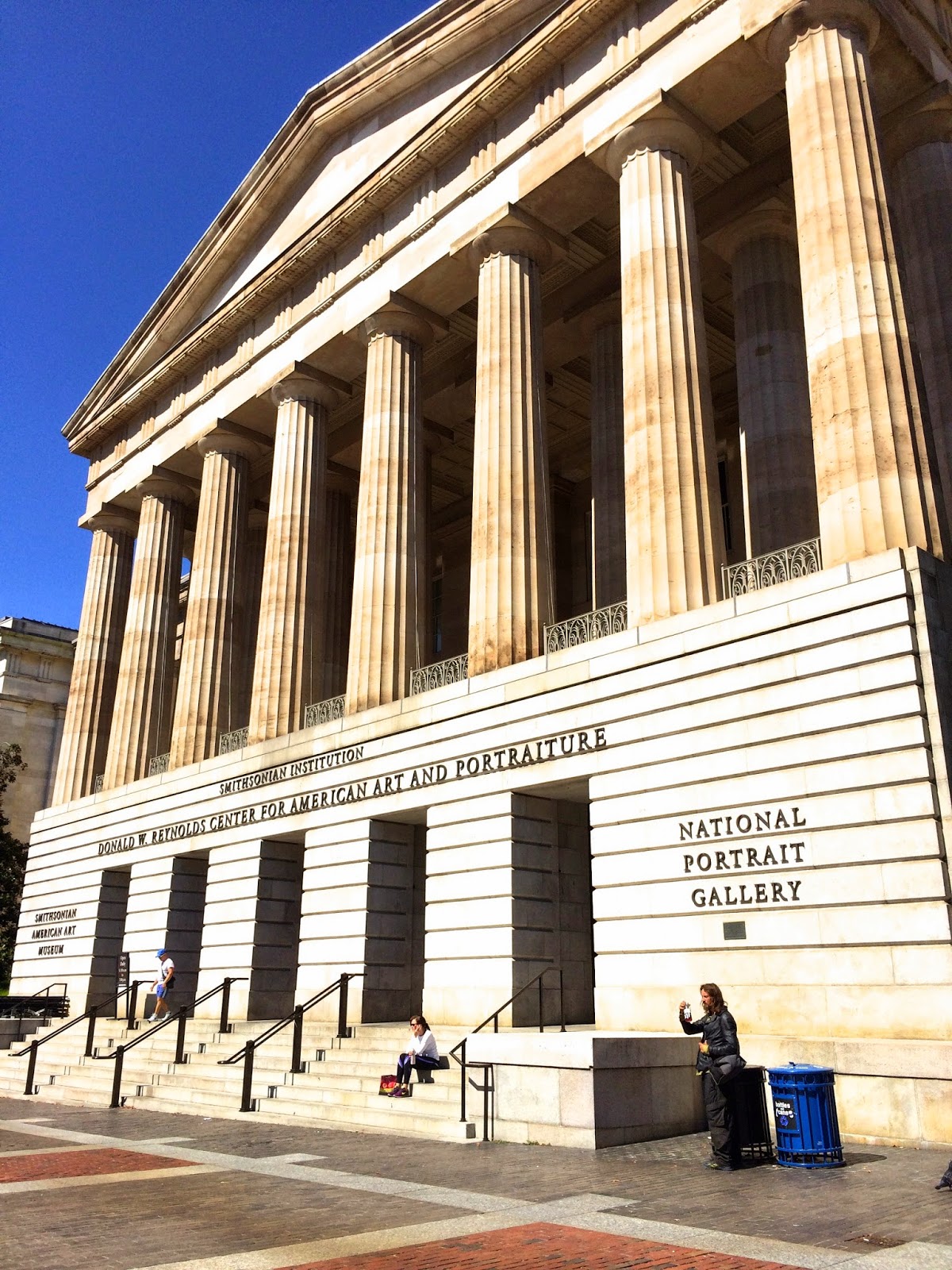
The National Portrait Gallery and the American Art Museum are both part of the Smithsonian Institution and are housed in the same building just north of the National Mall in DC. They are both also included on the 100 Free Things To Do in Washington DC.
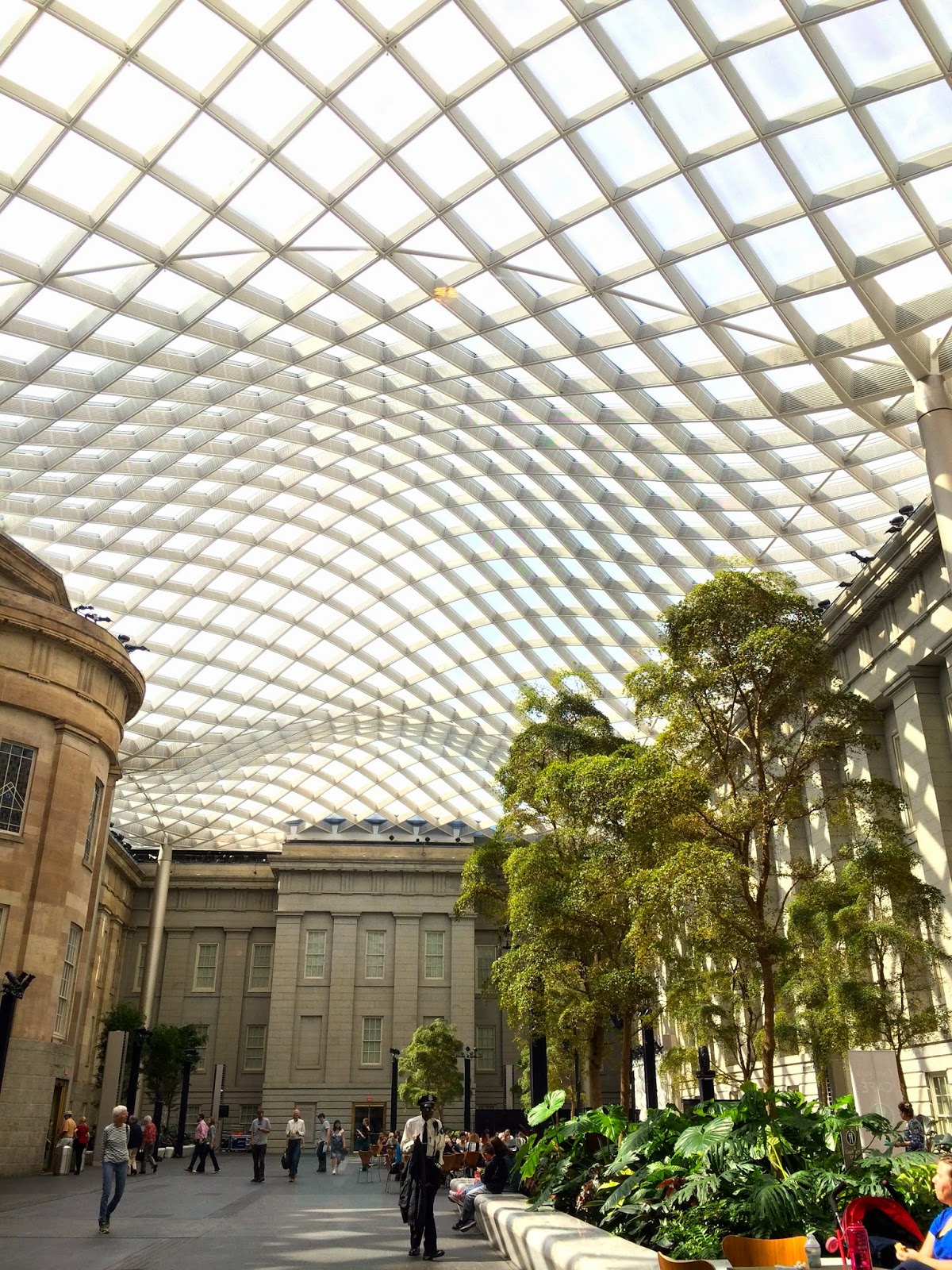
The museum is located on 7th and F streets in DC, just across the street from the Verizon Center and only a few blocks NW of Judiciary Square. It is one of many museums in the area. It is three floors with a mezzanine (there is a 4th floor, but not much on it), 2 wings with an open courtyard in the center. The museums are separated into the wings, with the Portrait Gallery being on one side, and the American Art Museum on the other.
 |
| Courtyard |
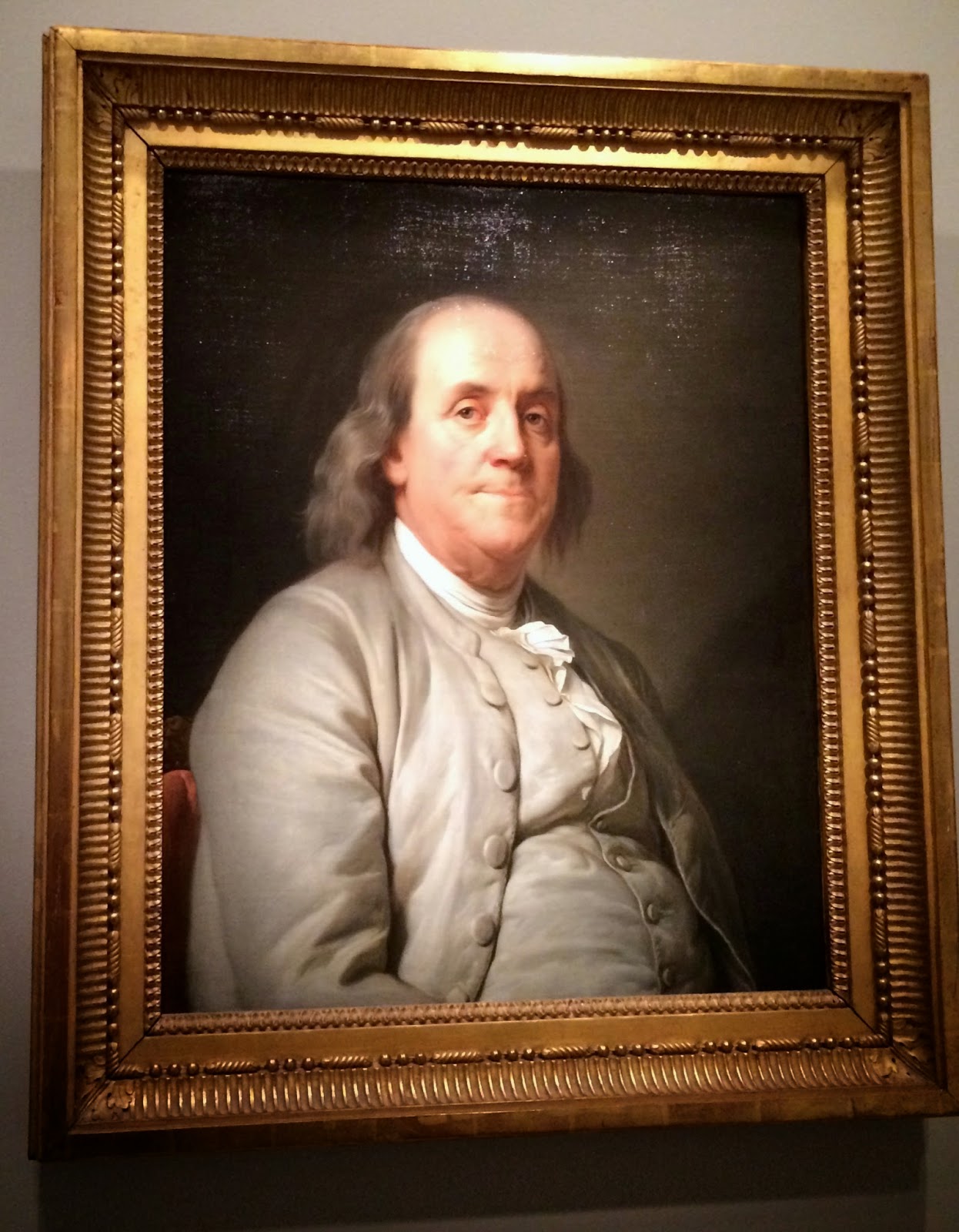
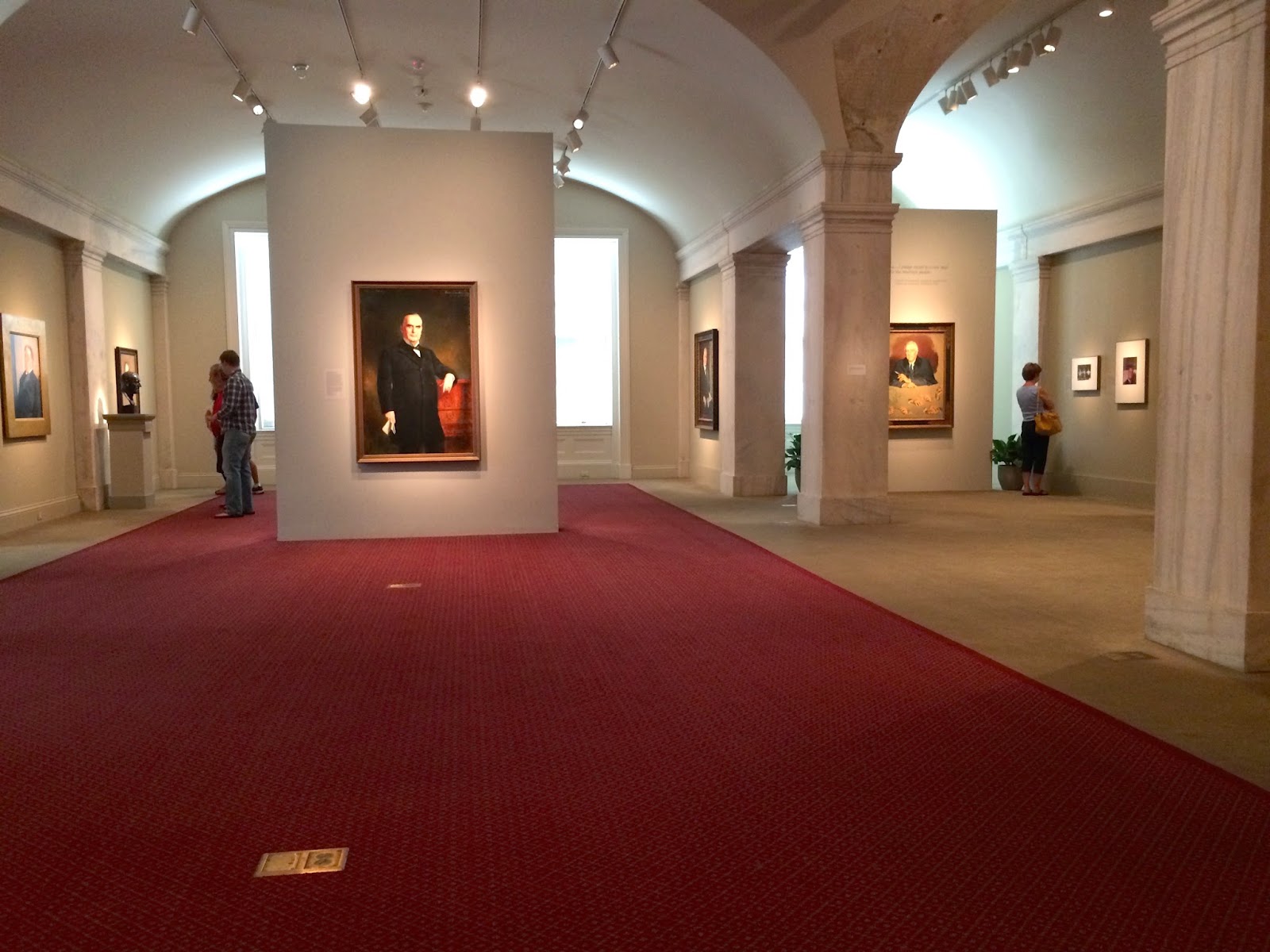
The National Portrait Gallery included portraits and busts of well-known Americans. It is separated into themes like “American Origins,” “20th Century Americans,” and “American’s President’s.”
 |
| Ben Franklin in American Origins Gallery |
Many of the exhibits do not allow photographs. J is not very interested in Art, but he did want to see the President’s Gallery. I was interested in most of it. 🙂
 |
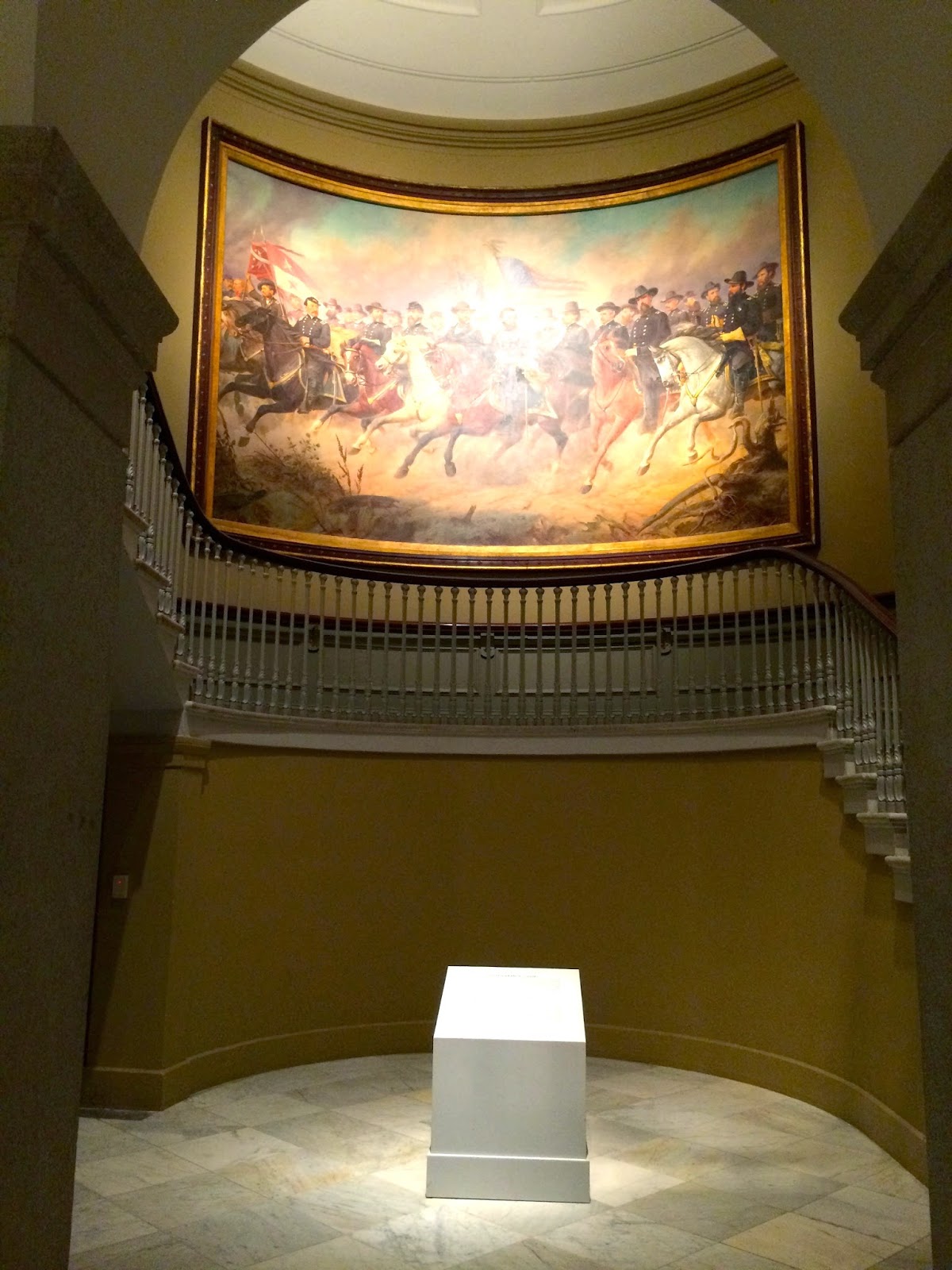
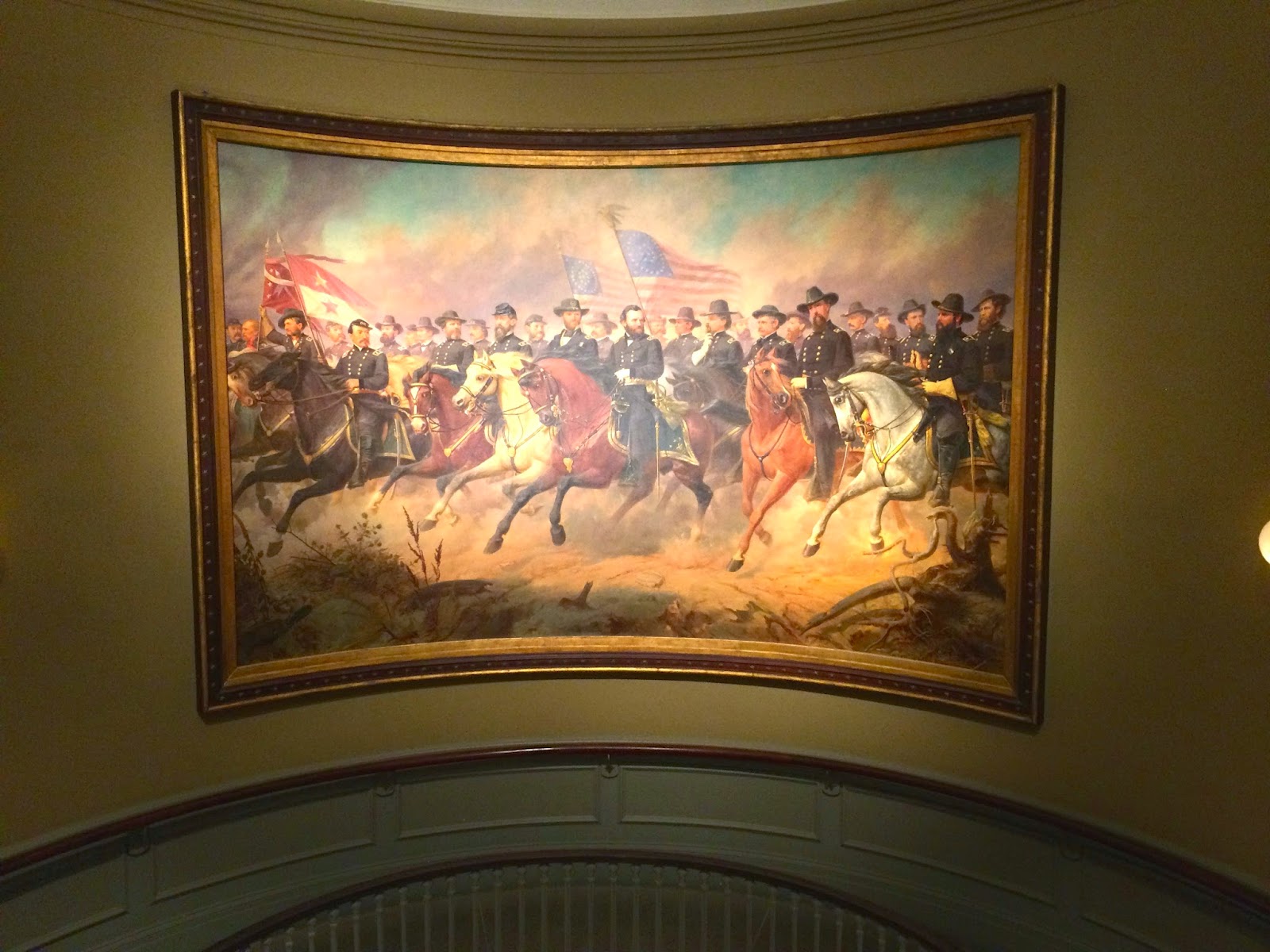
| Grant and His Generals, 1st floor, American Origins |
Framed version of the same painting above.
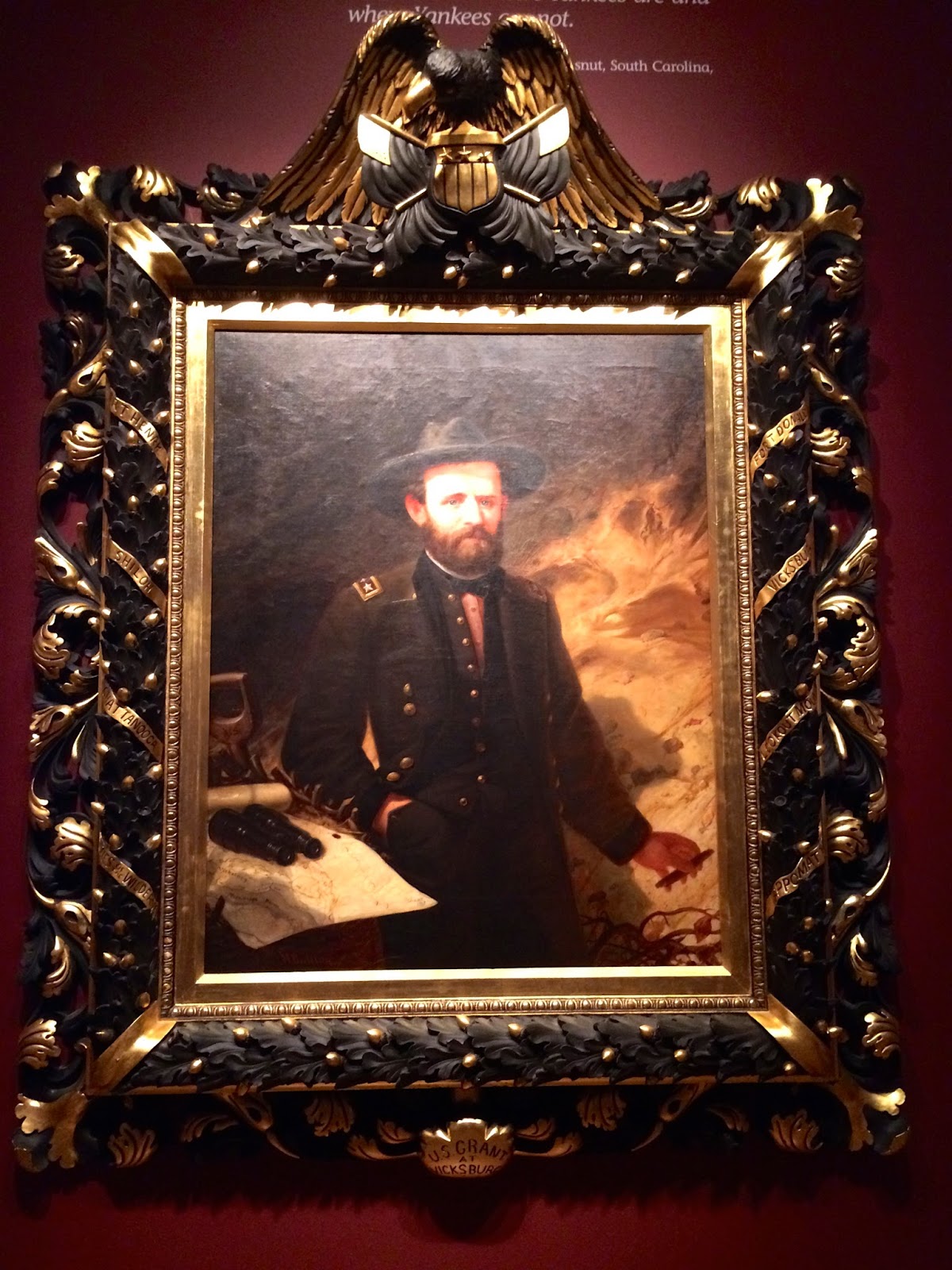
This frame for General Grant’s portrait was insanely ornate! We joked that it probably cost as much as the painting itself!
 |
| General Ulysses S. Grant, American Origins |
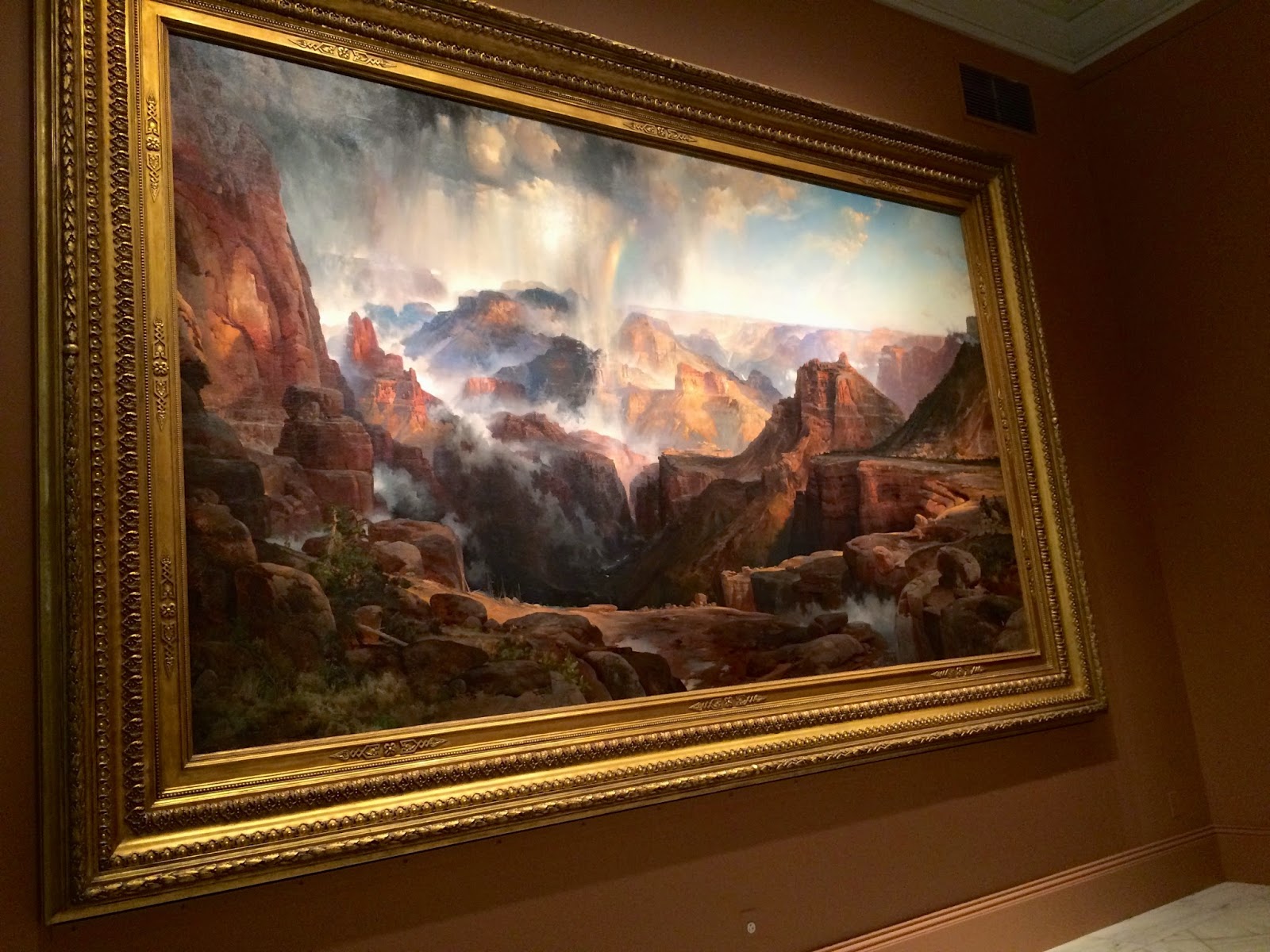
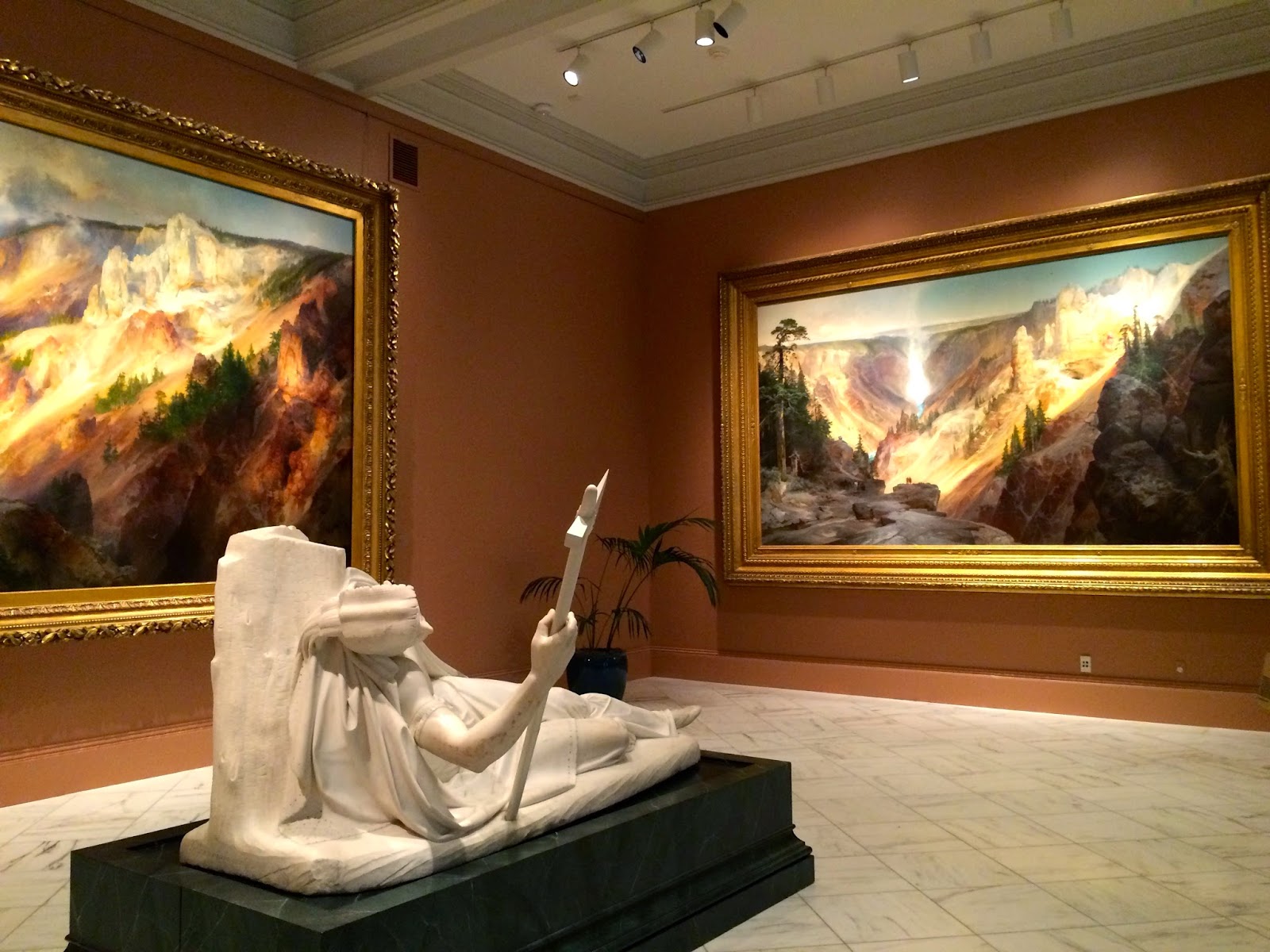
Heading to the America’s Presidents Gallery on the 2nd floor had us getting a tiny taste of the American Art Museum. These paintings were the size of a wall, and so spectacular!
 |
| The Chasm of the Colorado, Thomas Moran. 2nd Floor North lobby |
 |
| Both paintings are titled The Grand Canyon of the Yellowstone, and both by Thomas Moran. 2nd floor North lobby. The sculpture is “The Dying Tecumseh” by Ferdinand Pettrich. |
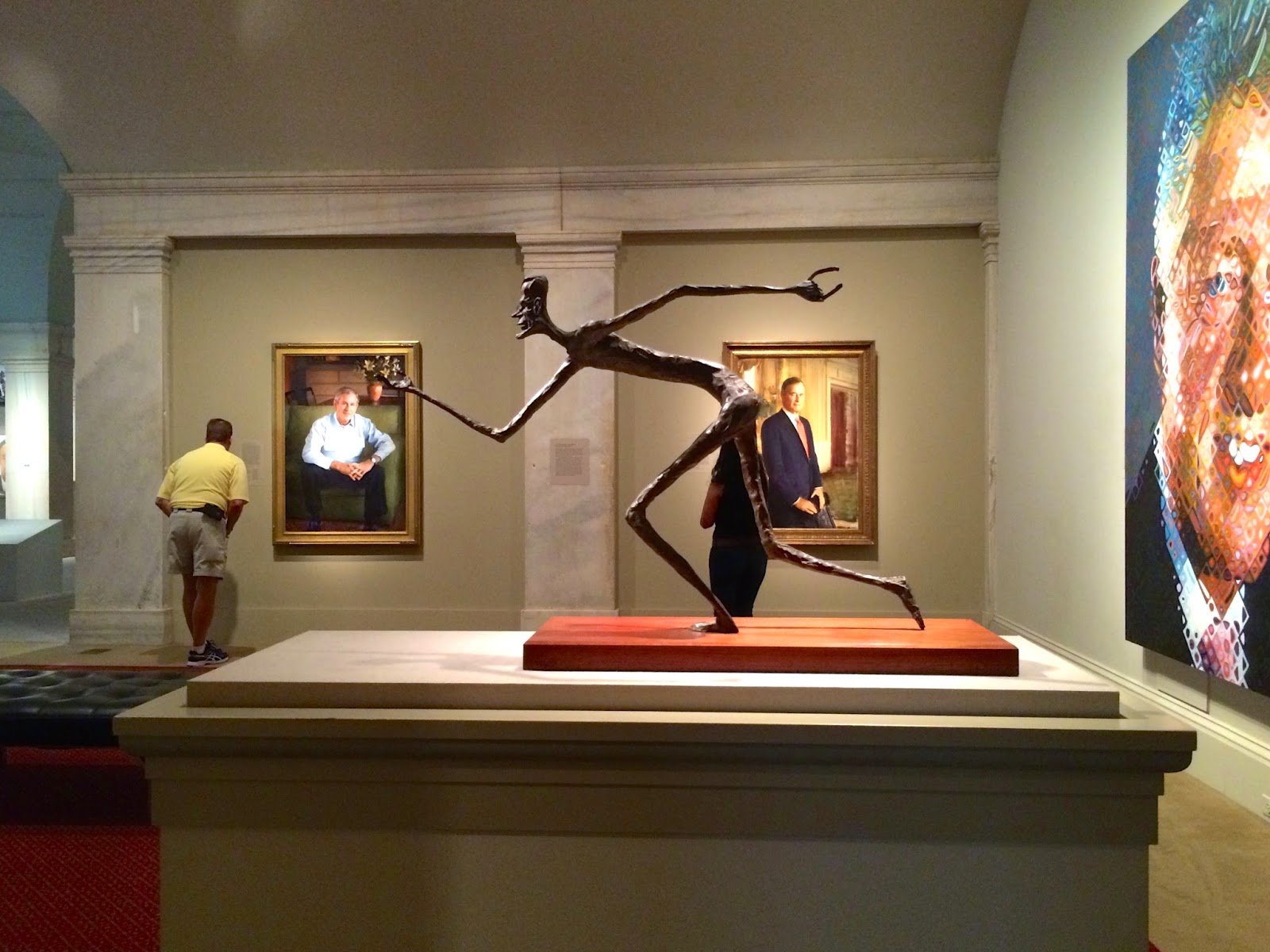
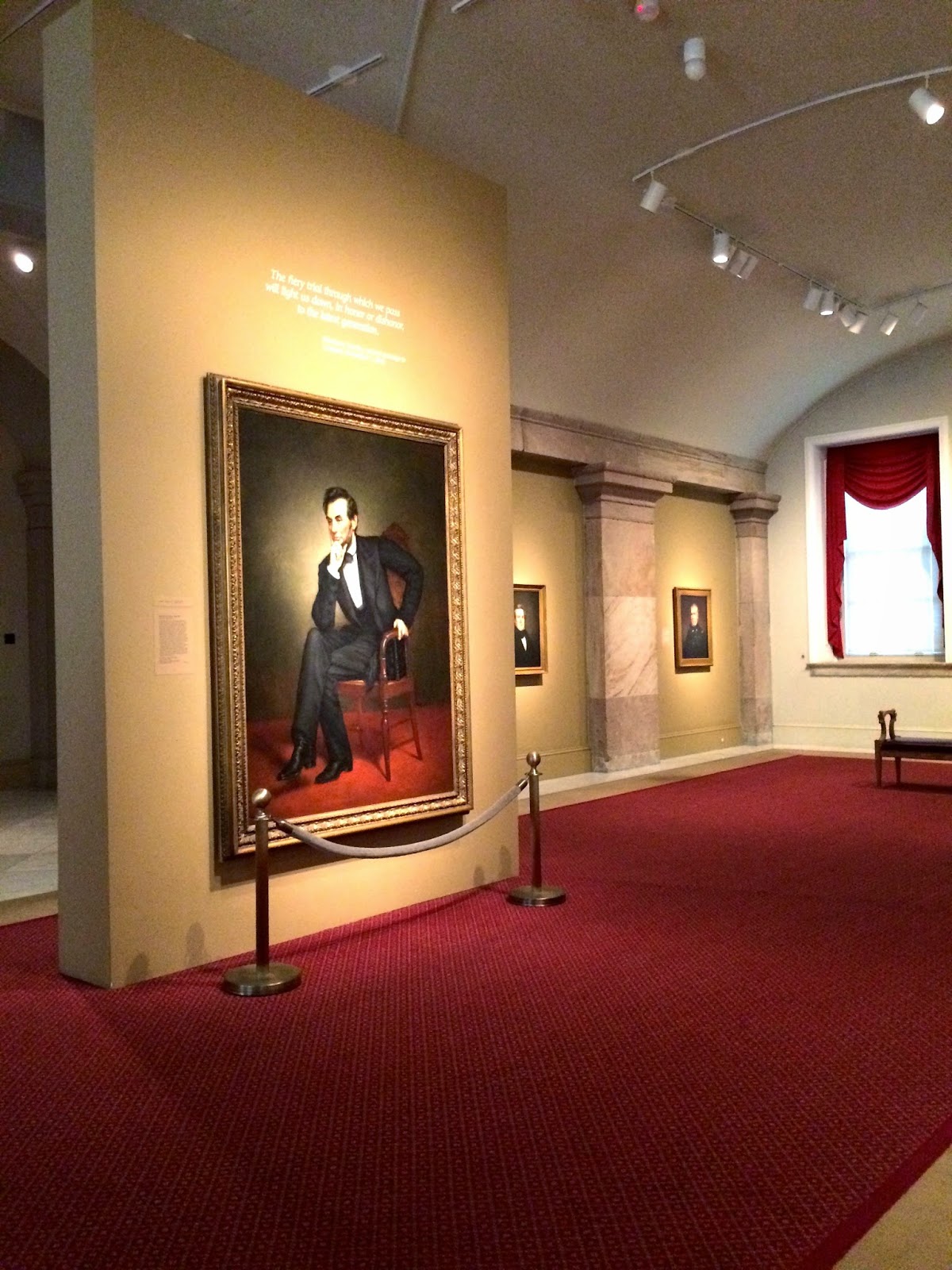
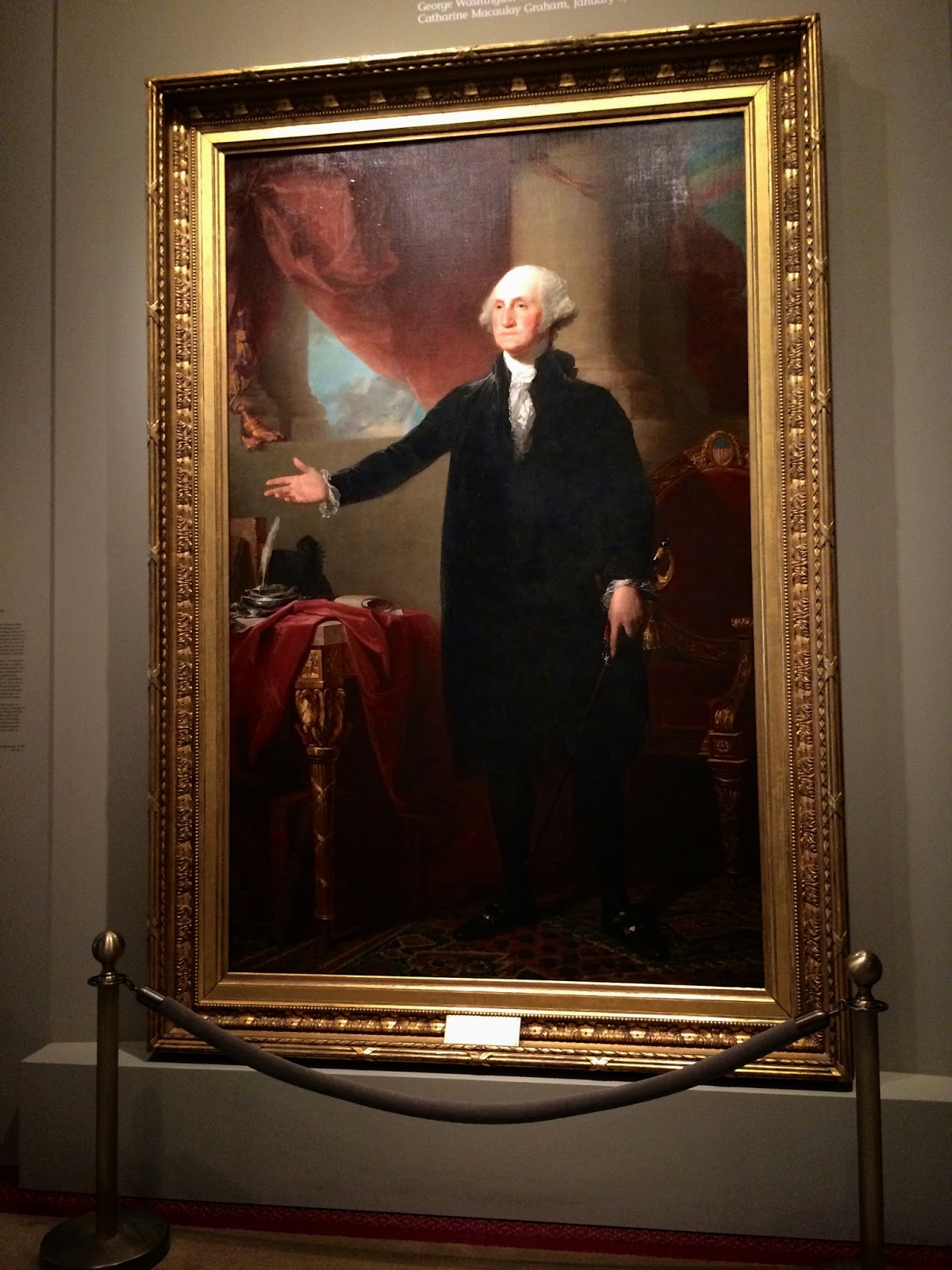
The America’s Presidents Gallery is on the 2nd floor and holds the portraits of the American Presidents, naturally. Not every President was represented, but most of them were. There were some exhibits that had audio recordings of famous speeches as well.
 |
| George W. Bush, George H.W. Bush, and Bill Clinton |
 |
| Abraham Lincoln. “The fiery trial for through which we pass will light us down, in honor or dishonor, to the latest generation.” |
 |
| George Washington |
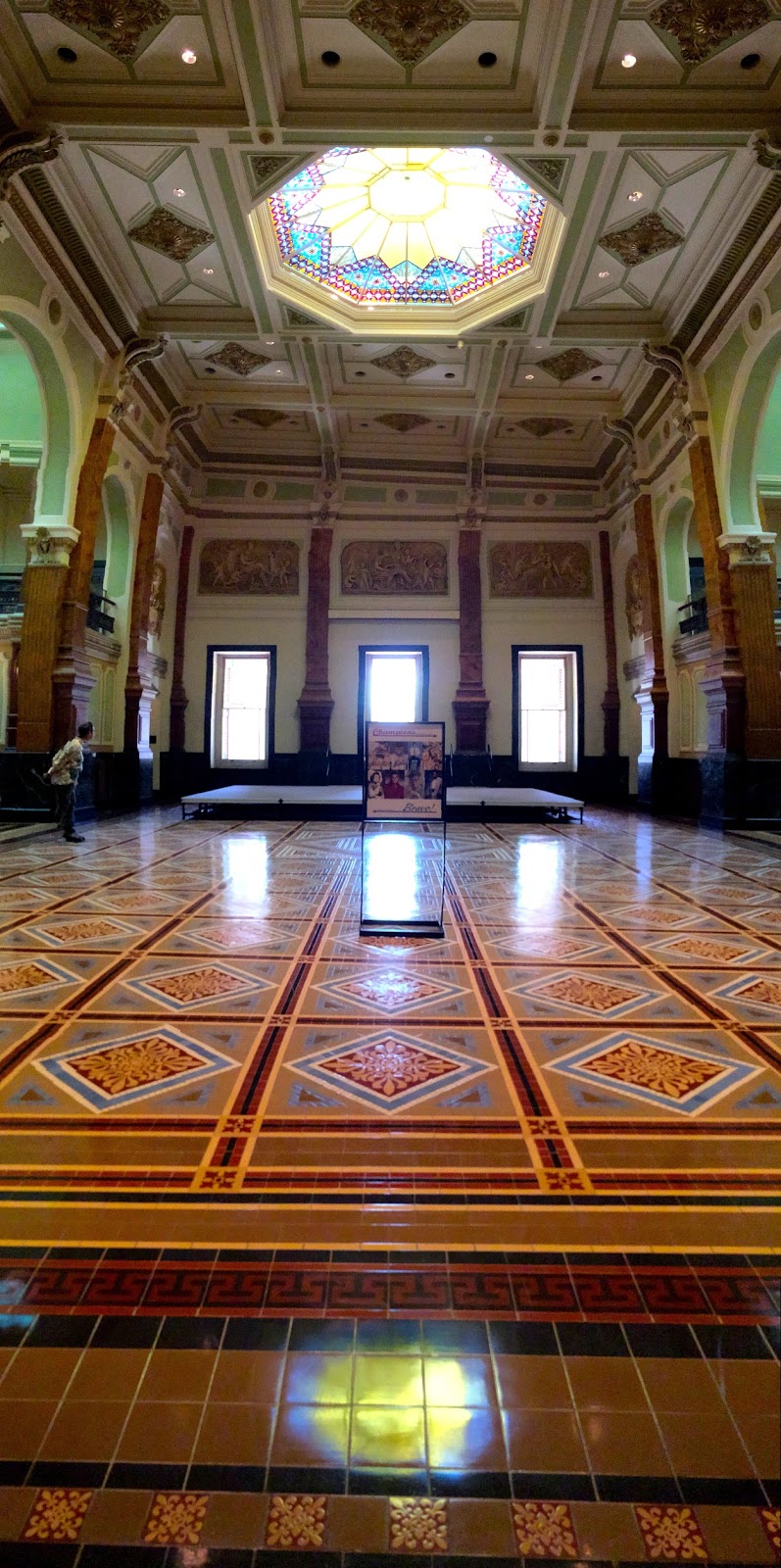
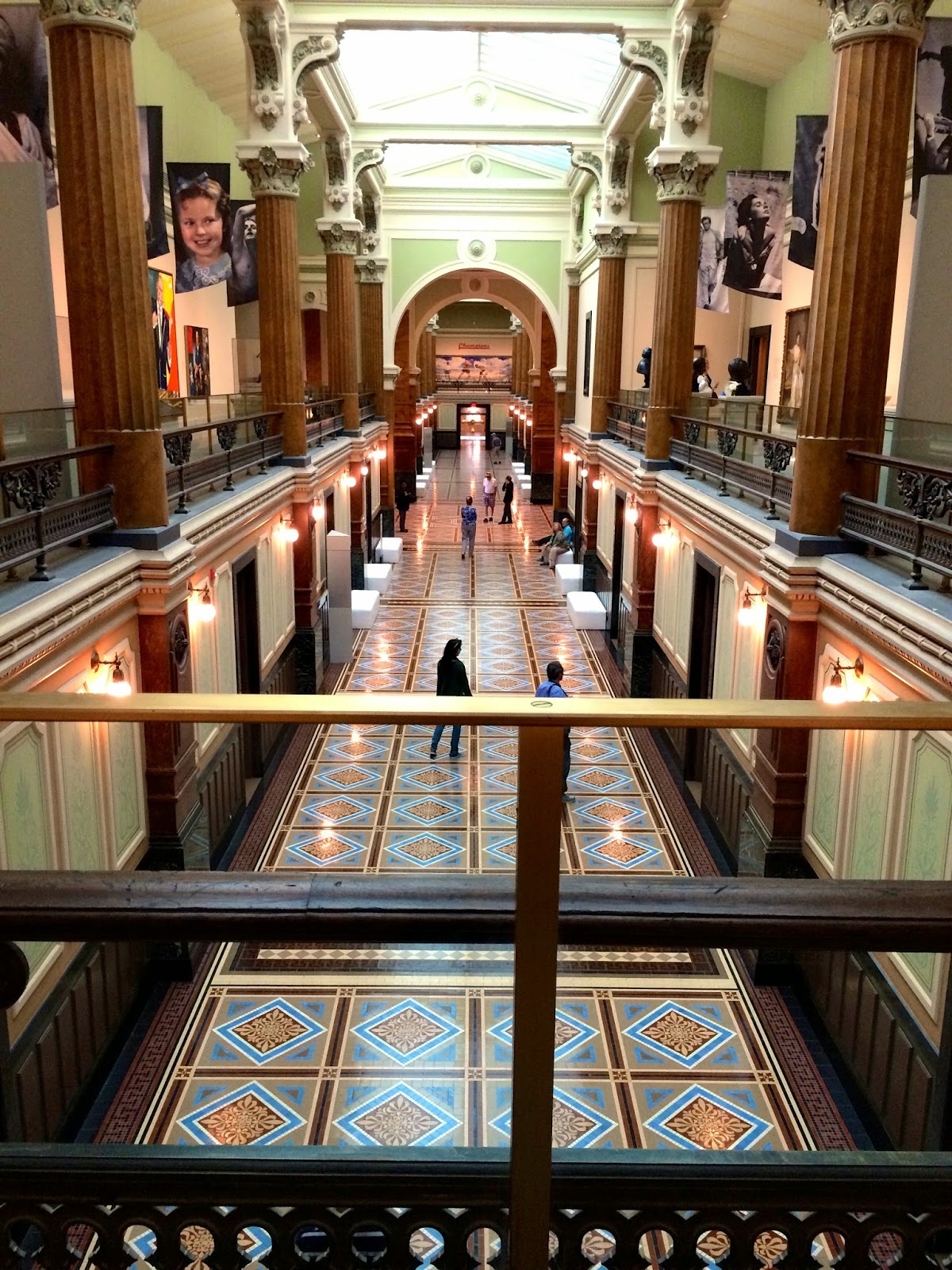
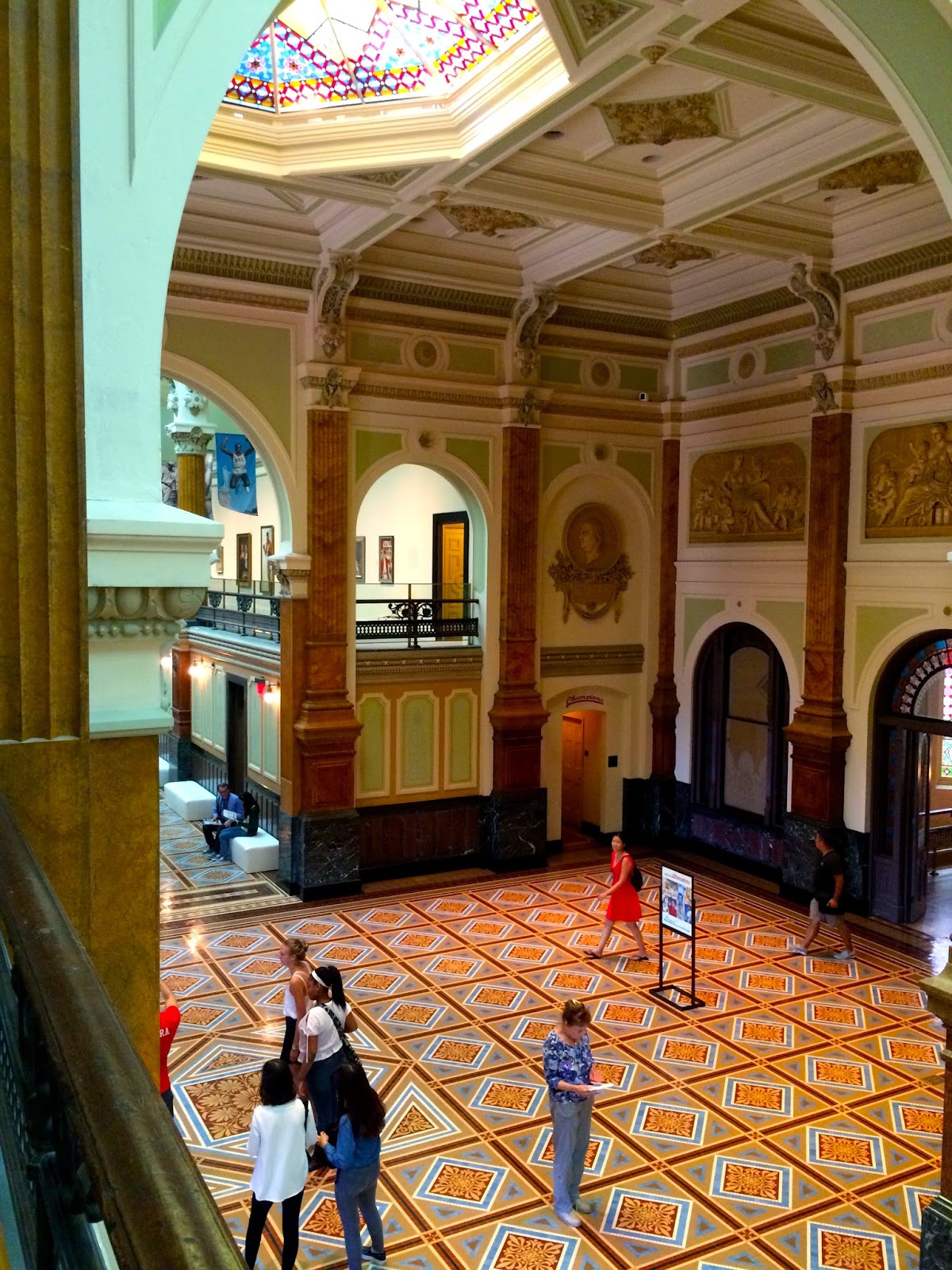
Taking the stairs up to the 3rd floor brings you to the center of the Great Hall. The Hall itself it beautiful! But it also houses portraits of 20th century Americans, including Elvis Presley, Joe Lewis, and E.E. Cummings.
 |
| From the 3rd Floor Mezzanine |
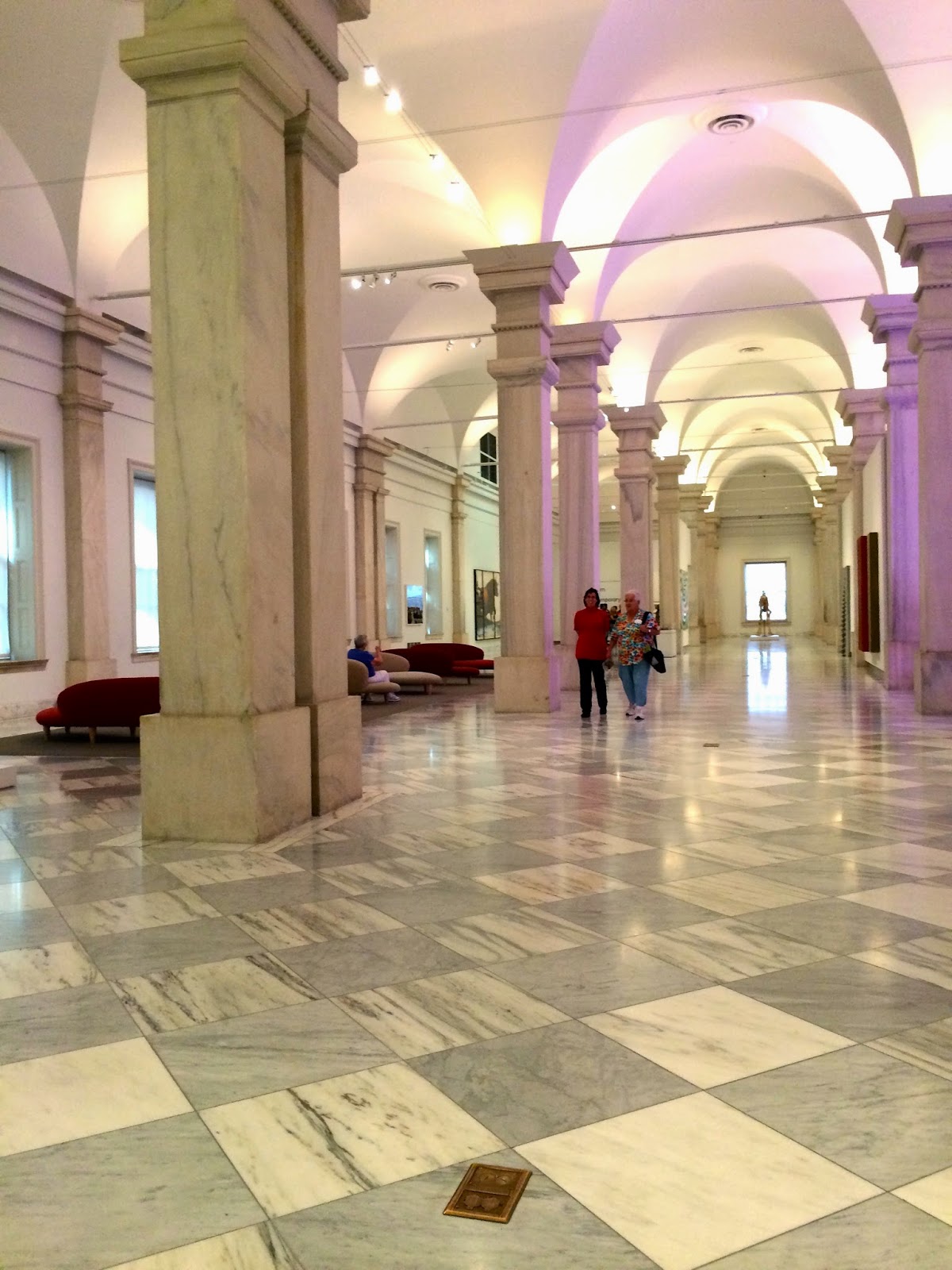
Entering in the American Art Gallery side was like going to a different building! Everything was crisp, white, open, and airy. The museum is a collection of American art.
“The Smithsonian American Art Museum, the nation’s first collection of American art, is an unparalleled record of the American experience. The collection captures the aspirations, character, and imagination of the American people throughout three centuries. The museum is the home to one of the largest and most inclusive collections of American art in the world. Its artworks reveal key aspects of America’s rich artistic and cultural history from the colonial period to today.”
 |
| Contemporary Art Gallery |
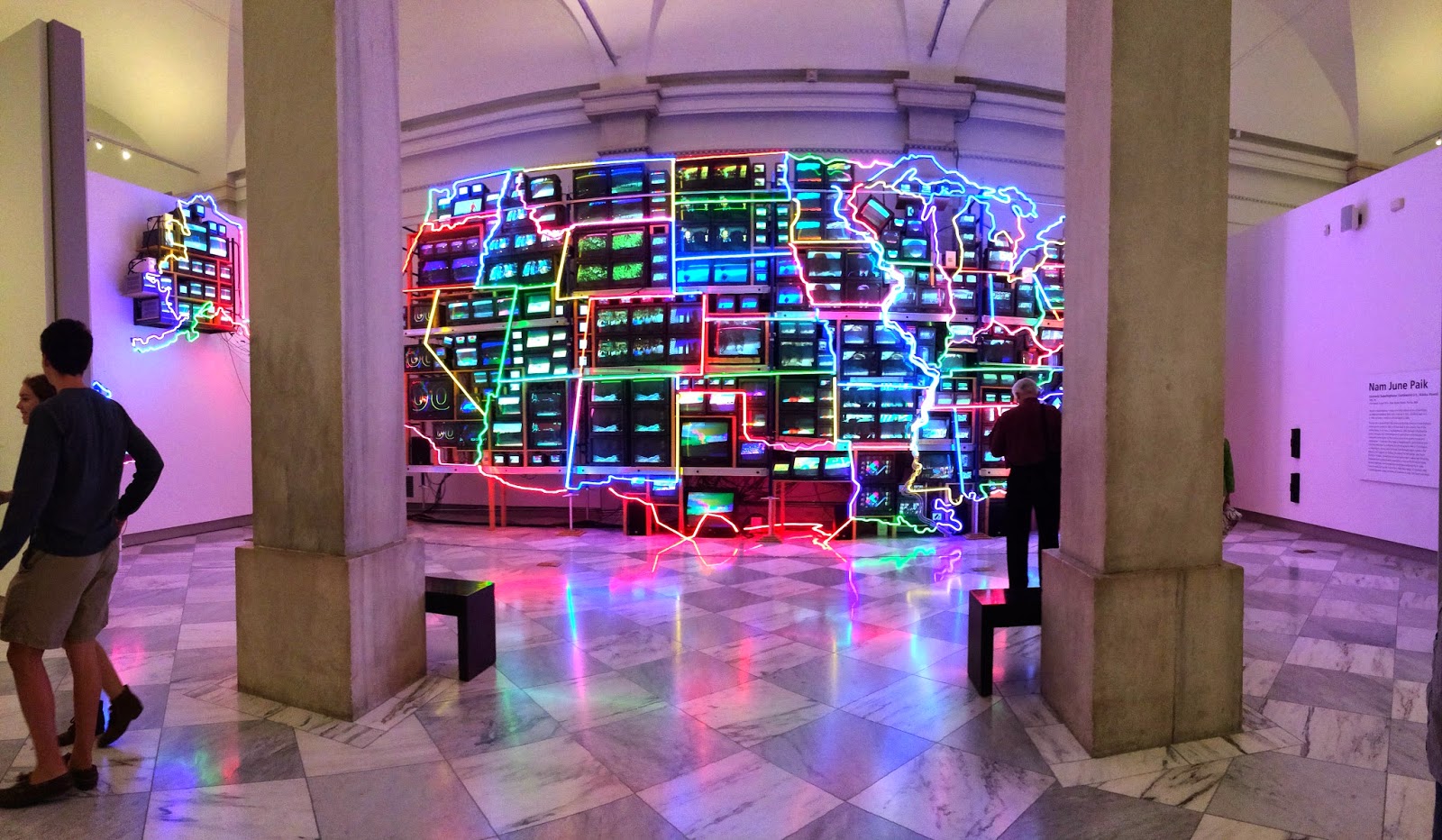
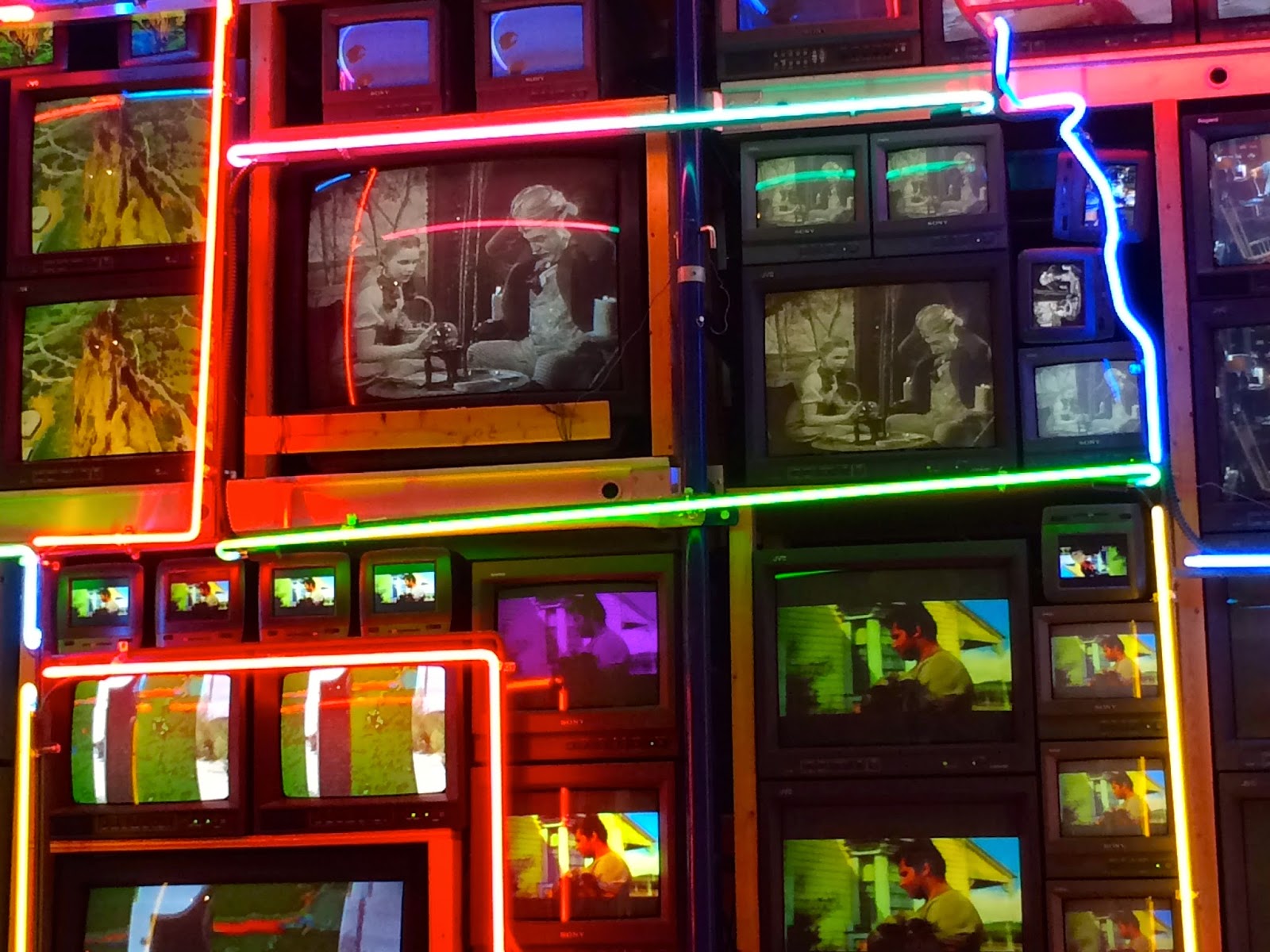
The Contemporary Gallery had some of the most interesting exhibits. Like this below…the United States outlined in neon with various size televisions airing tv/movies pertaining for each state. For example, Kansas was airing The Wizard of Oz, and Hawaii was airing Blue Hawaii. This was probably my favorite exhibit because it was so unexpected and unique!
 |
| Electronic Superhighway: Continental U.S., Alaska, Hawaii, Nam June Paik |
 |
| Wizard of Oz in Kansas |
 |
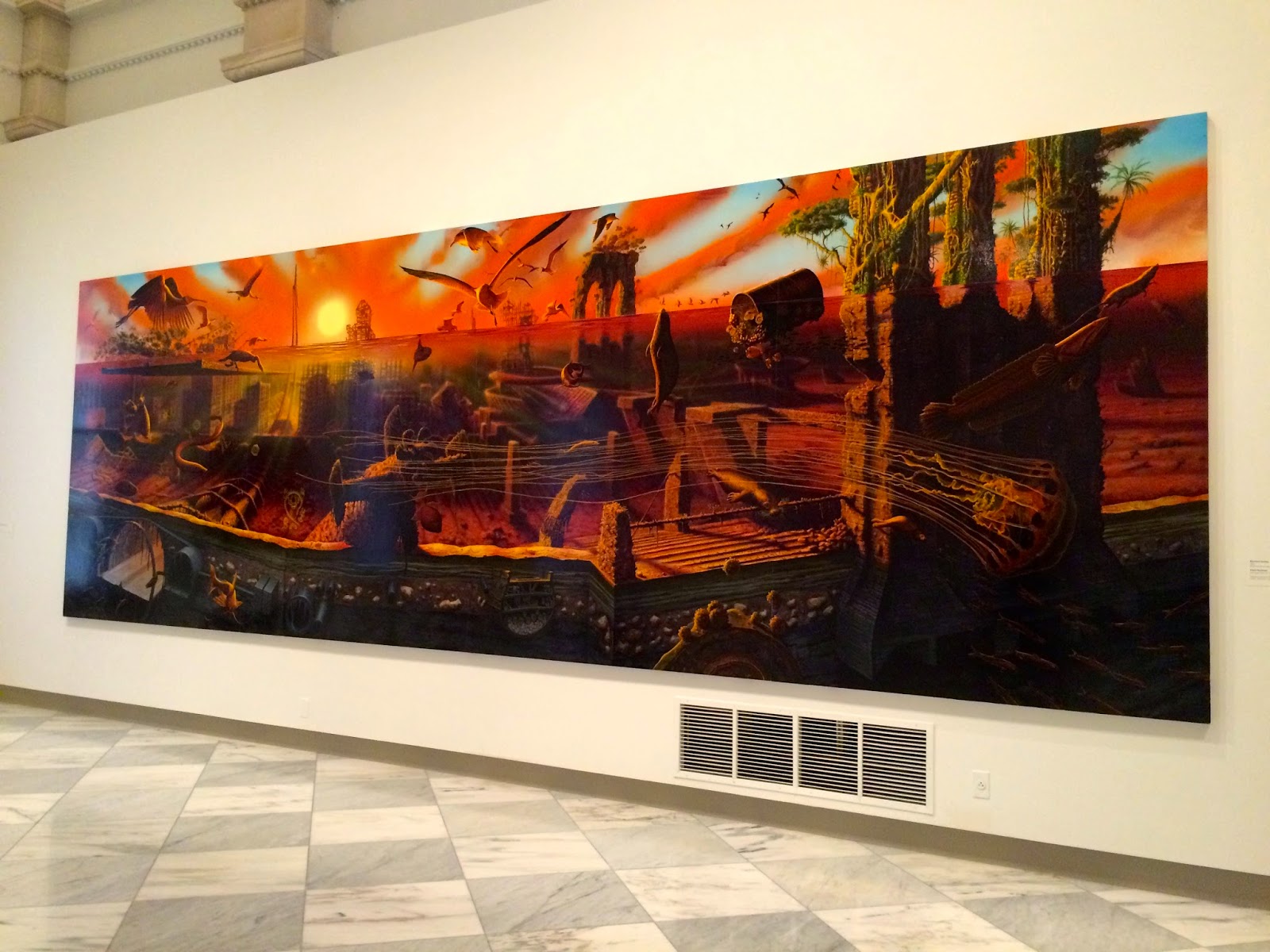
| Manifest Destiny, Alexis Rockman. 3rd Floor Lincoln Gallery |
 |
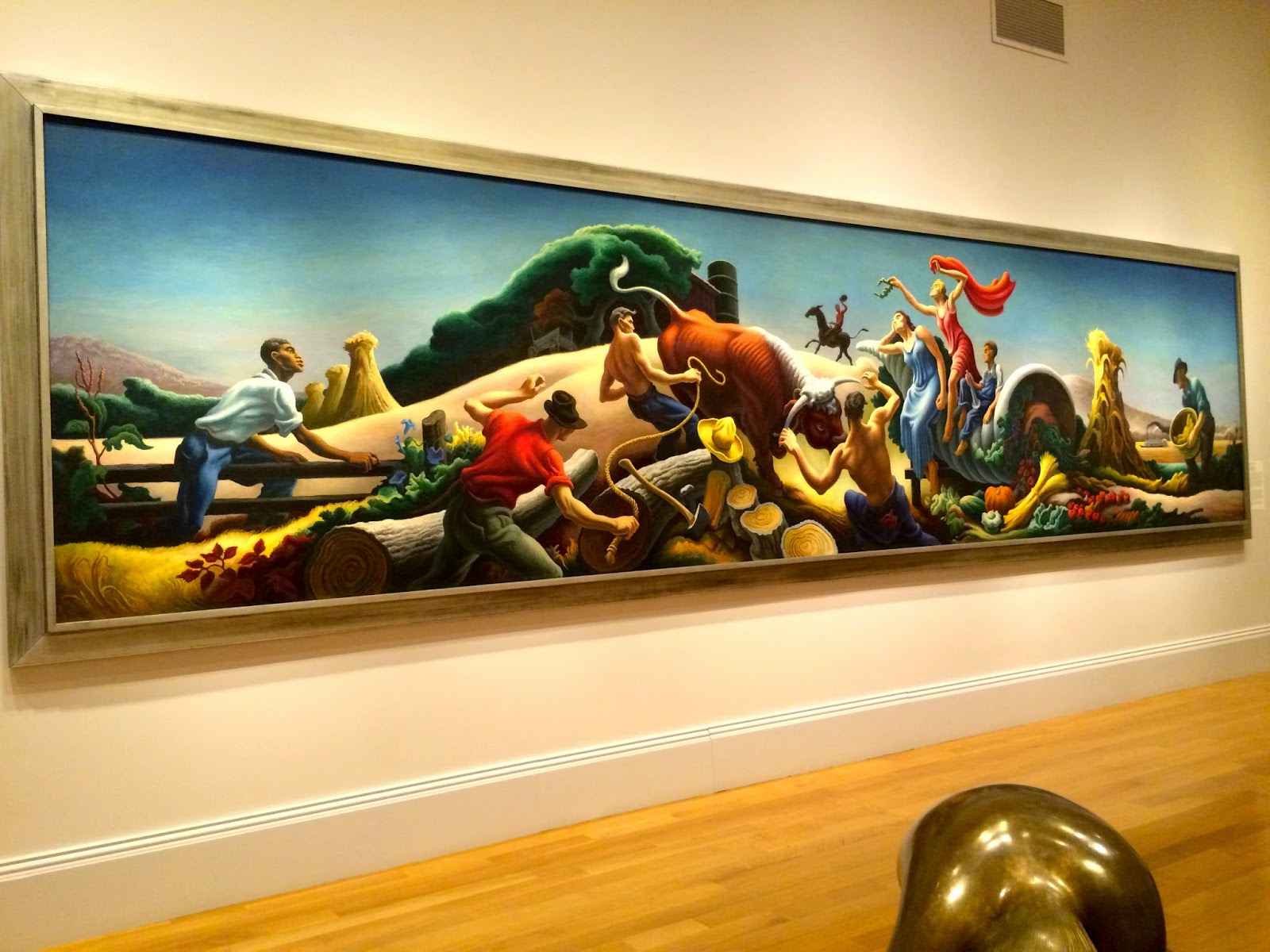
| Achelous and Hercules, Thomas Heart Benton. 2nd floor, Modernism Gallery. |
 |
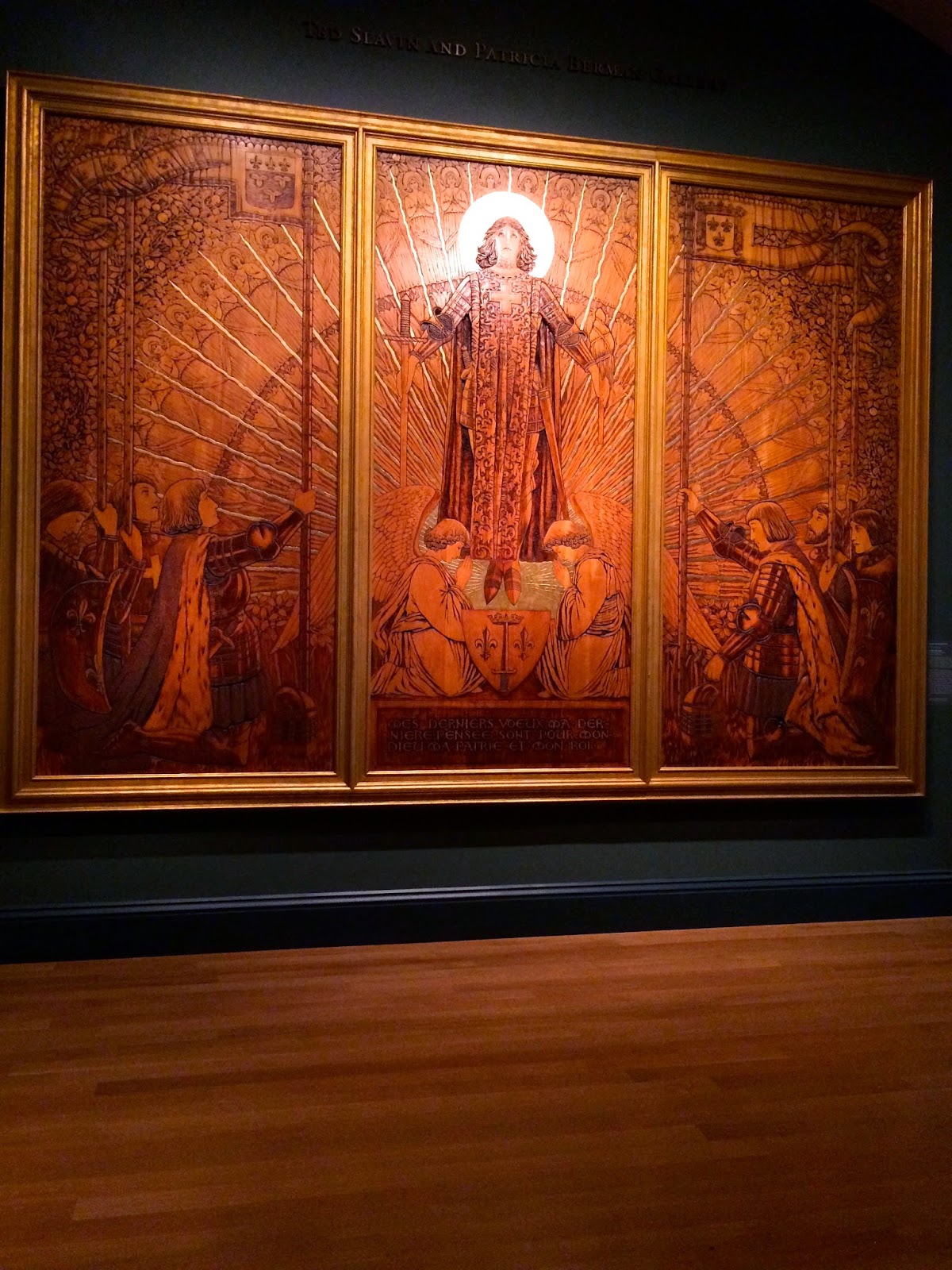
| Adoration of St. Joan of Arc, J. William Fosdick. Fire etched wood. 2nd floor, Gilded Age Gallery |
 |
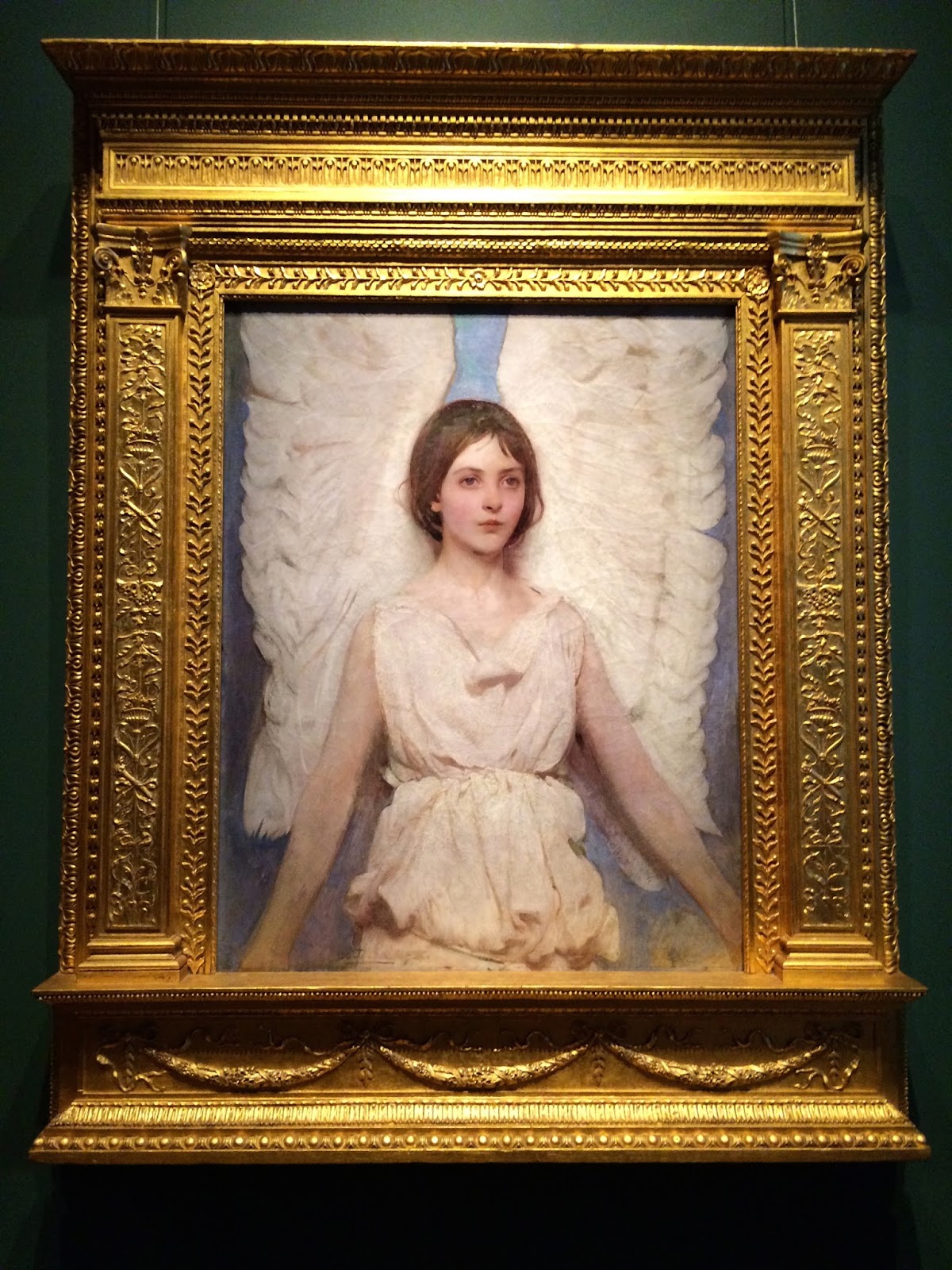
| Angel, Abbott Handerson Thayer. 2nd floor, Gilded Age Gallery |
 |
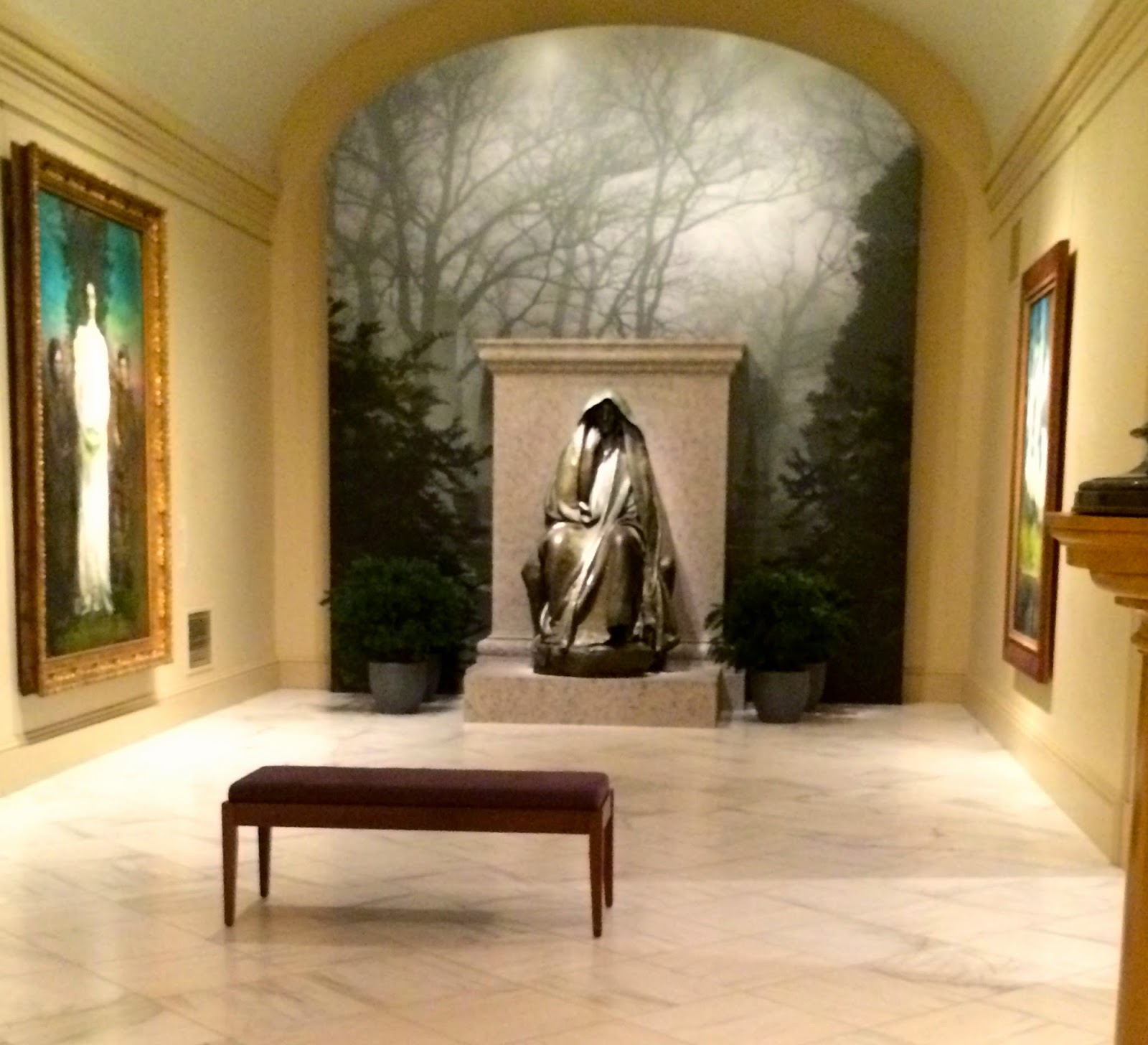
| Adams Memorial, Augustus Saint-Gaudens. 2nd floor, Gilded Age Gallery. |
“Clover” Adams, wife of the writer Henry Adams, committed suicide in 1885 by drinking chemicals used to develop photographs. Adams, who steadfastly refused to discuss his wife’s death, commissioned Augustus Saint-Gaudens to create a memorial that would express the Buddhist idea of nirvana, a state of being beyond joy and sorrow. In Adams’s circle of artists and writers, the old Christian certainties seemed inadequate after the violence of the Civil War, the industrialization of America, and Darwin’s theories of evolution. Saint-Gaudens’s ambiguous figure reflects the search for new insights into the mysteries of life and death. The shrouded being is neither male nor female, neither triumphant nor downcast. Its message is inscrutable. Clover’s gravesite in Rock Creek Cemetery in Washington, D.C. quickly became a tourist attraction, but Adams resisted all attempts to sentimentalize the memorial as a symbol of grief. He acknowledged the power of Saint-Gaudens’s sculpture, however, and allowed reproductions to be made and sold to a chosen few.”
 |
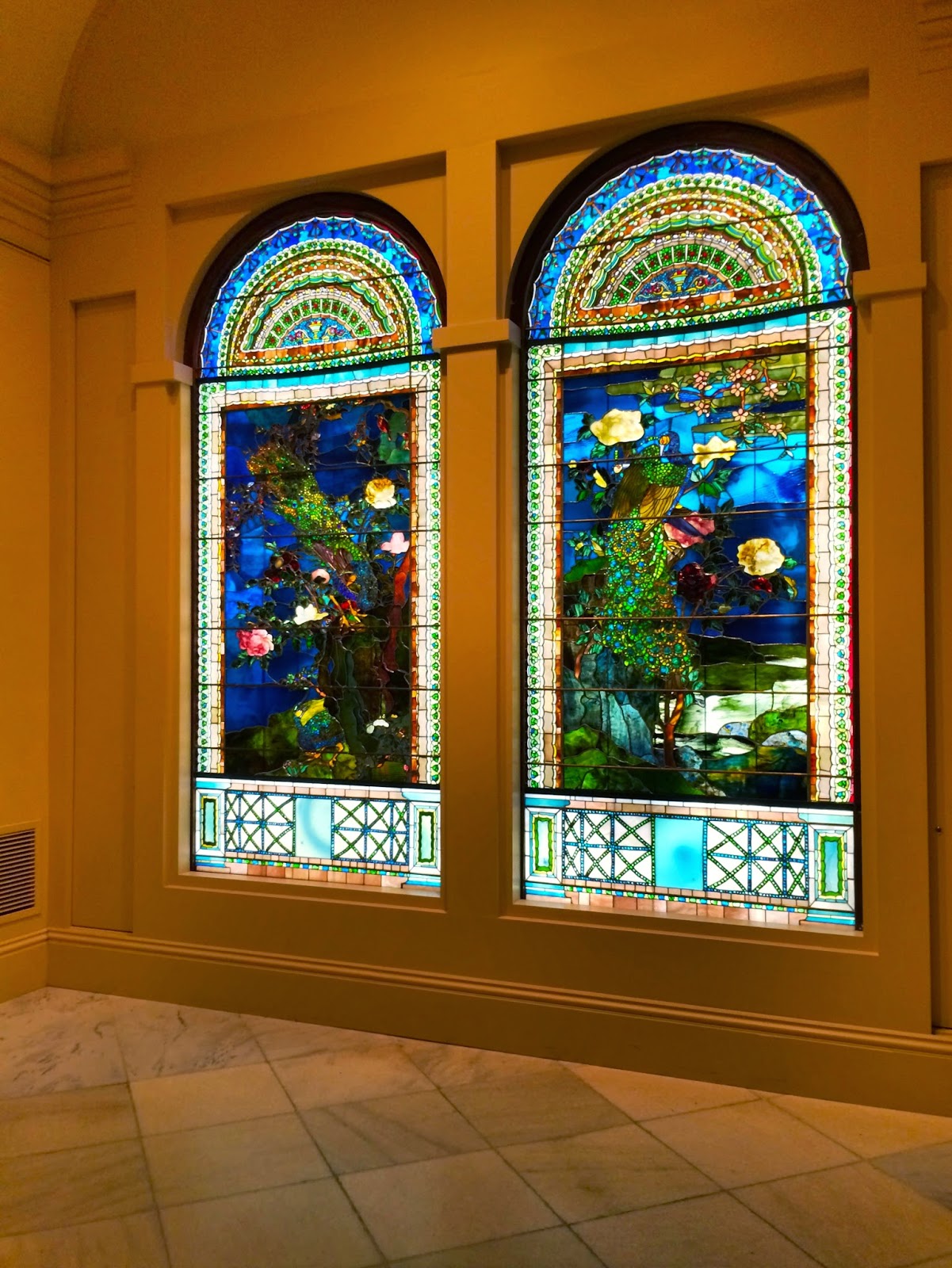
| Peacocks and Peonies I & II, John La Farge. Stained Glass. 2nd floor Gilded Age Gallery. |
 |
| Another View of Grant and His Generals in the stairwell. |
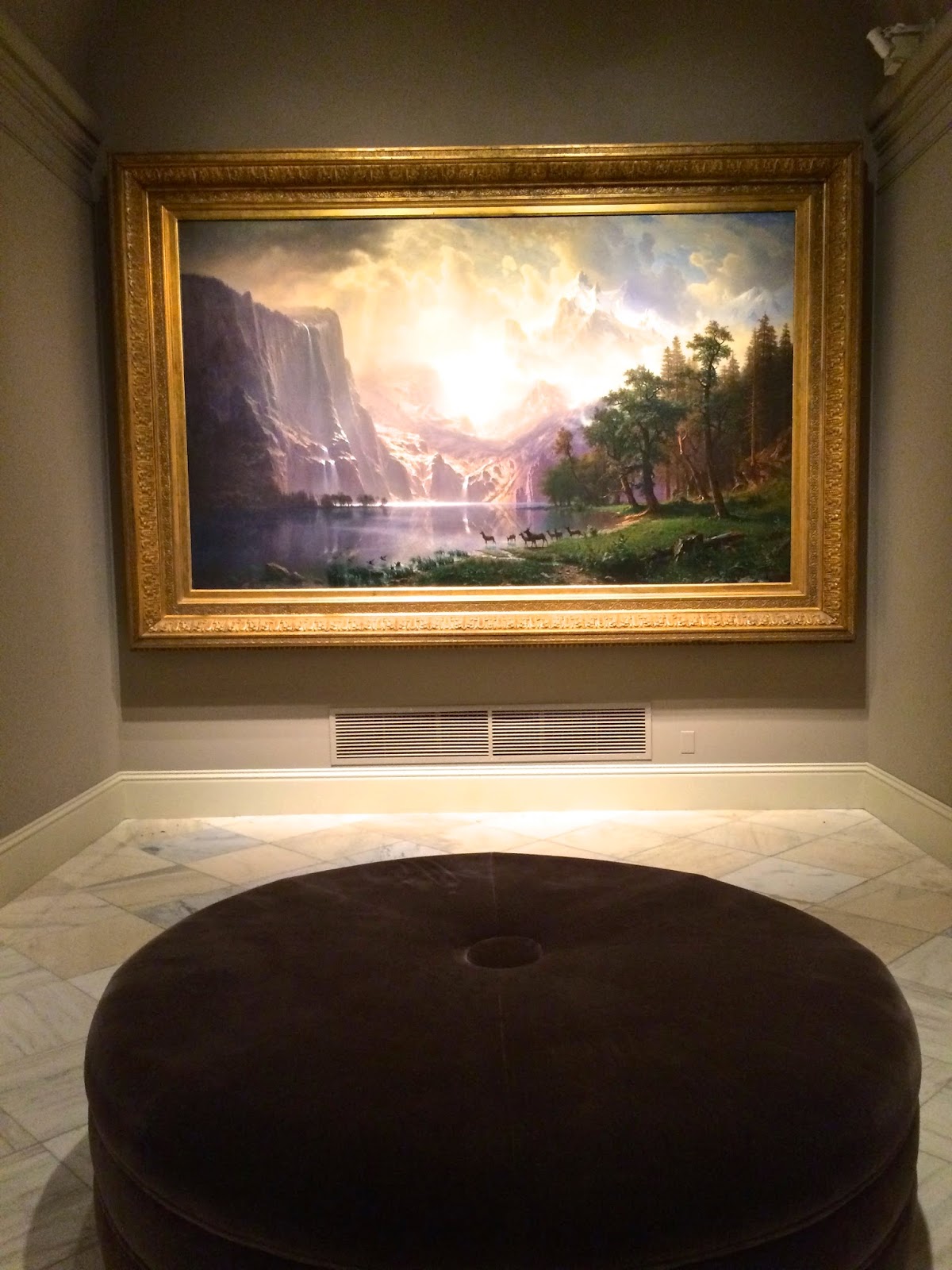
This painting was absolutely beautiful! Housed in the 2nd floor Landscapes Gallery, in its own dark alcove with a velvet pouf upon which to sit and admire.
 |
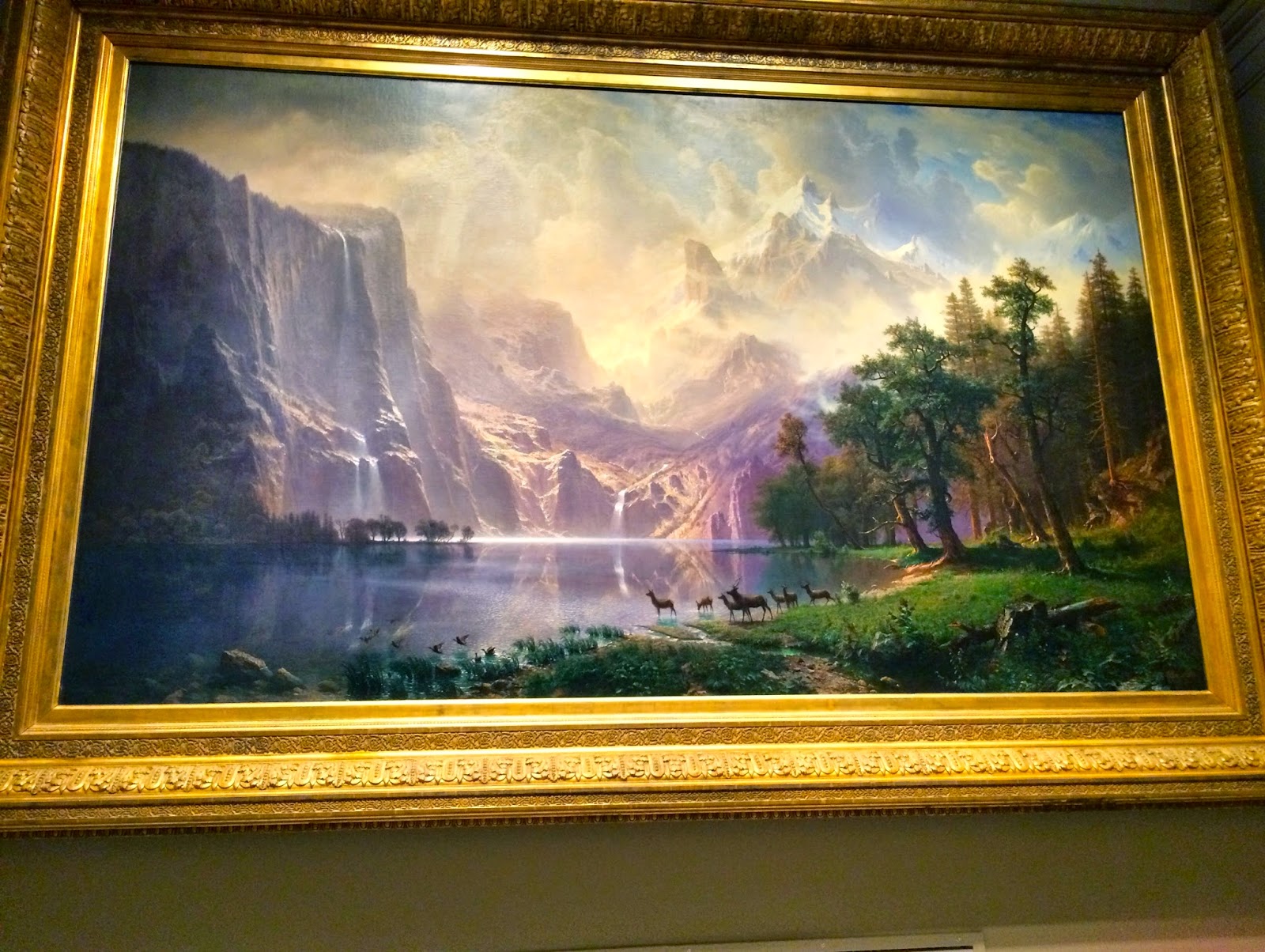
| Among the Sierra Nevada California, Albert Bierstadt |
“Albert Bierstadt’s beautifully crafted paintings played to a market eager, in the 1860s, for spectacular views of the nation’s frontiers. Bierstadt was an immigrant and a hardworking entrepreneur who had grown rich pairing his artistic skill with a talent for self-promotion. The unveiling of one of his canvases was a theatrical event. He sold tickets and planted news stories, strategies that one critic described as the “vast machinery of advertisement and puffery.” A “great picture” was elaborately framed and installed in a room with carefully controlled lighting. At the appointed time, the work was revealed to thunderous applause. Bierstadt painted Among the Sierra Nevada, California in his Rome studio, then showed the canvas in Berlin and London before shipping it to the United States. Works such as this fueled the image of America as a promised land just when Europeans were immigrating to this country in great numbers. When the painting was shown in Boston, one critic recognized that the landscape was a fiction invented from Bierstadt’s sketches of the West. Nevertheless, the writer felt that it represented ‘what our scenery ought to be, if it is not so in reality.'”
 |
| A closer view |
We viewed most of the museum, but did skip the 1st floor west wing which houses the Folk and Self-taught Art Gallery and the MacMillan Education Center, as well as a special exhibit gallery. We ate at the Courtyard Café, which is really just a glorified salad bar. Then we had to scavenge for a table. The courtyard was full of people taking up whole tables to sit by themselves with their laptops and use the free wifi. Whilst us with our food trays sat on a bench waiting for someone to leave a table. It was rather annoying. I would recommend to just stop at the Mexican restaurant across the street if you plan to have lunch.
I really enjoyed the museum! But I like art. This would probably not be a suitable museum to visit with children, or anyone who is not an art enthusiast. It is a decent size museum, so I would suggest allowing 2-3 hours for a visit, depending on how in-depth of a visitor you are. If you need to see every exhibit and read every sign, then you may need to plan on 3-4 hours. 🙂


 Tuck & Sundry
Wow! That's an amazing and beautiful Museum. Would be a cool place to visit and see the architecture and mezzanine, let alone the portraits! 🙂
LikeLike
Wow! That's an amazing and beautiful Museum. Would be a cool place to visit and see the architecture and mezzanine, let alone the portraits! 🙂
LikeLike