
We have lived in Germany for four years now so I finally feel I have enough experience to give some advice. If you are new to Germany, going on your first trip to Germany, or just are curious and want to know some random facts, this guide is for you!
This post contains commissionable affiliate links, which I may receive small commission from at no additional cost to you. Of course, all recommendations and opinions are my own.
I’m going to try something new and break this up by chapters so you can easily skip to the part you need to review. Many of these tips are applicable to all of Europe, but for the purpose of this post, I am writing specifically to German rules. Ok, los geht’s!
Driving
If you are planning to rent a car and/or drive in Germany I highly recommend you acquire an International Driver’s Permit like the one available from AAA. Is it REQUIRED? No. A rental car counter in Germany will still rent a car to you with just your US Driver’s License. But my motto is to be over-prepared, so I do recommend it. I also recommend you study a the rules of the road. The Road Guide from Stars and Stripes is a great resource and you can read it online. But for a crash course, here are the things you need to know to properly drive like a local.
- You cannot “Right on red after stop.” A red light is a stop. The only time you can make that right turn is if there is also an arrow sign. It is a green arrow on black and would be placed on the light pole next to the passenger side.

- Priority roads have the right away. Roads in Germany can be very winding and turn suddenly. It’s not always obvious which is the main road, so they will be marked. Priority road markings are a yellow diamond on white, or sometimes indicated with dashed lines on the edge of the road. These lines also serve as a stop or yield to the cross street if a stop sign is not present.


- Germany has some standard speed limits that are not always posted. Entering a village, a 50 Km/h speed is enforced. It’s often not posted, so it’s important to just know. Sometimes the speeds in a village go down to 30 km/h and those will be posted. On country roads between villages, the max speed is 100km/h. It is often posted to 70 or 80 km/h, but if it is not posted or the end of speed restriction sign is present, then it defaults back to 100km/h.

- Autobahn is the interstate. There are speed enforcement zones on the Autobahn, and they are always posted. The end of speed restriction sign is three black diagonal lines through a circle on white. This means you can GO! But be aware that Germans also go incredibly fast! You need to really look in your rearview for a speeding car before entering the left passing lane to ensure you don’t cut off someone who can’t stop.

- Speaking of passing lanes- in Germany the left lanes are for passing ONLY. You should not drive in the left lane. You use it, pass, and then get over to the right. You cannot weave in and out of traffic, passing on the right like in the States. The only instance where it is acceptable to pass in the right lane is if you are exiting or entering the highway, or there is heavy traffic in all lanes.
- If there is heavy traffic or a traffic jam, the expectation is to pull to the shoulder and allow a free lane between the cars. This is call a Rettungsgasse and is meant to allow emergency vehicles to pass.

- Pulling over on the shoulder of the Autobahn is allowed only in an emergency. There are emergency telephones spaced along the Autobahn to call for help, and your rental should include a traffic triangle and safety vests which you are expected to use.
- Cell phone use while driving is strictly prohibited. You can get ticketed even if the phone is in your hand.
- Germany loves a roundabout! They are every where! Knowing how to use one is essential. Always yield to traffic in the roundabout (unless there is a sign stating otherwise) and blinker out of the round about.
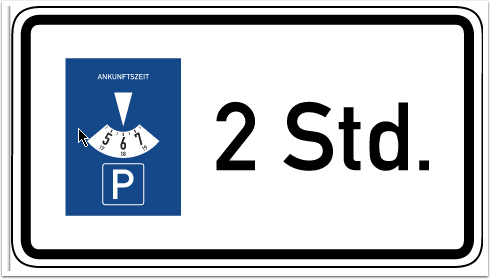
- Blue Parking discs should be included in a rental car. If you are parking in a parking lot that has a sign with the blue disc logo, you can park for free for the time indicated but need to use the parking disc. Set the disc to the time you arrived (round up to the half hour) and place on your dashboard on the drivers side.
- Zippering is when two lanes of traffic merge into one lane. In the US, we like to early merge as soon as we see the sign indicating we have to do so, and we leave the merging lane empty. In Germany, the merge happens at the actual merge. It is expected to use both lanes fully all the way up to the merge and then zipper in, one for one.

- Sundays in Germany are down days for tractor-trailers. You will see them lining the parking lots of interstate service stations and rest areas, having cookouts with colleagues, relaxing. And the roads will be blissfully clear of trucks! And it’s the best day to drive!
Money
Germany uses Euro as it’s currency. I see a lot of people fret about getting currency exchange at the airport, but it’s really not difficult to get Euro. You can use any ATM with your normal debit or credit card and extract euro. There are ATMs all over Europe. You can search ATM or “gledautomat” on google maps. If you are asking a person for directions, ask for a geldautomat or bankautomat. Here are a few more tips to make it smoother for you.
- Notify your bank and credit card company that you are traveling. Many banks will assume a charge from a foreign country is fraud and they will decline the charge. So make sure you put in a travel notice with any card company you plan to use while here.
- Always let your bank do the conversion rate. Many ATMs will ask if you want them to convert the euro, always select “no” and let your bank do it. You are always going to lose money in the conversion, but a bank rate will be better than an ATM rate. I recommend you avoid Euronet ATMs if at all possible and choose a bank ATM. Euronet have a reputation for outrageous fees. Another hidden conversion fee is when paying by card. Many card machines will ask if you want to pay in your own currency. Always select no and pay in euro.
- Always have some cash. You will find that many places take card here, but there are still a lot of instances where cash is the only payment accepted. Some restaurants are cash only. Any flohmark or farmer’s market will be cash. So always keep enough euro on you. Also, always have coins. Unless you are in a restaurant, toilets are rarely free. They are usually 50 eurocent, but I’ve seen some cost up to €1. If you are at a service station, the receipt from the toilet doubles as a coupon for the store. So toilet first and then use the coupon for your drinks and snacks.
- Use the airport currency exchange to exchange any leftover euro when you head back home.
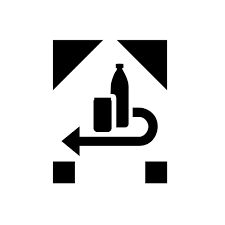
- Pfand. This is a deposit placed on items that are expected to be returned. An example where you will definitely notice it, is at Christmas Markets or Wine events. When you order a drink and it is provided in a mug or wine glass, a pfand is added to the price, and is returned when you turn the glass back in. It can be as much as €5, but it’s usually €3 or €4. An instance where you probably won’t notice it is on everyday bottles, cans, and glass from the grocery store. Water and soda bottles will have the pfand symbol, while milk and yogurt glass will say “pfandglas” in the small print on the bottle. These deposits are much less, usually 0,20-0,50€. Most grocery stores have a machine to deposit pfand articles. It does not give you cash back, but rather credit toward your shopping. This is likely not worth your time if you are just in Germany for a vacation. So my advise in that situation is just to leave the pfand bottles in your hotel room for housekeeping to collect and deposit. I leave them on a table so they don’t have to dig through the trash for them. If you are walking about a city and see some bottles placed on a trash can, or on the ground next to it, but not in it, it’s likely a pfand bottle left for homeless to collect and get the deposit. Some cities even create pfand holders to encourage leaving the bottle out of the trash bin for someone to collect it.


Language
Do I need to speak German? Can I get by with just English?
No, you don’t need to learn German. English is pretty widespread and you can get by mostly on English, but it’s always recommend to learn some words and phrases. I always say to at least know the polite words: “Please”, “Thank you”, “you’re welcome”, “excuse me” and “do you speak English.”
Bitte, Danke (or Dankeschön), Bitteschön, Entschuligen, Sprechen Sie Englisch?
The German language has formal and informal ways to say something. You can say “Guten tag”, which is a formal way to say hello or good day, and this is what a German language app will teach you. But “hallo” (hello) works just as well and is used more often. “Ciao” is a pretty universal way to say goodbye. “Tschüss” is also very common and fun to say!
You can find hundreds of different references to learn phrases and how to pronounce them, so I am not going to do a language lesson here. But I will note a few key things you may need to know.
- German has a few different letters in their alphabet. One of them is the eszett. It looks like this ß and sounds like “ss.” It is actually a substitute for a double “s” in a word. You might see it in street names. Strasse- street. So if you are told to find Marktstrasse and all the signs say Marktstraß, you know it is the same thing.
- Toilette. Seems simple, but Americans like to sanitize our bathroom words by saying restroom. Or even bathroom. Europeans don’t register “restroom” as “toilet”. So just ask for the toilet. In the same line of thinking, here are some other English words that don’t register meaning even if the person speaks English
diaper- call it a nappy; “to-go”- ask for take away.
Check out my favorite apps for Europe to see what I use for translating.
Restaurant Etiquette
Dining out seems universal, but there are a few difference in Germany that you should be aware of.
- Just as in the states, reservations may, or may not be required depending on the restaurant. Restaurants get very popular on weekends, so if its a popular spot also, you will likely want a reservation. Standard practice more often is to wait to be seated, but there are many small cafes that will just seat yourself. We almost always ask to sit. We just say “zwei?” for “two?” and they often will just make a wide gesture with their arms saying anywhere. Obviously change the number to how many are in your party. Also, this is not as easy to do if you are a large group. More than 4, I would advise making a reservation if they accept them.
- Water is not free in Germany. You order water and they will ask if you want large or small (gross or klein-this size question also applies to beer) and they will bring you a chilled bottle of water and a glass. Also, Germans like their water carbonated. So when you order, you always have to ask for still water (stilles wasser) or no gas “ohne gas.” The “w” in Germany is pronounces as a “v” sound. So wasser sounds like “vassa.”
- Waiters in Germany are not as pushy as those in the States. They leave you alone until you need something and don’t rush you. Closing your menu and setting it down is a signal that you are ready to order. If they see you with the menu open, they will continue walking by you until they see you are ready to order. If you need to order another drink, you make eye contact and gesture to your empty glass while saying another. When you are finished eating, putting your utensils and napkin in the plate will indicate that. And they will not bring a bill unless you ask for it. You can do a money hand gesture and/or say “zahlen bitte?” Otherwise, they will often leave you alone and let you sit and mingle all night. It’s not uncommon for diners to occupy a table for 2+ hours in Germany.
- Tipping. There is so much bad advise around tipping in Germany! I don’t know why this continues to spread like wildfire, but YES YOU DO TIP IN EUROPE! It’s definitely not as much as we do in the States, but tips are commonplace. Depending on the setting and the bill, some just round up the change to the next dollar amount, and some leave a few Euro coins. A good rule of thumb is about 10%. So for a €30 bill, a person might leave €3-4. If it’s a fine dining experience, you tip more.
- You will need to take notice of you lunch hours. Many restaurants in Germany close after lunch hours and won’t open again until dinner. Even if they appear open, they may close the kitchen and not open again until dinner. So try to avoid planning a late lunch. Most places will be open until 1-1:30, but your choices for finding lunch after 2pm are slim. Breakfast restaurants in Germany are a gem because they are not common! Unless you specifically know of a breakfast place in the city you are staying, my advice is either plan on hotel breakfast, or opt for a local bakery.
Hotel 411
Aren’t hotels just the same? Well, yes mostly. But here are a few things you might want to take note of.
- Air Conditioning is not commonplace in Europe. Anywhere. Even in malls and restaurants, AC is not a given. So if you are traveling to Germany in the summer, ensure you book a hotel with AC!
- Parking is another amenity you need to account for. It’s about a 50/50 here if a hotel will have parking. In a smaller town and outside of the city center, it is more likely to have one. But hotels in historic centers will likely not have their own parking and rather, will direct you to a nearby parking garage.
- German hotels have a maximum occupancy law. Many only allow 3 people per room. Depending on the hotel, sometimes a baby counts as a person, and sometimes not. Many booking platforms will not let you book a hotel if you have indicated more people than allowed. So what are the work arounds if you have small children who cannot occupy their own room? Some booking sites like Booking.com have a “family room” option on their search filters. These will be rooms with extra beds or more room for cots. You may also call a hotel you are interested in and ask if they will allow a cot in the room, and book directly through them. But always ask first. Don’t book a room for 3 people and show up with your extra people. Because Germans are rule-followers by nature and they will not take pity on you. If you have a large family, you will likely need to book 2 rooms everywhere, or opt for a vacation rental instead.
Shopping
- The most important thing you need to know in the the shopping realm is that stores are not open on Sunday. Sunday is a day of rest and family time, and the only stores that will be open are gas stations (and even they may be closed!) and restaurants. All of the attractions like museums, theme parks, tours etc will still be open.
- Grocery stores do not bag your groceries, or even supply bags. You must bring your own reusable shopping bags (or buy them in store) and bag the groceries yourself. The shopping carts are also on a lock system here. You have to use a coin to unlock the cart, and the coin will be returned when you return the lock.
- Sales tax is included in the sale price. So the price you see is the price it is. If you are making a large purchase, you have the option to have the VAT (tax) refunded to you in the airport on your way back to the States. You can ask the merchant the procedure you would need to do this. If a merchant sells high value items to tourists, they will know what you are talking about. Cuckoo clocks is a good example.
Safety
Is Germany safe?
Generally speaking, yes, Germany is rather safe. You can walk around without fear for your personal safety, you don’t generally have to worry about road rage. Pickpocketing is the biggest concern in Europe, and that really only happens in very large cities where it can get very crowded with tourist. The best advise I can give you is to just be aware of your surroundings, and always be aware of your belongings. Here are a few specific things to implement to prevent you from being an easy target.
- Don’t carry your phone or wallet in your back pocket. You can get a great slim front pocket wallet instead. Leave the big wallet at home.
- For the phone, I have a Casefify phone strap so I can wear my phone as a sling. There are many options of phone straps and slings available. I love mine and take it every where! It’s common for me to put my phone in my back pocket, but that is a big no-no in large cities like Paris. Get a phone sling, put it in your front pocket, or put it in a zippered purse pocket.
- Use a smaller purse. I always pack a small crossbody bag into my luggage and bring just the essentials with me out of the hotel. I leave the big purse with everything else at the hotel. This makes your bag a smaller target, and also limits the amount of things that would be stolen if your bag is stolen. Small belt bags are also a great option! Choose whichever is comfortable.
- If you must carry a big backpack, look into an anti-theft option. Pac Safe makes bags in all sizes and all have a special zipper mechanism that makes the bags impossible for a thief to open sneakily. They also have added features like RDIF protections and releasable straps that allow you to strap your bag around a chair or table.
- If you are like us and need an in-between bag that is just big enough for a little shopping and a camera, a chest sling bag is a great option! Whatever you choose to use, just be sure it is wrapped around you (not hanging from your shoulder), all the zippers are always closed, and place it in front of you in crowded areas like metros and busses.
- Be aware of scams and avoid them. Some common places people get pick pocketed is in a street scam where their are a team of players and you just aren’t paying attention to all of them. A few I know of is a gambling scam with balls in cups and the person (also a player) makes a huge bet and wins so you think you can play. Another is woman struggling with something and getting your attention for some help and her child picks your pocket while you help her. We saw one in Paris where a person would grab your attention asking for donations while a “concerned citizen” would try to warn you to not fall for it and try to usher you away with their arm around you. All while taking your wallet. There are some places where you will see art on the ground, and when a tourist walks by looking up at the buildings, the person slides the art out to where you are walking and then has a fit when you step on it, and demands you to pay for it. So just stay aware. Stay away from anyone who tries to guide you or get your attention. Don’t make eye contact with people soliciting. Step aside and stop walking if you want to gawk at something.
- If you are out and think someone is scamming your, or are in a dispute with a scammer, as if anyone can help you. Ask to call the police. Ask a local for help. Don’t assume you must do as they say. Make a fuss. Make a scene. If they are legit and not breaking the law as you suspect, then they will not flinch at the police coming.
Telephone Tips
Phone use in Germany is slightly different than the US. The country code is used for calling more often here. There are instances where you don’t use it, like if you are calling a cell phone, but if you are just visiting here, it is easier to teach you just one way and assume that all phones are landlines. You must use the (+) and the country code of 49. Cell phone plans in Germany will allow you to call all over Europe for no additional fee, but the US is considered international so you cannot dial a US phone number without incurring additional fees.
The emergency phone numbers for Germany are 112 and 110. This is equivalent to 911 in the states and will get you an emergency dispatcher. 112 is for fire and medical emergencies, and 110 is for police emergencies. If you have an accident on the interstate with injuries, just call 112 and they can notify the police. There is no need to call both of them.
I know I have some blind spots since I have lived here so long and things have become “normal” to me at this point. I tend to forget how different they seemed when we first moved here. So please let me know if there is something I skipped over, or if you have questions about anything else!
 Tuck & Sundry